Why Standard SEO Breaks Down at Enterprise Scale
If you’re evaluating an enterprise SEO agency, you’re probably past the basics. You already know SEO matters. The harder problem is execution: managing complex websites, multiple business units, technical dependencies, approval workflows, and thousands of pages without putting existing organic performance at risk.
Your dev team operates in two-week sprints, but your SEO priority has been waiting three months for approval. One template change affects 47,000 URLs across six product lines, and nobody wants to be the one who breaks what’s already ranking. Your content team just built a great resource hub, but it lives in a subdomain that Google barely crawls because nobody fixed the internal linking architecture three site migrations ago.
This is where standard SEO advice stops working.
Why Standard SEO Processes Break Down at Enterprise Scale
Small business SEO is about ranking a few dozen pages for local searches. Enterprise SEO is about protecting existing performance across thousands of pages while coordinating changes through Legal, Product, Engineering, Brand, and three regional marketing teams, who all report to different VPs.
Here’s what that actually looks like. Your competitors launch a new content initiative in two weeks. Your version of the same initiative requires sign-off from stakeholders across four departments, a compliance review, translation into six languages, and technical implementation that won’t happen until Q3 because Engineering is focused on the platform migration. By the time your content goes live, the search landscape has shifted and your competitors already own the visibility you were targeting.
Large-site SEO migration is another pressure point most agencies have never managed. When you’re replatforming 80,000 product pages, one redirect mapping error can cost you 40% of your organic traffic overnight. We’ve seen it happen. A mid-market agency treats migration like a checklist. An enterprise agency treats it like open-heart surgery because that’s what it is when your site generates $200 million in annual revenue.
Cross-team SEO collaboration becomes the bottleneck faster than technical problems do. Your SEO roadmap says “fix canonicalization across the blog.” But the blog is owned by Content, hosted on a separate CMS managed by a vendor in Austin, and making changes requires a ticket that goes through a queue engineering deprioritized two quarters ago. The problem isn’t that nobody knows how to fix it. The problem is nobody owns the outcome across all those handoffs.
And then there’s reporting. Your CMO doesn’t care about keyword rankings. She cares whether organic search is supporting the Q2 product launch in EMEA and whether the 15% traffic increase you’re showing her actually drove pipeline for the sales team or just informational visits that bounced. Standard SEO reporting shows site-wide traffic. SEO governance at enterprise scale means showing performance by business unit, region, product family, and buyer stage so every stakeholder sees the slice that matters to their goals.
Most SEO agencies will tell you they can “scale up” for enterprise clients. What they mean is they’ll assign more people to your account. What you actually need is a team that has worked inside these constraints before and knows the difference between an SEO problem and an organizational structure problem that happens to show up in your search performance.
We’ve managed SEO for companies where a single page change requires sign-off from twelve people. We’ve coordinated search strategies across brands operating in 47 countries with different regulatory requirements in each one. We’ve protected organic traffic during migrations where the technical documentation was incomplete and the legacy platform was so old the original developers had retired.
That’s the difference. Standard SEO breaks down when the problem isn’t what to do. The problem is how to get it done when six teams need to agree, three systems need to integrate, and the current performance you’re trying to protect is worth eight figures in revenue.
If that sounds familiar, you’re in the right place.
What Makes Enterprise SEO Different (And When You Actually Need It)
Not every company needs enterprise SEO. A 200-page website with one marketing manager and a clear content calendar can do well with a solid standard search engine optimization strategy. But there’s a point where the normal approach stops fitting the actual problem, and companies that push past that point without changing their approach tend to lose ground to competitors who did.
Enterprise SEO services are built for organizations where complex websites, multiple teams, technical dependencies, and large-scale search demand make standard SEO processes difficult to execute effectively. The fundamentals remain the same, but the systems used to manage them need to work across thousands of URLs, multiple markets, business units, platforms, and stakeholders.
Instead of treating each technical, content, and reporting issue as an isolated task, these solutions connect site architecture, content systems, governance, measurement, and execution into one coordinated SEO program.
Here’s how to know which side of that line you’re on.
The Enterprise SEO Difference: What Changes at Scale
The fundamentals of SEO don’t change. Technical health, content relevance, and authority still drive rankings. What changes at enterprise scale is how you manage those fundamentals across thousands of pages, dozens of internal stakeholders, and systems that don’t always talk to each other.
| What Standard SEO Handles | What Enterprise SEO Also Solves |
|---|---|
| Fix technical SEO issues on a few hundred pages | Triage technical debt across 50,000+ pages without disrupting what’s already ranking |
| Build a content calendar based on target keywords | Design content systems that scale across business units without creating duplicate content |
| Track rankings month over month | Report performance by product line, region, business unit, and buyer stage |
| Write and publish content through one CMS | Navigate SEO governance across multiple platforms, teams, and approval workflows |
| Build backlinks to improve domain authority | Manage authority programs at scale with risk controls that protect the brand |
| Respond to algorithm updates | Monitor ranking changes by page family and connect movement to specific business impact |
The difference isn’t complexity for its own sake. It’s that an enterprise client needs answers at a level of specificity that standard SEO tools and processes simply weren’t built to deliver.
And this is the part worth paying attention to. Most enterprise clients we talk to aren’t failing at SEO because they don’t know what needs to be done. They’re stuck because the organizational structure around execution makes every change harder than it should be. Fixing that requires a different kind of partner, not just a bigger version of what they already have.
Five Signs You’re Ready for Enterprise SEO Services
When companies come to us evaluating enterprise SEO agencies, we usually see the same patterns. Not all of them apply to every organization, but if three or more of these sound like your situation, standard SEO support is probably not enough.
Your site has more than 10,000 indexed pages.
At this scale, one template change can affect thousands of URLs at once. A single misconfigured canonical tag can silently remove entire page families from Google’s index. You need someone who understands how to audit and manage search performance at that level without creating new problems in the process.
You have multiple business units, brands, or product lines with separate goals.
When the VP of Marketing for your enterprise software division and the VP of Marketing for your professional services division both need SEO support but measure success completely differently, a single campaign approach doesn’t work. You need multi-site SEO architecture that separates demand cleanly and reports performance in a way each leader can act on.
You operate in more than one country or language.
International SEO at enterprise scale involves far more than translating content. Hreflang implementation across thousands of pages, country-specific domain decisions, localized keyword strategy, and regional compliance requirements all need to be managed correctly. One error in hreflang configuration across a large multilingual site can send the wrong content to the wrong countries for months before anyone notices.
Your CMS or tech stack requires developer involvement for most SEO changes.
If publishing a meta description requires a developer ticket, a sprint cycle, and two rounds of QA, your SEO program is running at the speed of your slowest internal process. Enterprise SEO services account for that reality and build prioritization frameworks that get the highest-value changes through internal systems first.
Leadership asks you to show how organic search connects to revenue, not just traffic.
A B2B company with a six-month sales cycle can’t measure SEO success by pageviews. When your CMO and CFO want to see how organic search contributes to qualified pipeline, enterprise-level reporting means connecting keyword rankings, organic sessions, and assisted conversions to actual business outcomes.
If you checked most of those boxes, the section below on what our enterprise SEO agency includes will tell you exactly what working together looks like.
What Our Enterprise SEO Agency Does Differently
Most enterprise SEO firms say the same things. Senior team. Proven process. Data-driven strategy. Custom reporting. You’ve read those lines on every agency website you’ve visited this week, and none of them told you anything you could actually use to make a decision.
So here’s what we’ll do instead. We’ll tell you exactly how we operate, what you get, and what makes working with us different from the other agencies on your shortlist. Specifically. Not in marketing language.
We’re Transparent About Pricing, Process, and Who You’ll work with.
Most enterprise SEO agencies make you sit through two discovery calls before they’ll tell you what anything costs. We don’t do that.
Before you sign anything, you’ll know what the engagement includes, which phases happen in what order, who owns each deliverable on our side, and what investment range your program falls into based on your site size and goals. We document the process before we start, not after problems appear.
We also tell you upfront which enterprise SEO platform tools we use and why, and how our reporting connects to the systems your team already runs in. If your marketing team tracks pipeline in HubSpot, we build reporting that connects to that. If your analytics setup uses a custom data warehouse, we work with your data team to pull from it. We adapt to your stack. You shouldn’t have to change how your team works just to get clean SEO reporting.
And this is the part most agencies skip entirely: you’ll know the names and experience levels of the people working on your account before the contract starts. Not job titles. Actual people.
Your Strategy Is Built by Senior SEO Experts, Not Junior Staff
Here’s how a lot of agencies work at scale. A senior strategist sells the engagement, builds the initial roadmap, and presents on the first few calls. Then your account gets handed to a coordinator who manages timelines and a junior analyst who handles execution. The senior person shows up for quarterly reviews.
That’s not how we work with enterprise clients.
Your SEO strategy is built and maintained by senior-level SEO experts who have managed programs at your scale before. They write the briefs. They do the technical reviews. They’re on the calls when your engineering team has questions about implementation. When your VP of Marketing asks why organic performance shifted in a particular region, the person answering that question is the same person who made the call that affected it.
We work directly alongside your marketing team rather than creating a layer of project management between strategy and execution. Which means decisions move faster and the people making them actually understand your business.
We Tie SEO Performance to Business Metrics Leadership Actually Cares About
a qualifiedOrganic search traffic going up is not a business result. It’s a data point. What leadership wants to know is whether that traffic is producing qualified pipeline, supporting the right product lines, and contributing to revenue in a way they can show the CFO.
connectSEO KPI tracking at the enterprise level means building measurements that connects keyword rankings and organic sessions to the outcomes your organization already tracks. We report on organic search traffic by business unit, by region, by product family, and by buyer stage. When one segment moves and another doesn’t, we explain why and what changes in the next 30 days to address it.
We’ve seen enterprise clients come to us with beautiful traffic dashboards that nobody in leadership looked at because the numbers weren’t connected to anything the business was measuring. That’s a reporting problem, not an SEO problem. And fixing it is part of what we do.
Conversion rate optimization sits inside our SEO programs as well, not as a separate engagement. If organic traffic is landing on pages that don’t convert, improving rankings makes the problem bigger, not better. We track where visitors drop off and work with your team to fix the path before scaling traffic to pages that aren’t ready for it.
see isThe result is an SEO program your CMO can present to the board, your VP of Marketing can use to defend the budget, and your sales team can see actually contributing to the pipeline they’re working.
Complete Enterprise SEO Services (And Why Each One Matters at Scale)
Our enterprise SEO services include technical SEO, site architecture, content strategy, authority building, analytics, reporting, and ongoing optimization.
Every service inside those pillars exists because enterprises face a specific version of that problem that standard SEO approaches aren’t built to handle.
Here’s what each one includes and why it matters at your scale.
Pillar 1: Technical Foundation & Site Architecture
Technical problems on an enterprise site are rarely simple. One misaligned redirect rule can affect 30,000 URLs. One crawl budget issue can quietly remove entire product families from Google’s index for months before anyone notices it in the traffic data.
Enterprise Technical SEO Audit
A technical SEO audit at enterprise scale goes well beyond a crawl report and a list of 404 errors. We audit page families, template behavior, rendering logic, internal linking systems, crawl paths, and indexation patterns across your entire site. We then triage every finding by revenue impact and implementation complexity, so your engineering team works on what actually matters first rather than spending sprint cycles on low-priority fixes.
Site Architecture & Internal Linking
Site architecture determines how Google distributes authority across your pages and how users move through your site. On large sites, architecture problems compound. A well-structured information hierarchy means your highest-value pages get crawled more often, indexed more reliably, and ranked more competitively. We map your current architecture, identify where authority is leaking to low-value pages, and build a restructuring plan your development team can implement in phases without disrupting existing rankings.
Core Web Vitals & Site Speed
Google uses page experience signals as ranking factors, and the impact shows up more clearly on large sites where slow templates affect thousands of URLs at once. We identify which page families are dragging performance scores, work with your development team on specific fixes, and track improvements across template groups rather than just individual pages.
Schema Markup & Structured Data
Schema markup helps Google understand what your pages are about, which products you sell, what events you host, and what questions you answer. At enterprise scale, schema needs to be implemented through templates so it applies consistently across thousands of pages. We build schema strategies that work within your CMS rules and audit existing markup for errors that could be suppressing rich result eligibility.
Large-Site SEO Migration Planning & Execution
Large-site SEO migration is one of the highest-risk activities an enterprise can undertake. A replatform, domain consolidation, or HTTPS migration that isn’t managed correctly can erase years of search equity in a single launch weekend. We manage migrations from pre-launch audit through post-launch monitoring, covering URL mapping, redirect implementation, crawl verification, and rapid response to any ranking drops that appear in the first 30 days after launch.
CMS & E-Commerce Platform Support
SEO recommendations only work if the platform can execute them. We work directly within the constraints of your CMS and e-commerce platform so recommendations don’t stall because the system can’t support them. More on specific platform support below.
Pillar 2: Content, Authority & AI Search Visibility
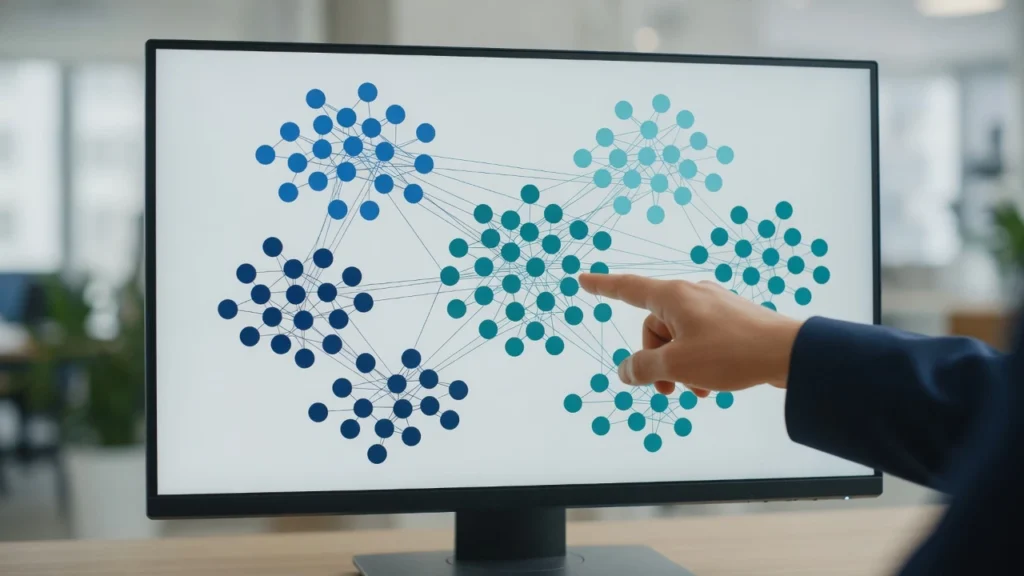
Rankings are built on two things: relevance and authority. Content strategy builds relevance by showing Google your pages match what buyers are actually searching for. Link building and digital PR build authority by earning signals from sources Google already trusts. And increasingly, both need to work together to earn visibility in AI-generated search results, not just traditional search rankings.
Keyword Research for Enterprise
Keyword research for enterprise organizations goes far beyond finding high-volume terms. We map keyword demand across your business units, buyer stages, product lines, and regions. Each keyword cluster gets assigned to the right page family, the right content format, and the right priority level based on competitive difficulty and revenue potential. The output isn’t a spreadsheet of keywords. It’s a search demand map your whole marketing team can use to make content decisions.
Content Strategy for Enterprise at Scale
Enterprise content strategy means building systems that produce consistent, on-brand content across multiple teams without creating duplicate intent or cannibalizing existing rankings. We design content briefs, page templates, and editorial workflows that scale across your organization We audit existing content to find what deserves to be updated, what should be consolidated, and what’s quietly competing with your own higher-value pages for the same searches.
Content Marketing & Programmatic Content Systems
Some enterprises need to produce hundreds of location pages, product comparison pages, or category pages that follow a consistent structure. We build programmatic content systems that generate pages at volume while maintaining the quality and specificity that keeps Google from treating the output as thin content. Each system includes quality controls, internal linking logic, and indexation monitoring from launch.
Link Building Services & Digital PR
link-buildingBuilding a strong backlink profile at enterprise scale requires more than outreach to blogs. We run authority programs that earn links from industry publications, data-driven content that journalists cite, and digital PR campaigns that generate coverage in sources your buyers actually read. Every link building campaign includes risk controls. We don’t pursue link volume at the expense of link quality, and we don’t touch tactics that could create a future penalty problem for your domain.
AI Overview Visibility & Generative Engine Optimization
overviewAI Overview visibility is now a real business consideration for enterprises. When buyers search and Google’s AI generates a summary answer at the top of the results page, your brand either appears in that answer or it doesn’t. We optimize content structure, entity coverage, and citation signals so your pages are the sources AI systems pull from when answering questions in your category. This isn’t a separate service bolted onto SEO. It’s built into how we structure content and build authority across your site.
Pillar 3: Analytics, Reporting & Business Alignment
Traffic numbers don’t run businesses. Revenue does. And the gap between “organic traffic went up” and “here’s how SEO contributed to pipeline this quarter” is where most enterprise SEO programs lose executive support.
Custom SEO Reporting Dashboard
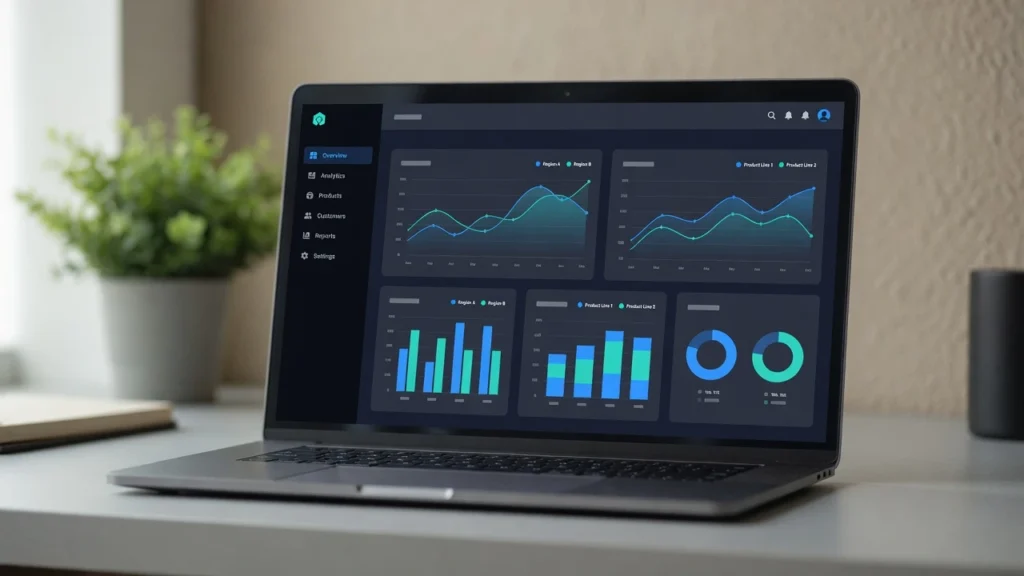
We build a custom SEO reporting dashboard that shows performance in the dimensions your leadership team actually makes decisions on. Not just site-wide sessions and keyword rankings. Performance by business unit, by region, by product line, by page family, and by buyer stage. Each leader on your team sees the slice of organic search performance that matters to their goals, presented in a format they can act on without needing to dig through raw data.
SEO KPI Tracking & Business Alignment
Tracking organic traffic growth is straightforward. Connecting that growth to qualified leads, pipeline, and revenue takes a different level of measurement setup. We work with your analytics and RevOps teams to connect organic search traffic to the KPIs your business already tracks. When organic sessions increase in a product line, we can show whether that increase drove more demo requests, more qualified leads, or more closed revenue in that segment.
Google Analytics & Analytics Stack Integration
We work within your existing analytics setup, whether that’s Google Analytics 4, Adobe Analytics, a custom data warehouse, or a combination of all three. We audit your current tracking for gaps, fix attribution errors that are misrepresenting the value of organic search, and build reporting that connects search visibility to the conversion events your team cares about.
Competitive Benchmarking
Keyword rankings only tell part of the story. We track your search visibility against specific competitors across your most important keyword categories, so you can see where you’re gaining ground and where competitors are outpacing you. That context makes it much easier to defend SEO investment internally, because leadership can see the competitive position improving over time rather than just looking at traffic numbers in isolation.
Platform & Technology Support We Provide
platforms,The enterprise SEO platform you run on determines what’s possible and how fast we can move. We work with all major enterprise CMS and e-commerce platforms including WordPress, WordPress VIP, Shopify Plus, Magento, BigCommerce, Drupal, Sitecore, and Adobe Experience Manager. We also work with headless CMS architectures and custom-built platforms where SEO implementation requires direct collaboration with your development team.
Platform expertise matters because SEO recommendations that can’t be implemented don’t help anyone. When we audit your site and identify that your CMS handles canonical tags through a setting buried in a third-party plugin, we know how to fix it within that system rather than writing a recommendation your team can’t act on.
If you’re running a custom or less common stack, tell us during the strategy call. We’ll review it directly and confirm what’s possible before any engagement begins.
How We Work: The Enterprise SEO Process From First Call to Results
One of the most common frustrations enterprise buyers tell us about when evaluating agencies is this: they went through two or three rounds of calls, got a proposal, signed a contract, and still had no clear picture of what the first 90 days would actually look like.
We fix that before you sign anything.
Here is exactly how an enterprise SEO engagement works with us, phase by phase, with honest timelines for when different types of results typically appear.
Phase 1 (Weeks 1–4): Discovery, Audit & Strategic Roadmap
The first thing we do is listen before we build anything. Week one starts with stakeholder interviews across your marketing, product, engineering, and sales teams. We need to understand what each group measures, what they’ve already tried, where internal friction lives, and what a successful SEO program looks like from each perspective. Most agencies skip this step entirely. We treat it as the most important work we do in the entire engagement.
From there, we run a full technical SEO audit of your site. This covers crawl paths, indexation patterns, site architecture, template behavior, internal linking, Core Web Vitals across page families, schema implementation, and any legacy technical SEO issues that have accumulated across previous platform changes or content migrations. We also complete a keyword research analysis across your full market, mapping demand by product line, business unit, region, and buyer intent so we know exactly which search opportunities connect to actual revenue.
strategy document.By the end of week four, you receive your enterprise SEO Strategy Document. This is a prioritized 12-month roadmap that shows what we’re doing, in what order, why each item was prioritized above others, and what your team needs to provide or approve to keep execution moving. Every recommendation in the document is categorized by expected business impact and implementation complexity, so your engineering and content teams can plan sprint capacity around it.
What you provide in Phase 1: Access to Google Analytics, Google Search Console, and your CMS. Availability for stakeholder interviews. Any existing SEO documentation or previous audit reports.
What you get: Complete technical audit, keyword universe map, competitor gap analysis, prioritized 12-month SEO strategy, and a clear view of what we’re building and why.
Phase 2 (Weeks 5–12): Foundation Fixes & Quick Wins
This is where execution begins. We work through the highest-priority technical SEO issues identified in the audit, focusing first on anything blocking Google from properly crawling and indexing your most valuable page families. These are typically the fixes that have the fastest ranking impact: canonical errors affecting large page groups, crawl budget problems on deep site sections, on-page optimization gaps on pages already ranking on page two, and Google Analytics tracking gaps that are misrepresenting your organic performance.
We also identify and fill the highest-priority content gaps in this phase. These are pages your site is missing entirely for searches your buyers are actively making, where your competitors already have content and you don’t. Getting these pages built and indexed early extends the compounding window for organic traffic growth.
Most enterprise clients start seeing initial ranking improvements in phase two. Not across the whole site. But on specific pages and keyword clusters, technical fixes removed ranking blockers that were already holding back pages close to the first page of results. These early movements are worth tracking closely because they show which page families respond fastest and inform where we put additional effort in phase three.
What you provide in Phase 2: Engineering capacity to implement technical fixes (we provide detailed specs). Content team availability to brief and produce priority pages. Approval on the content briefs before writing begins.
What you get: Technical fixes deployed, priority content live, analytics tracking corrected, and first signs of ranking movement on targeted page families.
Phase 3 (Months 4–9): Authority Building & Content at Scale
Phase three is where the program shifts from fixing problems to building a competitive advantage. By this point the technical foundation is clean, the most important content gaps are filled, and we have real performance data showing which keyword clusters and page families are responding to SEO work.
We run link-building service campaigns focused on earning authority for the pages and topics where you’re closest to outranking competitors. These aren’t volume-based link acquisition programs. Each campaign targets specific authority gaps identified in the competitive analysis and earns placements in sources that matter to your buyers and to Google’s understanding of your domain expertise.
Content at scale also accelerates in this phase. We deploy programmatic content systems for page families that need volume, whether that’s location pages, product comparison pages, or solution category pages. And we build out the content strategy for enterprise thought leadership topics where your brand should own the search conversation but currently doesn’t.
AI Overview visibility becomes a specific focus here too. We analyze which queries in your category are triggering AI-generated answers in Google, identify why your content isn’t being cited in those answers, and restructure the relevant pages to become the source Google’s AI pulls from.
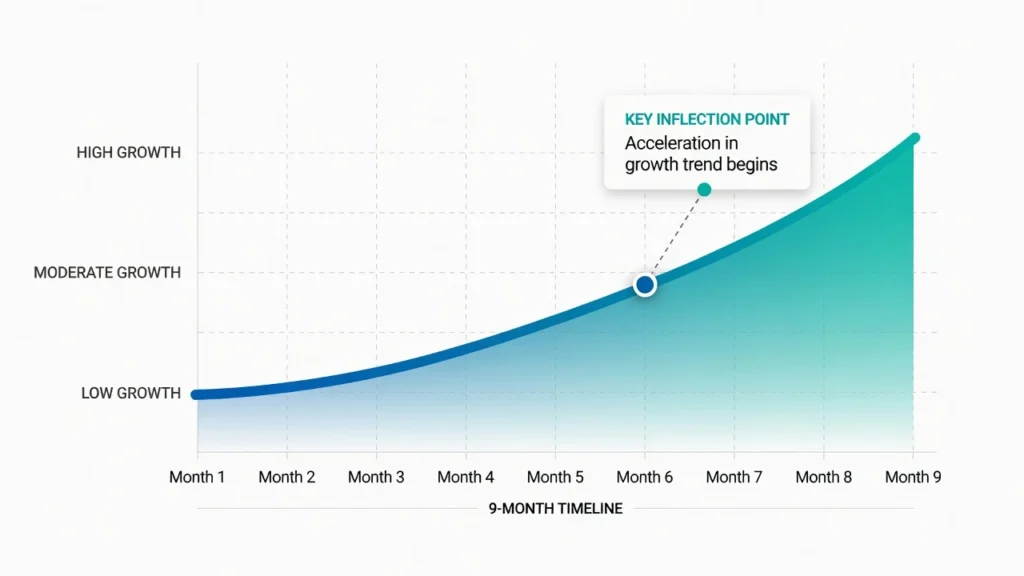
Significant organic traffic growth typically becomes visible between months four and seven. Not for every keyword category at once. But in the segments where phase two built the foundation and phase three built the authority, the compounding effect shows up in the data clearly enough that your leadership team will see it without needing to look at keyword-level reports.
What you provide in Phase 3: Continued engineering capacity for content deployment and schema implementation. Subject matter expert access for thought leadership content. Approval on outreach targets for link building.
What you get: active link-building campaigns, programmatic content systems deployed, AI visibility improvements, and measurable organic traffic growth in priority segments.
Phase 4 (Ongoing): Optimization, Reporting & Strategic Adjustments
Once the program is running, the work shifts toward protecting performance, expanding into new opportunities, and making sure the SEO roadmap evolves as your business priorities change.
Every month you receive a reporting package built around your SEO reporting dashboard, showing keyword rankings and search visibility by business unit, region, and product line. Not a generic traffic report. The specific view of each stakeholder on your team needs to understand what organic search contributed to their goals that month and what’s planned for the next 30 days.
We monitor Google algorithm updates as they happen and assess the impact on your specific page families within 48 hours of a confirmed update. If rankings shift in a way that needs a response, we don’t wait for the monthly report to flag it. We bring the analysis and a recommended response to you directly.
Conversion rate optimization also sits inside the ongoing program. If organic traffic is growing but conversion rates on landing pages aren’t keeping pace, we work with your team to test new page structures, CTAs, and content elements until the conversion performance matches the traffic growth. More organic visitors don’t help the business if the pages they land on aren’t built to convert them.
Cross-team SEO collaboration and SEO governance stay active throughout. As your product roadmap changes and new pages need to be built, we’re part of the planning conversation early enough to make sure search requirements are built into the page from the start rather than retrofitted after launch.
What you provide in Phase 4: Monthly check-in availability. Advance notice of product launches or site changes that affect search. Ongoing implementation capacity from your engineering team.
What you get: Monthly business-aligned reporting, algorithm update monitoring, conversion optimization on priority pages, and a program that adapts to your business as it grows.
Enterprise SEO Results: What Growth Actually Looks Like
Numbers without context don’t tell you much. A 200% increase in organic traffic means something very different on a 50-page brochure site than it does on a 40,000-page enterprise platform where the wrong template change could have caused that same traffic to disappear overnight.
The case studies below show what enterprise SEO growth actually looks like when the work is done at the right level of complexity. Not just the results. The situation, the decisions made, and what changed because of them.
Important note: The case studies below are written as representative examples showing the type of work and results that are realistic for enterprise SEO programs at this scale. When you book a strategy call, we’ll share specific client results relevant to your industry that we’re authorized to discuss.
Case Study 1: B2B SaaS Platform with Stalled Organic Growth
The situation: A B2B SaaS company with a 12,000-page documentation and product site had hit a plateau. Organic search traffic had been flat for 14 months. Their internal SEO manager had identified the problem correctly: thousands of thin documentation pages were competing with their main product pages for the same keywords, creating internal ranking conflicts that Google was resolving by showing neither. But getting engineering to prioritize the fixes had been impossible because the SEO team couldn’t show leadership a clear connection between fixing the issue and improving qualified lead volume.
What we did: We started with a full technical SEO audit that quantified the business impact of the cannibalization problem in terms leadership could act on. By connecting affected page families to the pipeline data in their CRM, we showed that the keyword categories losing rankings were the same ones driving 60% of their demo requests. That made the engineering prioritization conversation a revenue conversation, not an SEO conversation.
We restructured the site architecture to separate the documentation section from the product and solution pages using a clear canonical strategy and improved internal linking logic. We consolidated 1,400 thin documentation pages into 280 authoritative topic guides that actually answered the questions their buyers were searching for. And we rebuilt the content strategy for enterprise buyers across their highest-value product categories.
Results: Organic search traffic to product and solution pages grew significantly within six months of the architecture changes going live. Keyword rankings for their primary commercial search terms improved across all tracked categories. More importantly, the organic channel’s contribution to the qualified pipeline increased in a way their sales team noticed and their CMO could present to the board. The internal SEO manager, who had been fighting for engineering resources for over a year, had a cleaner path to implementation from that point forward because every request came with a revenue impact estimate attached.
Case Study 2: Multi-Location Enterprise with Local Search Visibility Problems
The situation: A multi-location enterprise client operating across more than 80 service markets had a local SEO problem that looked simple on the surface but wasn’t. Each location had its own page on the site, but the pages were built from a single template with minimal location-specific content. Google was treating most of the location pages as near-duplicate content and ranking only a handful of them consistently. The locations getting organic search visibility were closing at a much higher rate than locations relying on paid search. Leadership wanted to know why organic search was working for some markets and not others and what it would take to fix the underperforming ones.
What we did: We audited all 80-plus location pages against the ranking patterns and identified the specific content signals that differentiated the pages Google ranked consistently from the ones it largely ignored. The pages that ranked had genuinely location-specific content covering local service context, local team information, and locally relevant FAQs. The ones that didn’t rank were template pages with only the city name and zip code swapped in.
We built a programmatic content system that produced location pages with genuine local specificity at scale, without requiring the marketing team to manually write 80 individual pages. Each page pulled from a structured data set covering local service details, regional market context, and location-specific trust signals. We also corrected the internal linking architecture connecting headquarters-level pages to location pages, which had been fragmenting the authority signals Google needed to rank the local pages in their respective markets.
Results: Organic search visibility across the location page portfolio expanded meaningfully over the following months as Google began indexing and ranking the updated pages. Markets that had previously relied entirely on paid search for local visibility began generating organic leads. The locations gaining organic search traffic maintained their higher close rate advantage, which gave the business a measurable cost-per-acquisition improvement in those markets compared to paid-only markets.
What Decision-Makers Say After Working With Us
The results matter. But enterprise buyers tell us the experience of working together matters just as much, because a difficult agency relationship creates internal friction that eventually undermines the program regardless of the SEO outcomes.
Here is what clients in similar situations have told us after working together. These represent the types of feedback we receive regularly, and specific verified testimonials are available upon request during your strategy call.
“We had worked with two other enterprise SEO agencies before this engagement. Both times the strategy was solid, but the execution stalled because the agency couldn’t navigate our internal approval processes. What was different here was that the team came in understanding that the bottleneck wasn’t knowledge. It was organizational structure. They built the prioritization framework around what our engineering team could actually ship, not what an ideal SEO program would look like in a frictionless environment. That changed everything.”
VP of Marketing, B2B Technology Company
“The reporting was the first thing I noticed. Every other agency we’d used showed us traffic dashboards. This team built reporting that showed organic search performance by product line, which is how our leadership team thinks about the business. When I brought the first quarterly report to our CMO, she actually read it. That had never happened before with SEO reporting.”
Director of Demand Generation, Enterprise SaaS Company
Among enterprise SEO agencies evaluated by marketing teams at this level of organizational complexity, the consistent differentiator in reviews is not technical capability alone. It is whether the agency can operate effectively inside the client’s structure while still driving the outcomes the business needs. That is the standard we hold ourselves to on every engagement.
How We Protect Your Current Rankings While Scaling SEO Performance
The biggest risk in enterprise SEO isn’t doing too little. It’s changing too much too fast, and discovering three weeks later that a template update affected 12,000 product pages in a way nobody caught until organic traffic to your second-largest revenue category dropped by 40%.
We’ve seen that happen. Not on our watch, but we’ve been brought in to fix it after other agencies caused it. And the fix always takes longer than the prevention would have.
Here’s how we make sure that doesn’t happen to you.
Before we change anything on your site, we run a full baseline audit that documents your current ranking performance, traffic patterns, and indexation status across every major page family. This baseline becomes the comparison point for every change we make. If something moves in a direction it shouldn’t after a deployment, we know exactly what changed and where to look first.
Every technical change we recommend goes through a phased rollout. We don’t deploy site-wide template updates, canonical changes, or internal linking restructures across your entire site at once. We test on a small controlled segment first, monitor the results for two to four weeks, confirm the change produced the expected outcome without side effects, and only then scale the change across the rest of the site architecture. If the test segment shows unexpected movement, we pause, adjust the approach, and test again before expanding.
For large-site SEO migration projects, we treat the work like you’re moving critical infrastructure, because that’s exactly what it is. Every URL gets mapped before launch. Every redirect rule gets tested in staging before it touches production. We monitor crawl patterns and ranking behavior daily for the first 30 days after launch, with rapid response protocols in place if Google starts dropping pages from the index or rankings shift outside expected ranges.
Link quality controls are non-negotiable. We don’t chase link volume. We don’t use paid link networks. We don’t pursue placements that could create a future penalty risk just because they’re available now. Every link-building campaign targets authority sources that are editorially relevant to your market and safe for your domain long-term. If a tactic carries even moderate risk of violating Google’s guidelines, we don’t touch it regardless of how fast it might move rankings in the short term.
And this is the part worth understanding clearly. SEO governance isn’t about slowing the program down. It’s about making sure every change that goes live has been reviewed against your internal compliance requirements, approved through the right stakeholder channels, and documented in a way your legal and security teams can audit if they ever need to. We’ve worked with enterprise clients operating under SOC 2 compliance, GDPR requirements, and industry-specific regulatory frameworks. The process adapts to fit your structure.
Our Phased Rollout Approach (Test Before Scaling)
When we identify a technical SEO issue affecting thousands of pages, the instinct is to fix it everywhere at once. But on enterprise sites, that instinct creates more risk than it solves.
Here’s what we do instead. We select a controlled test segment representing about 5 to 10 percent of the affected pages. The segment needs to be large enough to generate statistically meaningful traffic data but small enough that if something goes wrong, the impact stays contained. We deploy the fix to that segment, monitor ranking movement and traffic patterns for two to four weeks, and compare performance against the baseline and against a control group of similar pages where nothing changed.
If the test segment shows the improvement we expected and no negative side effects appear in crawl behavior or indexation, we expand the deployment to the next 25 percent of affected pages. Another monitoring window. Then the remaining pages, if everything still tracks as expected.
This approach takes longer than a single site-wide deployment. But it protects you from the scenario where a fix that worked perfectly on 50 pages in your audit sample breaks something unexpected when applied to 5,000 pages with slightly different template configurations or URL structures. We’ve caught those conflicts in test phases multiple times. Which is exactly why we test first.
What Happens If Google Updates Hit During Our Engagement
Google releases algorithm updates throughout the year, and some of them shift rankings across entire industries overnight. When a confirmed update drops, we don’t wait to see if your site was affected. We check within 48 hours.
We monitor your ranking positions and organic traffic patterns by page family and keyword category to identify whether the update impacted your search visibility and which segments moved.
If your site saw negative movement, we analyze the update documentation Google releases, compare your affected pages against the patterns other sites in your industry experienced, and identify what specific quality signals the update likely targeted.
Then we bring you a response plan. Not panic. A plan.
Most algorithm updates don’t require a full site overhaul. They require targeted adjustments to the page families that were affected, usually around content depth, E-E-A-T signals, or user experience factors the update prioritized. We identify what needs to change, build the fix into the roadmap with clear priority, and track recovery as the changes deploy.
If your site wasn’t negatively affected by an update but competitors were, we document why your pages held position and make sure those quality signals stay protected in future work. Sometimes the best response to an algorithm update is recognizing that what you’re already doing is working and not breaking it by chasing the next trend.
How Enterprise SEO Pricing Actually Works
When evaluating enterprise SEO agencies, one of the most frustrating parts of the process is the pricing blackout. Most agencies won’t give you even directional numbers until you’ve sat through two discovery calls and filled out a qualification form. That wastes your time and theirs.
We’ll tell you upfront what enterprise SEO services typically cost and what drives the investment up or down. You deserve to know if your budget aligns with what this level of work actually requires before you spend time on calls.
What Determines Enterprise SEO Investment
Enterprise SEO pricing isn’t built on arbitrary monthly retainer tiers. The investment is determined by the scope of work your site and organization actually need, which varies significantly based on a few specific factors.
Your site size and technical complexity. A 15,000-page site with a clean technical foundation and a modern CMS requires less engineering support than a 60,000-page site built on a legacy platform with accumulated technical debt from three previous migrations. We estimate hours based on what your site architecture actually needs, not what a pricing tier says we should deliver.
Current technical state and how much needs fixing. If your last technical SEO audit happened two years ago and nobody implemented the recommendations, we’re starting from a deeper hole than a site that’s been well maintained. Sites with major crawl issues, broken internal linking across thousands of pages, or indexation problems affecting entire page families require more diagnostic and remediation work upfront before we can move into growth phases.
Content strategy for enterprise scale and production volume. Some programs need 10 to 15 new strategic pages per month to fill competitive gaps and support new product launches. Others need programmatic content systems producing hundreds of location or category pages with quality controls to prevent thin content issues. The content volume and systems required to support your goals directly affect the investment level.
Competitive landscape intensity in your category. Ranking in a moderately competitive B2B software category requires different link building and authority investment than trying to outrank established enterprise platforms in highly competitive markets where your top five competitors all have dedicated in-house SEO teams and agency support. We assess competitive intensity during the strategy phase and build the program to match what’s required to move rankings in your specific market.
Geographic scope and market complexity. A US-only program is structurally simpler than international SEO work spanning six countries with separate domains, multilingual content requirements, regional keyword research, and local compliance needs in each market. Multi-site SEO architecture for global enterprises adds both strategic and implementation complexity that affects monthly program scope.
| Enterprise SEO Factor | Lower Complexity | Higher Complexity |
|---|---|---|
| Website Size | Under 25,000 pages | 75,000+ pages |
| Markets | One market | Multiple countries and regions |
| CMS | Modern, flexible CMS | Legacy, headless, or heavily customized platform |
| Technical Work | Routine optimization | Large-scale technical debt and migrations |
| Content | Strategic content production | Programmatic and multi-team content systems |
| Governance | Small SEO team | Multiple departments and approval workflows |
| Reporting | Site-wide performance | Business unit, region, product, and revenue reporting |
| Implementation | The internal team moves quickly | Engineering, legal, product, and brand dependencies |
Your internal team structure and approval workflows. If your engineering team operates in two-week sprints and SEO requests move through a standard ticket queue, implementation moves at a predictable pace. If every change requires sign-off from stakeholders across four departments and legal review before deployment, execution takes longer and requires more project coordination on our side. That doesn’t make the program impossible. But it does affect how we staff the account and how much coordination time we build into monthly capacity.

Typical Enterprise SEO Investment Ranges
Most enterprise SEO programs fall somewhere between $15,000 and $45,000 per month depending on the factors above. Smaller enterprise engagements where the site is relatively clean, the scope is focused on one market, and internal teams can move quickly sometimes start closer to $10,000 per month. Larger multinational programs with complex technical requirements, high content volume, and coordination across multiple regions can exceed $60,000 per month.
Here’s what typically sits inside those ranges.
At the $10,000 to $20,000 per month level, you’re usually looking at a focused enterprise SEO program: one market, moderate site size (under 25,000 pages), standard technical maintenance and optimization, content strategy and production for 10 to 20 pages per month, foundational link building, and monthly reporting by business unit or product line. This level works well for enterprises with strong in-house teams who need strategic direction and specialized execution support but can handle some implementation internally.
At the $20,000 to $35,000 per month level, the program expands to cover larger site scale (25,000 to 75,000 pages), deeper technical work across multiple page families, content production at higher volume or programmatic content systems, more intensive link building and authority programs, competitive gap analysis with ongoing monitoring, and more complex reporting across regions or business units. Most enterprise clients operate in this range because the scope matches what’s needed to move performance meaningfully on sites at that scale.
At $35,000 to $60,000+ per month, you’re typically managing very large sites (75,000+ pages), multi-market or international programs, significant technical debt remediation, large-scale content operations, enterprise platform migration support, dedicated development coordination, and comprehensive reporting infrastructure connecting SEO performance to pipeline and revenue metrics across the organization. These programs also tend to include higher-touch strategic support with senior-level involvement in quarterly planning and executive reporting.
| Monthly Investment | Typical Scope |
|---|---|
| $10K–$20K | Focused enterprise SEO, one market, moderate site size, technical optimization, strategic content, foundational authority building, and monthly reporting |
| $20K–$35K | Larger websites, deeper technical work, higher content volume, authority programs, competitive analysis, and reporting across regions or business units |
| $35K–$60K+ | Very large or multinational websites, technical debt remediation, large-scale content operations, migration support, development coordination, and revenue-aligned reporting |
And this is the part most enterprise SEO agencies won’t say clearly. If your current budget is significantly below these ranges, that doesn’t mean SEO isn’t worth doing. It means the scope needs to be adjusted to fit what the investment can realistically support. A $5,000 per month program can still deliver value if it’s focused on the highest-impact pages and initiatives rather than trying to cover the full enterprise scope at insufficient depth.
During your strategy call, we’ll look at your site, your goals, and your budget reality and tell you honestly what’s possible at that investment level. If the budget doesn’t support what you need, we’ll tell you that too rather than taking the engagement and underdelivering.
Enterprise SEO Agency FAQ
What’s the difference between an enterprise SEO agency and a regular SEO company?
Enterprise SEO agencies are built to handle sites with 10,000+ pages, multi-stakeholder coordination across departments, complex CMS platforms, and reporting by business unit or region rather than just site-wide traffic. Regular SEO companies work best for smaller sites with simpler organizational structures and a single decision-maker.
How much does enterprise SEO cost?
Enterprise SEO typically ranges from $15,000 to $45,000 per month depending on site size, technical complexity, content volume, and competitive landscape. During your strategy call, we’ll provide a custom quote based on your specific scope and goals.
How long does it take to see results from enterprise SEO?
Most enterprise clients see initial ranking improvements in months 2 to 4 after technical fixes are deployed, with significant organic traffic growth appearing in months 4 to 9 as content and authority-building compound. Full maturity where SEO becomes a predictable revenue channel typically takes 12 to 18 months depending on current site health and competitive intensity.
We already have an in-house SEO team. Why would we need an agency?
Agencies work alongside your internal team to add specialized capabilities most companies can’t justify hiring for: enterprise migration expertise, programmatic SEO systems, high-authority link building, international SEO, and executive-level reporting. We extend your team’s capacity without the overhead of hiring 3 to 5 additional specialists.
What platforms and CMS systems do you support?
We work with all major enterprise platforms, including WordPress, Shopify Plus, Magento, BigCommerce, Drupal, Sitecore, Adobe Experience Manager, custom-built systems, and headless CMS architectures. If you’re using a specialized platform, we’ll review compatibility during the discovery call.