What’s Included in Our Cloud Application Development Services
We handle the full cloud development lifecycle from planning through launch and ongoing management. Whether you’re building a new application, migrating from on-premises servers, or need DevOps expertise you don’t have in-house, our cloud services cover every technical requirement across AWS, Azure, and Google Cloud. We provide cloud app development and cloud computing solutions for businesses building new applications, modernizing existing systems, or moving workloads to the cloud.
Cloud-Native Application Development
We build cloud-native apps from scratch using microservices, containers, and serverless architecture designed for high performance in cloud environments. Our cloud-native development approach uses modern cloud-native architectures to create applications that can scale efficiently and adapt as your business grows. Best for launching new products or completely rebuilding legacy systems.
Cloud Migration Services
We move your applications and data from on-premises servers to the cloud with minimal downtime. Best for businesses reducing infrastructure costs or retiring old data centers.
Cloud Integration Services
We connect cloud applications to your existing systems, third-party APIs, and databases for seamless data flow. Our custom API integration services ensure your cloud applications communicate perfectly with legacy systems, CRMs, and business tools. Best for companies needing cloud capabilities without migrating everything at once.
Cloud Infrastructure Management
We monitor, scale, patch, and optimize cloud infrastructure after launch, helping you control resource usage and keep your environment running efficiently. Best for companies already in the cloud but lacking in-house DevOps expertise.
Cloud Security & Compliance
We implement encryption, identity access management, access control, security audits, and compliance with GDPR, HIPAA, and SOC 2. Security is built into every project from day one.
DevOps & CI/CD Pipeline Setup
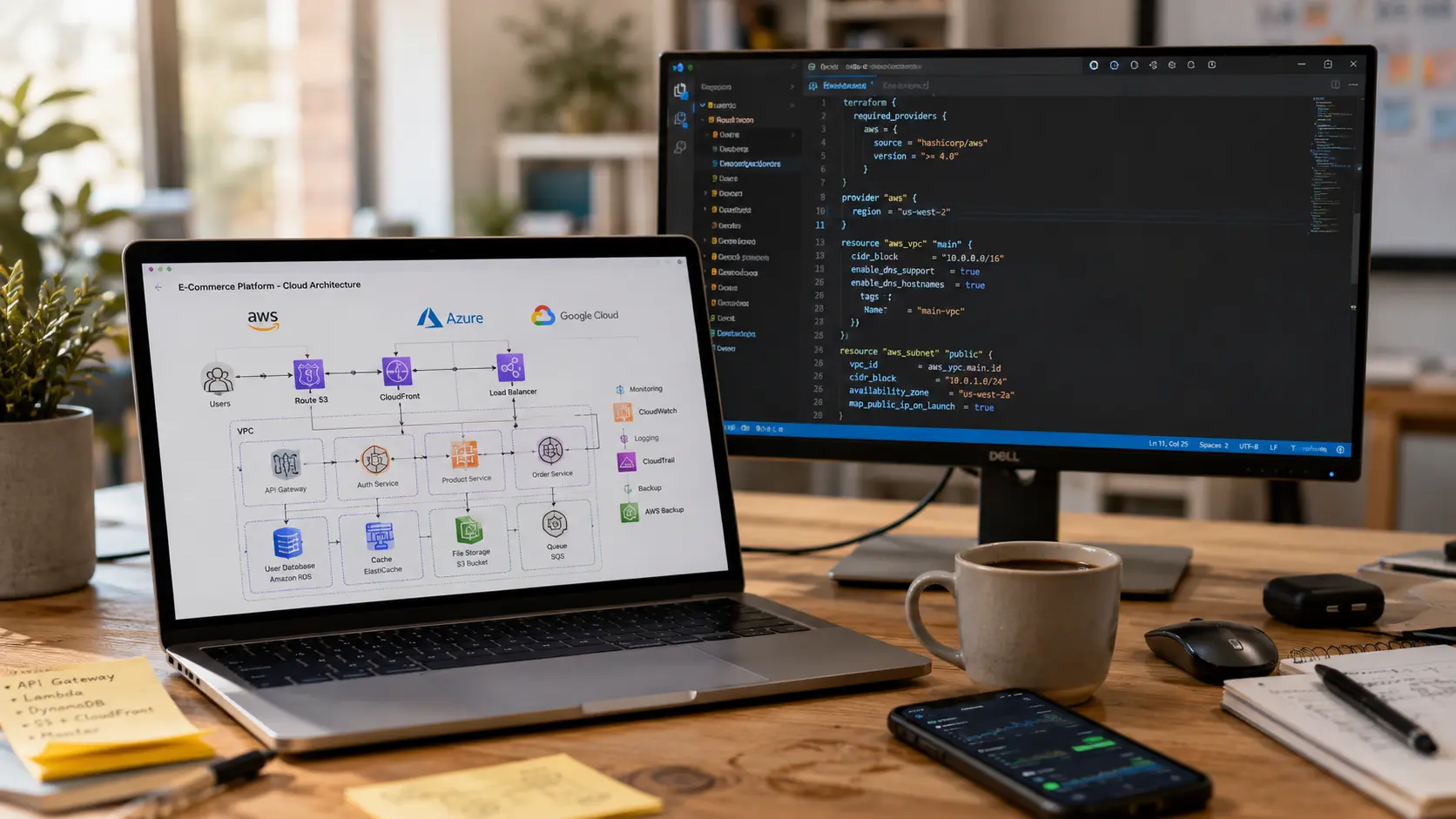
We automate your build, test, and deployment pipelines so your team can push updates daily instead of quarterly. We use Jenkins, GitLab CI, and Terraform.
Cloud Consulting & Strategy
We assess your systems, recommend the right platform, design your architecture, and provide cost analysis before you commit to development. Best for companies still evaluating cloud options.
Ongoing Support & Maintenance
We provide 24/7 monitoring, performance tuning, bug fixes, and feature updates after launch. Most clients keep us on retainer for long-term support.
Not sure which service fits your situation? Book a free 30-minute consultation and we’ll help you figure out the right approach based on your current setup and business goals.
GET IN TOUCH
What’s Included in Our Cloud Application Development Services
Why Companies Choose Cloud Development (And When It’s Not the Right Move)
Most companies move to cloud application development to achieve cost savings, cut infrastructure costs, and scale without buying new servers every six months. But cloud isn’t always the right answer, and we’ll tell you upfront if it’s not.
Here’s when cloud makes sense. You’re spending too much on on-premises hardware that sits idle most of the time. Your application needs to handle traffic spikes without crashing.
You want your team shipping updates weekly instead of waiting months for server provisioning. Or you need better disaster recovery and business continuity than your current backup system provides. Cloud-based applications can also make it easier to scale systems and maintain access to critical business services. Many clients also migrate to the cloud as part of their cloud-based ERP implementation to modernize their entire business operations.
Cloud-based software solutions give you those benefits without the capital expense of data center hardware.
We’ve also seen situations where the cloud doesn’t fit. If you have strict data residency requirements that mandate on-premises storage in specific countries, cloud gets complicated fast. Very small internal tools with five users sometimes cost more to run in the cloud than on a single server. And some legacy systems are so tightly coupled to specific hardware that migration would cost more than the system is worth.
Hybrid cloud setups work well when you need some workloads on premises and others in the cloud. We design those too when the situation calls for it.
What we don’t do is push enterprise cloud applications on companies that don’t need them. We assess your current infrastructure, your actual usage patterns, and your compliance requirements before recommending a direction. If cloud doesn’t make financial or technical sense for your situation, we’ll tell you during the consultation before you spend a dollar on development.
How Our Cloud Application Development Process Works (From First Call to Launch)
Most clients ask us what happens between signing the contract and launching their application. Here’s our five-phase cloud application development process with realistic timelines and what you’ll receive at each stage.
Phase 1: Discovery & Requirements (Weeks 1-2)
We start by interviewing your key stakeholders to understand business goals, user needs, and technical constraints. If you’re migrating an existing system, we assess your current infrastructure and data. You’ll receive a requirements document and feasibility analysis that defines exactly what we’re building.
What we need from you: About 2 to 3 hours of stakeholder time spread over two weeks, plus any existing system documentation if you have it.
Phase 2: Architecture & Planning (Weeks 2-3)
We design your cloud-native architecture, including platform choice (AWS, Azure, or Google Cloud Platform), database structure, API design, and security model. You’ll receive a detailed technical architecture document and a fixed-price proposal or time-and-materials estimate.
What we need from you: Approval of the architecture approach and budget before development starts. This is your checkpoint to ask questions and request changes.
Phase 3: Development & Testing (Months 2-4)
We build in two-week sprints with your development team working alongside automated testing, CI/CD pipeline setup, DevOps automation, and containerization. You’ll see working builds every two weeks so you can give feedback before we go too far in the wrong direction.
What we need from you: Feedback on demos and answers to questions that come up during development. Most of this happens async through Slack or email.
Phase 4: Deployment & Launch (Weeks 1-2 of Month 5)
We deploy to production using Terraform for Infrastructure as Code, run load testing, complete a security audit, and launch. You’ll receive the live application, admin training, and full documentation.
What we need from you: Final approval and go-live decision once you’ve tested everything in staging.
Phase 5: Post-Launch Support & Optimization (Ongoing)
We provide 24/7 monitoring, bug fixes, performance tuning, and cost optimization after launch. You’ll receive monthly performance reports and proactive issue resolution. Most clients stay on a support retainer for 12 months or longer because cloud infrastructure needs ongoing attention.
Typical timelines: A new cloud-native application takes 4 to 6 months from kickoff to launch. Application migration to the cloud usually runs 2 to 4 months, depending on data complexity and integration requirements.
Want to see how this cloud application development process would work for your specific project? Request a free project assessment and we’ll walk you through a customized timeline based on your current systems and goals.
Cloud Platforms We Specialize In
We work across AWS, Microsoft Azure, and Google Cloud Platform depending on what fits your technical requirements and business situation. Each platform has strengths in different areas, and we’ll recommend the one that makes the most sense for your project.
AWS Cloud Application Development
AWS works best when you need the broadest service catalog and fastest scaling. We build AWS cloud application development services using Lambda for serverless functions, EC2 for compute, RDS and DynamoDB for databases, S3 for storage, and EKS for Kubernetes orchestration. Most SaaS startups and mid-market companies choose AWS because the third-party integration ecosystem is mature and well documented.
Microsoft Azure Cloud Development
Azure makes sense if you’re already invested in the Microsoft stack like Office 365, Active Directory, or .NET applications. We use Azure Functions, App Service, Cosmos DB, and Azure Kubernetes Service for cloud application development services with .NET and Microsoft environments. Enterprise companies with existing Microsoft licensing often see better ROI staying in the Azure ecosystem.
Google Cloud Platform Development
Google Cloud Platform excels at data-heavy workloads, machine learning applications, and cost efficiency for specific use cases. We build Google Cloud application development services using Cloud Run, BigQuery, Cloud Functions, and GKE. Analytics platforms and AI applications benefit most from GCP’s data processing capabilities.
Multi-Cloud & Hybrid Cloud Solutions
Some situations call for a multi-cloud strategy across AWS and GCP for redundancy or hybrid cloud setups that keep sensitive data on-premises while running applications in the cloud. The Google Cloud Architecture Framework provides excellent guidance on designing resilient multi-cloud systems. We design cloud-native application development services that work across platforms using Kubernetes, Docker, and Terraform so you’re not locked into one vendor.
Why Businesses Trust Us With Their Cloud Projects
We work with both startups scaling fast and enterprise clients modernizing legacy systems. Both types need a trusted cloud application development company that won’t disappear mid-project or leave them with undocumented code.
Our team holds current certifications across AWS, Azure, and Google Cloud Platform. Not expired ones from two years ago. We build enterprise cloud applications in industries where cloud security actually matters: healthcare systems with patient data, fintech platforms processing payments, and SaaS companies with strict uptime requirements.
When clients ask about SOC 2, HIPAA, or GDPR compliance, we don’t scramble to research it. We build those requirements into the architecture from day one.
Most clients stay with us long after launch. Why? Because we document everything properly, respond the same day, and don’t vanish once you’ve paid the final invoice. We serve startups and enterprise clients across healthcare, financial services, logistics, and technology.
Before you hire any cloud application development company, ask to see code repositories, meet the actual developers assigned to your project, and call references. We encourage all three.
What Cloud Application Development Actually Costs (And What Affects Price)
Most companies shopping for cloud application development services ask about cost in the first call. Here’s what drives the price.
Project complexity matters most. Simple database migration to AWS costs far less than building a custom SaaS platform. Straightforward migrations run from PKR 25,000 to 30,000. Custom cloud-native applications with authentication, payments, and integrations cost 30,000 to 35,000. Enterprise SaaS platforms start around 20,000.
The timeline affects team size. Need it in three months instead of six? We need more developers working in parallel, which costs more.
Platform choice matters. Some platforms have higher licensing or configuration costs. Google Cloud Platform often runs cheaper for data workloads, but AWS has better tooling for some use cases.
Ongoing costs are separate. After launch you pay for infrastructure like hosting, storage, and bandwidth, plus optional support. Most clients budget 20,000 to 30,000 monthly for infrastructure.
Your actual cost depends on your requirements. Affordable cloud-integrated web application development services vary based on scope, and cost optimization during the build saves more than optimization later. Request a free estimate and we’ll break down the numbers for your specific situation.
GET IN TOUCH
What Cloud Application Development Actually Costs
How We Minimize Risk During Cloud Migration
The biggest fear with application migration to the cloud is “What if something breaks and we lose data or can’t serve customers?” We run parallel systems and test everything twice before touching your production environment.
Here’s exactly how we protect your business during migration. Phased approach, not big bang. We migrate one component at a time instead of moving everything at once. Your current system keeps running normally while we build and test the cloud version alongside it.
Parallel systems until cutover. Both old and new systems run simultaneously for days or weeks before we switch traffic over. If anything goes wrong with the cloud deployment, we immediately route everything back to your existing system.
Comprehensive data validation. We verify every database record, every file, and every integration point transfers correctly. Data integrity checks run automatically, and we manually spot-check critical data before declaring any phase complete.
Tested rollback procedures. Before we start, we document exactly how to reverse every step. Not just theory, we practice the rollback process in our staging environment so we know it works under pressure.
Off-hours deployment scheduling. Final cutover happens when your business impact is minimal, usually on weekends or after business hours, depending on your customer base.
Our cloud migration services have completed migrations for companies processing thousands of transactions daily. Average total downtime during cutover: under two hours. And we’ve never lost client data during a migration.
Which is exactly why we insist on this process even when clients want to “move faster.”
Cloud Application Development FAQs
How long does a typical cloud application development project take?
The timeline depends on project complexity. Cloud migration takes 2 to 4 months. Custom cloud-native applications need 4 to 6 months. Enterprise SaaS platforms require 6 to 12 months. Your specific timeline varies based on scope, team size, and how quickly you provide feedback during development sprints.
How much does cloud application development cost?
Simple cloud migration costs 25,000 to 30,000. Custom cloud applications run 30,000 to 35,000. Enterprise platforms start around 20,000. Final cost depends on complexity, timeline, platform choice, and team size. Request a free estimate for a detailed breakdown based on your specific requirements.
Which cloud platform is right for my business: AWS, Azure, or Google Cloud?
AWS offers the broadest service catalog and mature ecosystem. Microsoft Azure works best if you use it. NET, Office 365, or Active Directory. Google Cloud Platform excels at data analytics and machine learning workloads. Most companies default to AWS unless they have specific Microsoft or data requirements.
What if cloud migration breaks our current system or causes downtime?
We prevent this with phased migration, parallel systems during cutover, comprehensive testing, and tested rollback procedures. Your current system keeps running while we build the cloud version. Average downtime during final cutover: under two hours, scheduled during off-peak times.
Do we need to hire in-house cloud engineers, or can you handle everything?
We handle the complete cloud application development process. You need 2 to 3 stakeholders available for weekly demos and feedback, typically 2 to 3 hours per week total. After launch, you can stay on our support retainer or transition to your team.
Ready to Start Your Cloud Application Project?
Whether you need cloud migration or custom application development, we handle the technical complexity so you can focus on your business. Our cloud application consulting starts with an honest assessment of whether cloud development makes sense for your specific situation.
Request a free project consultation. When you contact us, we’ll schedule a 30-minute call to discuss your current setup and project goals. No sales pitch or pressure, just a straightforward technical conversation about what you’re trying to accomplish and whether cloud application development services fit your needs.
If we’re a good match, you’ll receive a detailed project proposal within five business days. The proposal includes a timeline, cost breakdown, platform recommendation, and next steps.
Call us at [phone number] or fill out the form below. We respond to all inquiries within 24 hours and can usually schedule initial consultations within 48 hours.
GET IN TOUCH