
AI Agents for Real Estate in Pakistan Custom Development by Tecveq

Turn Your WhatsApp Into a 24/7 Lead-Booking Machine Here is what most Pakistani real estate agencies discover the hard way. A buyer messages your WhatsApp at 11 PM: “DHA Phase 6 mein 10 marla plot available hai? Rate kya hai?” Your chatbot replies: “Thank you for your inquiry. Our agent will get back to you within 24 hours.” The buyer opens the next agency’s WhatsApp and asks the same question. That agency – using Tecveq’s AI agent – answers in 9 seconds with the plot availability, current price, a location pin, and a message that says: “I can book a site visit for you this Saturday at 10 AM. Shall I confirm?” The buyer books with them. Not because your plot was worse. Because your response came 9 hours too late. That gap between a basic chatbot and a custom-built AI agent is not a small technical difference. It is the difference between a missed lead and a booked viewing. At Tecveq, we build AI agents specifically for Pakistani real estate agencies – systems that don’t just answer questions, but qualify leads, book viewings, and update your CRM automatically. In Urdu, Roman Urdu, and English. At 11 PM. On Eid holidays. Every single time. The Chatbot That Frustrates Buyers vs. The AI Agent We Build for You A basic chatbot is reactive. It waits for a question, matches it to a scripted response, and stops there. The conversation is done. The lead sits in a queue waiting for a human to follow up tomorrow morning, or the morning after. The AI agents Tecveq builds work differently. Our system reads the buyer’s message, understands the intent behind it, pulls live property data from your inventory, qualifies the buyer through a natural back-and-forth conversation, books the viewing, updates your CRM record automatically, and sends a WhatsApp confirmation. All of this happens in one conversation. At 11 PM. Without anyone on your team touching it. This is what conversational AI real estate technology actually makes possible when it is built properly for a sales workflow, not just customer support. The buyer never feels like they are talking to software. They feel like they reached someone who knew exactly what they needed and got it done immediately. That’s what we build. That’s what Tecveq delivers. ⚡ GET IN TOUCH Get Your Free AI Readiness Assessment for Pakistani Real Estate Agencies 💬 Chat on WhatsApp 📞 Call 0307 3319555 What Our AI Agents for Real Estate in Pakistan Do That Basic Chatbots Cannot Here’s a direct comparison across the six dimensions that matter most for a Pakistani real estate agency and what we build differently at Tecveq. Dimension Basic Chatbot Tecveq AI Agent Response type Reactive – only answers what it’s directly asked Proactive – asks qualification questions, offers property matches, and suggests next steps without being prompted Task complexity Single-step – one question, one scripted reply, conversation ends Multi-step autonomous – qualifies the lead, matches the property, books the viewing, updates the CRM, sends confirmation, all in one conversation CRM update Manual – your agent copies lead details into the system the next morning Automatic – every conversation is logged, tagged, and synced to your CRM in real time, no manual data entry Language support English only, or broken Urdu through generic translation that misreads real estate terms Full Urdu, Roman Urdu, and English, trained specifically on Pakistani property vocabulary so it understands marla, kanal, possession, registry, and NOC correctly Buyer memory Forgets after every session – buyer has to repeat their requirements each time Remembers buyer preferences across conversations – returning buyers pick up exactly where they left off Escalation logic No handoff system — buyer gets a dead end or waits indefinitely Smart human handoff — when a question falls outside the AI’s confidence threshold, it connects the buyer to a specific agent with full conversation context already transferred The reason AI agents for real estate in Pakistan outperform basic chatbots isn’t the technology alone — it’s the workflow design behind it. A chatbot is a response machine. What Tecveq builds is a virtual property assistant that completes actual sales tasks from start to finish. The natural language processing behind our AI agents for real estate in Pakistan what the technology community calls an LLM, or large language model lets the AI read intent, not just keywords. When a buyer types “chahiye mujhe ek ghar DHA mein, 2 crore se kam,” our AI doesn’t need an exact script match. It reads the intent, identifies the price ceiling and location preference, and starts qualifying the lead naturally. Here’s the part we think matters most, and it’s why agencies come to us instead of a generic platform: The technology itself isn’t the hard part. Building it specifically for how Pakistani real estate agencies actually operate — your WhatsApp workflow, your local property terminology, your CRM setup, your lead routing logic — is the part most off-the-shelf tools completely miss. That’s the gap Tecveq closes. That’s what we build for you. Next, let’s look at exactly where Pakistani agencies are losing time and money every single day — and how our AI agents for real estate in Pakistan fix each of those problems for you The Daily Bottlenecks Costing Pakistani Real Estate Agencies Qualified Leads Every Week Every agency owner I speak to describes the same situation in slightly different words. The leads are there. The WhatsApp messages are coming in. But somewhere between the inquiry arriving and the agent responding, buyers disappear. They do not wait. They message three agencies at once and book with whoever answers first. In Pakistani real estate, that window is often less than an hour. Here are the five bottlenecks I see costing agencies the most. Not in theory. In actual lost leads and wasted agent hours every single week. Bottleneck 1: After-Hours WhatsApp Inquiries Go Unanswered The majority of serious property inquiries in Pakistan arrive between 8 PM and midnight. Buyers are done with work, sitting at home, and finally have time to research. Your agents are not at their desks. The WhatsApp messages
Best Software House in Bahrain: Why Tecveq Leads in 2026

Bahrain’s Software Industry in 2026: What’s Driving Demand For businesses looking to turn an idea into a working product, choosing among the software development companies in Bahrain can be just as important as defining the product itself. The right development partner should bring technical expertise, a clear development process, reliable project management, and an understanding of Bahrain’s regulatory and business environment. Fintech Growth & Open Banking in Bahrain Bahrain was the first country in the region to launch an open banking framework, and that head start still shows. The Central Bank of Bahrain runs a regulatory sandbox that lets fintech companies test technology-based solutions for up to a year under direct supervision before going live. That single decision back in 2017 changed what “building software in Bahrain” actually means today. The numbers back this up. Bahrain now hosts more than 100 fintech firms and digital financial service providers, a four-fold increase from the 25 companies in the sandbox four years earlier. And this growth isn’t slowing down. The fintech market itself is projected to grow from $1.4 billion to $5 billion by 2033, spanning payments, digital banking, and wealthtech. We build with this regulatory reality in mind, not around it. A payments feature that works in most markets can still fail a CBB compliance review if the data flow isn’t structured correctly from day one. Bahrain’s software industry is expanding as fintech, government digital transformation, and startups create demand for new digital products. For businesses planning a new platform, application, or internal system, the challenge is not simply finding developers. It is choosing a software development company that understands the local market, can manage the development process properly, and can build software that is secure, scalable, and practical to operate. We see this in our conversations with founders and businesses in Bahrain. Many already know what they want to build; the harder part is turning that idea into a properly scoped development project with the right technology, timeline, and team. Government Digital Transformation (iGA Initiatives) Bahrain’s government has made digital delivery a national priority, not a side project. Non-oil sectors reached 85% of GDP in 2026, with financial services accounting for 17% of that output, driven partly by the Kingdom’s unified oversight model and early-mover advantage in open banking. That kind of economic shift creates real work. Government-adjacent projects, licensing portals, and digital identity systems all need software teams who understand the compliance layer, not just the code layer. We’ve had more of these conversations in the past year than in the three before it combined. Rising Startup Ecosystem in Manama & Seef Startups in Manama and Seef aren’t waiting around for perfect conditions anymore. They’re building now, with smaller teams and tighter runways than five years ago. The country’s appeal lies in a single regulator, fast approvals, and a supportive ecosystem, which lets companies move from pilot to production quickly. That speed matters more to a founder than almost anything else we hear in early calls. Slow approval cycles kill momentum. Bahrain’s structure is built to avoid that trap, and it’s part of why we see so many MVP requests coming out of Seef specifically. Key Regulations Every Business Should Know Before Hiring a Software House Most businesses hiring a software house in Bahrain never ask about compliance until something breaks. We ask about it in the first call. Bahrain runs three separate regulatory layers that touch software projects, and skipping any one of them can turn a working product into a legal problem after launch. Central Bank of Bahrain (CBB) Compliance for Fintech Software If your software touches payments, banking data, or customer financial information, the CBB has a say in how it’s built. The Central Bank of Bahrain runs a regulatory sandbox that lets fintech companies test technology-based solutions for up to a year under direct supervision before going live. That’s not a formality. It’s the actual path most fintech products in Bahrain go through before launch. Bahrain was also the first country in the region to roll out an open banking framework, back in 2018. What that means for you: any software handling customer bank data needs to work within API standards. the CBB already set, not standards we invent on the fly. We map this out before writing a single line of code. Not after. iGA Data Residency & Security Standards Bahrain’s government follows a Cloud First Policy, which means public sector agencies must evaluate cloud solutions first for any ICT procurement, weighing security, cost, and fitness for purpose. If you’re building software for a government client, or even just working near one, this policy shapes what infrastructure choices are acceptable from day one. The policy treats security as shared responsibility. The Information and eGovernment Authority sets the security controls, the contracting agency aligns to them, and the cloud provider handles the underlying infrastructure security. Practically, this means most Bahrain-facing workloads run best on infrastructure with an in-country presence, such as AWS’s Bahrain region, rather than being routed through servers with no local footprint. This isn’t a box to check at the end. Get the hosting decision wrong early and you’ll be migrating later, on someone else’s timeline. NCSC Cybersecurity Requirements Bahrain’s National Cyber Security Center sets the baseline every organization in the Kingdom is expected to meet, and that baseline has been getting stricter each year. The NCSC’s current national strategy, running through 2028, is built around active risk management and continuous compliance, not a one-time audit. Organizations working in regulated sectors, financial services, healthcare, and government services, among them, are expected to follow documented, evidence-backed security practices, not just written policies. If a breach happens and there’s no proof the controls were actually working in practice, documentation alone won’t protect you. We build with these controls in mind from the architecture stage. Not bolted on afterward as a patch. Tecveq Company Profile Our projects are supported by a team of experts across software development, AI, cloud infrastructure, and compliance. That combination allows us to
Custom Software Development Company for Complex Projects
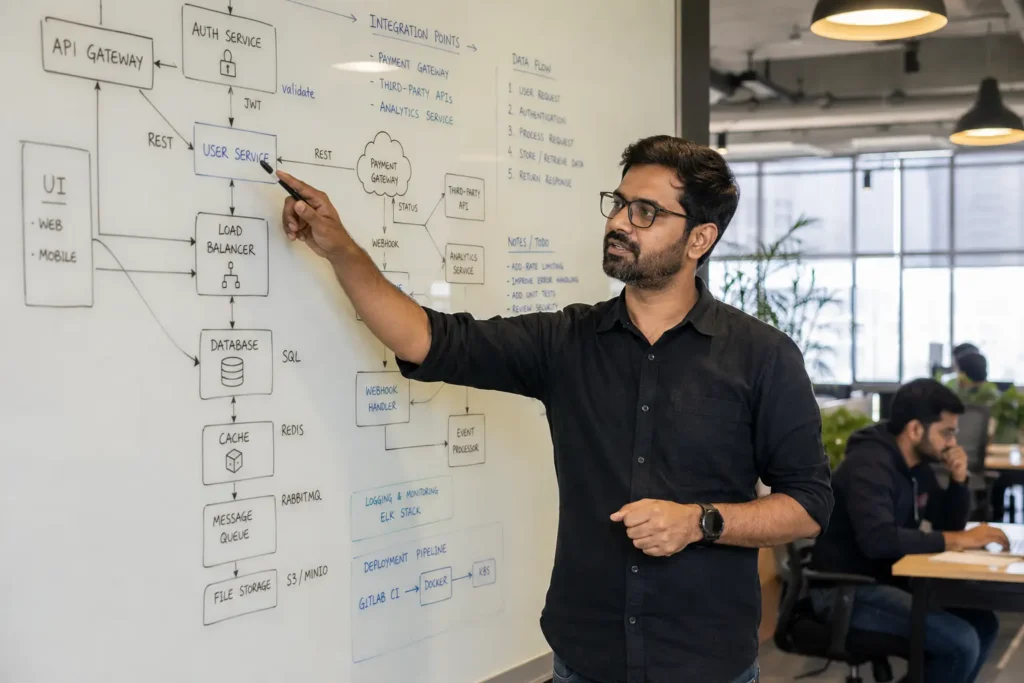
andWhat Makes a Software Project Complex And Why It Needs the Right Partner Most software problems are simple on the surface and messy underneath. A project becomes complex the moment it touches more than one system, more than one team, or more than one point of failure. That’s the line where a general-purpose developer starts guessing and a specialized team starts architecting. We define a complex software project as one where the code is only part of the challenge. The harder work is everything around it: legacy systems that can’t go down during migration, regulatory requirements that change what “correct” means, or a data pipeline where one bad assumption breaks five other things downstream. That’s where AI features are only as useful as the data pipeline behind them. We build that foundation first, because a model trained on incomplete or inconsistent data can produce confident but unreliable results. For projects involving generative AI, machine learning, or data analytics, that means designing the data collection, validation, storage, and processing layers before choosing the technology that sits on top of them. become valuable—not simply for writing code, but for designing the architecture, integrations, security, and workflows that allow the software to work reliably within a specific business. Here’s what that looks like in practice. A retail client needing a new checkout flow is not complex. The same client needing that checkout flow to sync inventory across three warehouses, two currencies, and a legacy ERP built in 2011 that’s complex. Same industry. Completely different engagement. Project management is what keeps all of those technical pieces moving in the same direction. On complex builds, that means keeping requirements, development, QA, security, infrastructure, dependencies, timelines, and stakeholder decisions visible throughout the project. Our delivery team uses sprint planning, regular reviews, milestone tracking, and ongoing communication so technical problems don’t quietly become project delays. ⚡ GET IN TOUCH Ready to build it right the first time? Start with a free project assessment honest scope, realistic timeline, no guesswork. 💬 Chat on WhatsApp 📞 Call 0307 3319555 Signs your project requires specialized complex-systems expertise You’ll usually know it’s complex before a single line of code gets written. A few honest signals: If two or more of these apply, you’re not looking for a freelancer or a small dev shop working solo. You’re looking for a team that can do solution architecture before touching a keyboard. We ask a blunt question early in every complex engagement: what happens if this breaks at 2 AM and nobody’s watching? If the client can’t answer that, we build the answer together before we scope the build. Common risks of choosing the wrong partner for complex builds Here’s what actually goes wrong. We’ve inherited enough half-finished projects to know the pattern. phase,The most common mistake is hiring based on speed instead of architecture. A team that promises a fast timeline on a complex system is usually skipping the discovery phase and discovery is exactly where complexity gets identified and planned for, not avoided. The second mistake is worse: no documentation. We’ve taken over systems where the only person who understood how three modules talked to each other had already left the company. Nobody could touch the code without breaking something invisible. it andAnd the third one costs the most money. Teams that don’t design for scale from day one end up rebuilding the same system twice: once to launch it, and once to fix it when it can’t handle real usage. documentation,None of these are hypothetical. They’re the reason enterprise software development for complex systems needs a different process than a standard build: heavier discovery, clearer documentation and architecture decisions made before deadlines start driving them. Tecveq Company & Services Table Company Name Tecveq Address M3CH+JG7, Farid Town, Sahiwal, 57000 Phone 0307 3319555 Email info@tecveq.com Website tecveq.com Services Custom Software Development, Enterprise Software Development, Legacy System Modernization, API Integration, AI & Data Applications, Cloud Infrastructure, Healthcare App Development, ERP Software Development, CRM Development, Mobile App Development (React Native & Flutter), Ecommerce App Development, Shopify Development, Next.js Development, Web App Development, Logistics Software, AI Chatbot Development, WhatsApp Automation, LMS Development, SEO Services, Digital Marketing, Graphic Design & Web Design Best For Complex, Large-Scale & Mission Critical Software Projects Our Complex Software Development Services Our custom application development work covers business platforms, enterprise applications, internal tools, mobile applications, customer-facing systems, and software that needs to integrate with existing infrastructure. Complex projects rarely fail because of bad code. They fail because nobody mapped the dependencies before building started. Here’s how we handle the six areas that come up most often when a project outgrows a simple build. Depending on the project, we are a top custom software development company that may include web platforms, enterprise systems, mobile applications, internal business tools, or software that connects multiple existing systems. Enterprise Software Development Enterprise software has to work for hundreds of people at once, not just look good in a demo. According to Gartner’s research on enterprise application trends, scalability and multi-user architecture are among the top factors that differentiate enterprise systems from standard applications. We build systems where different departments use the same platform for completely different jobs, and every one of those jobs still has to run without stepping on the others. That means role-based access controls done properly, not bolted on after launch. It means an architecture that can add a new department’s workflow without touching what the last department already relies on. Most enterprise failures we’ve seen trace back to one thing: the system was designed for the first fifty users, not the next five hundred. Legacy System Modernization & Migration Migrating off an old system while it’s still running the business is one of the riskiest jobs in software. We treat legacy modernization as a live-wire project, because that’s exactly what it is. We don’t rip and replace on day one. Legacy ERP systems present some of the most challenging modernization scenarios we encounter. If you’re running outdated accounting or resource planning
Complete Shop Management System Built for Pakistani Retail Businesses
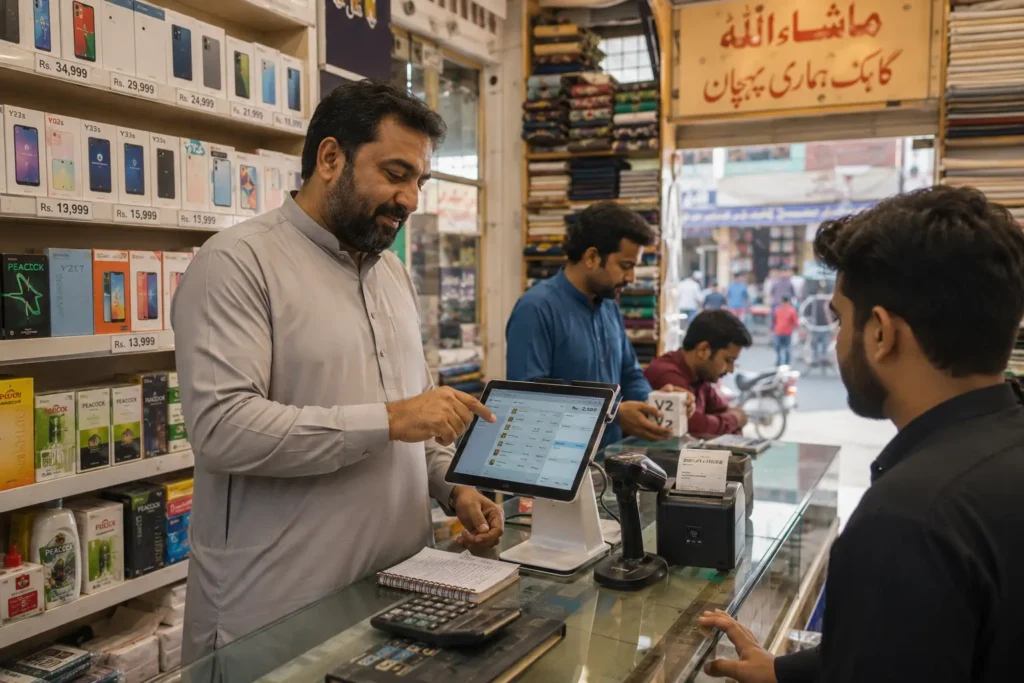
Stop Losing Money to Manual Record Keeping and Stock Confusion It’s closing time, and you’re still here two hours later, trying to figure out why your cash register shows PKR 45,000, but you only have PKR 42,500 in hand. The numbers in your notebook don’t match the stock on your shelves. Again. You’ve counted the inventory three times, and you’re still missing items. Meanwhile, your family is waiting for you at home, and you haven’t even started calculating today’s actual profit yet. This happens almost every day. A customer asks for a popular item, and you realize it’s out of stock, but you had no idea until that moment. You’ve spent over PKR 30,000 this month on expenses, but you can’t remember exactly where all that money went because the receipts are scattered across five different notebooks. Your staff occasionally gives discounts to friends without telling you. And every time you think about an FBR inspection, your stomach tightens because you know your records are a mess of loose papers and half-completed khata entries. You’re working harder than ever, but you have no clear picture of whether you’re actually making money or just staying busy. You can see your revenue, but your real profit? That’s a guess. The chaos of manual tracking is costing you money every single day through lost sales, inventory errors, untracked expenses, and time you’ll never get back. There’s a better way. TecVeq Shop Management Software – Company Details Company Details Information Company Name TecVeq—Shop Management Software Pakistan Headquarters sahiwal Pakistan Service Locations M3CH+JG7, Farid Town, Sahiwal, 57000 Contact Number 0307 3319555 (Call/WhatsApp) Languages Supported Urdu, English (Training & Support) Core Services Shop Management System, POS & Billing Software, Inventory Management, Multi-Branch Management, FBR-Compliant Digital Invoicing, Staff & Sales Tracking, Expense Management, Customer Management (CRM) Shop Types Supported Mobile Shops (IMEI Tracking), Grocery & General Stores, Tailor & Boutique Shops, Bakery & Sweet Shops, Pharmacy & Medical Stores, Clothing & Apparel Stores, Electronics Shops, Wholesale Distribution Technology Stack Cloud-Based Architecture, Offline Mode Support, Mobile App (Android/iOS), Web Dashboard, Barcode Scanner Integration, Thermal Printer Support, Real-time Data Sync, Bank-Level Security & Encryption Pricing Starting PKR 15,000/month—Free 14-Day Trial (No Credit Card Required), No Setup Fees, No Long-term Contracts, Transparent PKR Pricing, Custom Quotes for Multi-Branch Key Features Works During Load-Shedding (Offline Mode), FBR Digital Invoicing Compliant, Real-time Inventory Alerts, Daily Profit/Loss Reports, Multi-User Staff Access, WhatsApp Integration, Data Export & Backup, 24/7 Local Support Support Pakistan-Based Support Team, On-site Training (Major Cities), Video Call Training Available, WhatsApp Support Channel, Free Software Updates, 6 Days/Week Support What Is Shop Management Software (And Why Pakistani Retailers Need It Now) Shop management software is a digital system that replaces your manual registers, stock notebooks, and scattered expense records with one organized platform. It works as an inventory management system as well as a complete business assistant, keeping your sales, stock, expenses, and customer records organized in one place. It automatically records every sale as it happens, tracks exactly what’s in stock, shows you where every rupee is going, and generates FBR-ready invoices without you having to calculate anything manually This isn’t complicated technology designed for computer experts. Our POS software in Pakistan works as a complete point of sale system built specifically for busy shop owners who need to focus on customers, not fight with difficult technology. When you make a sale, the software updates your inventory instantly. When you buy new stock, it tracks your expenses automatically. When you need to see your daily profit, the numbers are already calculated and waiting for you But why is every smart retailer in Pakistan switching to shop management systems right now? Three reasons you can’t ignore. First, FBR is requiring digital invoicing and proper tax records according to the latest FBR digital invoicing guidelines. Manual Khata books won’t protect you during inspections anymore. Second, your competitors are already using billing and invoicing software to serve customers faster and track their profits more accurately. And third, customers expect quick service. When you’re still calculating prices with a calculator while the shop next door has instant billing, you lose sales. The cost of staying manual is getting higher every month. Every inventory error costs you money. Every untracked expense reduces your real profit. Every extra hour you spend on closing calculations is time away from your family. Here’s what our cloud-based retail software does for Pakistani shop owners who make the switch. ⚡ GET IN TOUCH Get FBR-Compliant Invoices + Offline POS System in Pakistan – No Credit Card Required for Free Trial 💬 Chat on WhatsApp 📞 Call 0307 3319555 How Our Shop Management System Solves Every Daily Challenge Ourshop management system in pakistan was built specifically to solve the exact problems you face every single day. We didn’t create another generic software package. We studied Pakistani retail challenges and designed every feature around the real issues that cost you time and money. Inventory Chaos Becomes Crystal Clear ControlYour current problem: Closing takes forever because manual counting never matches your register. The Tecveq system records every transaction automatically and gives you real-time sales totals as transactions happen. The outcome? You get complete sales tracking and daily profit reports with two clicks, so you’re home with your family in ten minutes instead of two hours Two-Hour Closing Time Becomes Ten-Minute ReportsYour current problem: Closing takes forever because manual counting never matches your register. The Tecveq system records every transaction automatically and calculates your daily totals in real time. The outcome? You get complete sales tracking and daily profit reports with two clicks, so you’re home with your family in ten minutes instead of two hours. Cash Confusion Becomes a Clear Financial PictureYour current problem: You can’t track where PKR 30,000+ in monthly expenses actually went. Our expense tracking feature records every purchase and categorizes your spending automatically. The outcome? You see exactly where every rupee goes and know your real profit every single day, not just your revenue. FBR Anxiety Becomes Automatic ComplianceYour
Shopify Development Company Built for Stores That Actually Convert

What You Get When You Hire Our Shopify Development Team We build, migrate, and fix Shopify stores for e-commerce brands that need a team who actually finishes the job right. Not a freelancer disappearing halfway through. Not a template dressed up as custom work. A shopify development company should do more than write code. We plan the store around how your customers actually shop, build the theme so it loads fast on a phone, and connect the tools your business already runs on. Then we test everything before it ever touches your live site. Most online retailers come to us after a bad experience somewhere else. Missed deadlines. Vague pricing. A developer who stopped answering messages after the deposit cleared. We work differently. You get a clear scope before we start, regular updates while we build, and a store that is genuinely yours to run once we hand it over. Have a project in mind? Send us a few details and we will tell you honestly whether we are the right fit. ⚡ GET IN TOUCH Real Shopify developers. Real timelines. Real answers get your free quote today 💬 Chat on WhatsApp 📞 Call 0307 3319555 Why Most Shopify Stores Underperform After Launch Most stores that lose sales after launch have the same three problems, and none of them are about the products. The first is checkout friction. A customer adds something to their cart, gets to payment, and leaves. Sometimes it is a form asking for too much information. Sometimes it is a payment method they do not trust or do not have. Every extra step at checkout is a chance for someone to change their mind, which is exactly why cart abandonment reduction has to be part of the build, not an afterthought bolted on later. The second is speed. A theme loaded with apps and animations might look impressive on a fast office connection. On a customer’s phone, on real mobile data, it can take several seconds just to show the first product image. Page load speed optimization is not a nice extra, and it directly affects your rankings too, which is one of the first things we check as part of ecommerce SEO services. Slower stores lose visitors before they ever see what is for sale. The third is technical debt. A store built quickly, without a real plan for growth, ends up patched together over time. New features get bolted onto the wrong foundation. Eventually something breaks, or average order value quietly drops because upsells and bundles were never designed to work with the theme in the first place. We see this pattern often enough that we plan around it from day one, not after the store is already losing money. Company Overview Detail Information Company Name Tecveq Address M3CH+JG7, Farid Town, Sahiwal, 57000 Location Serving clients across Pakistan, USA, UK, and Middle East Phone Number 0307 3319555 Email info@tecveq.com Website tecveq.com Working Hours Monday to Friday, 9AM to 6PM PKT Business Type Shopify Development Company / Software House Our Shopify Development Services Every project starts with the same question. What is actually going to move the needle for this store, and what is just going to look nice in a proposal. From there we handle shopify store setup, custom development, migrations, and the ongoing work that keeps a store fast and selling. Here is what that looks like broken down by service. Store Setup and Custom Theme Development We build stores from the ground up using custom Liquid development, not a stock theme with your logo dropped on top. Our theme customizations cover product pages, navigation, checkout, and other storefront elements around how your specific customers actually shop. For businesses that need more than an off-the-shelf design, we can also build a custom Shopify theme around the store’s actual requirements. Off-the-shelf themes are fine for a quick launch. But they rarely hold up once you start adding products, apps, and features the theme was never designed for. A custom Shopify setup gives you more control when the store needs specific layouts, functionality, or customer journeys that a standard theme cannot handle. App Development and Third-Party Integrations Sometimes the Shopify app store already has what you need. Other times it does not, and that is where a custom app can make more sense. Instead of forcing your business into an existing tool, our development agency can build the functionality around the way your store actually operates. We build apps for specific business needs and connect the ecommerce integrations that keep your store, inventory, and marketing tools talking to each other. Inventory systems, email platforms, loyalty programs, whatever your business already runs on, we make sure it works with your store instead of around it. For businesses juggling multiple platforms, our custom API integration services handle the connections that off-the-shelf apps usually cannot. Shopify Plus and Headless Commerce Shopify Plus solutions are built for stores handling serious order volume, multiple markets, or complex checkout rules that standard Shopify cannot support. This is where automation and B2B features actually start to matter. For stores that need speed and flexibility beyond a standard storefront, we also build with headless commerce architecture. Not every store needs this. But for the ones that do, it is the difference between a site that keeps up and one that starts to strain under its own growth. ⚡ GET IN TOUCH Get a real Shopify quote no guesswork, no placeholder pricing. 💬 Chat on WhatsApp 📞 Call 0307 3319555 Store Migration to Shopify Moving platforms is one of the most common ways a store loses sales overnight, usually because something got left behind in the switch. We handle store migration to Shopify from WooCommerce, Magento, and other platforms, and we treat your product data, order history, and existing SEO rankings as things that cannot be lost along the way. Every migration gets tested before your old site goes dark. Not after. Shopify SEO and Conversion Rate Optimization Getting people to your store and getting them