Why Off-the-Shelf Logistics Software Falls Short
Generic logistics software can look like an efficient starting point, but it often becomes a limitation as logistics operations grow. We see this repeatedly when companies outgrow rigid platforms and need software that supports their actual logistics processes.
Off-the-shelf systems are designed for broad use. Custom software development for logistics company takes a different approach: the platform is designed around your workflows, integrations, fleet operations, customer requirements, and growth plans.
These systems break down when you need them most. During peak season rushes, generic software slows to a crawl. When you want to add a new service line or integrate with a key partner, you discover the platform cannot handle it without expensive third-party plugins that rarely work seamlessly.
The real problem runs deeper than features. Generic logistics software treats every company the same. But your 3PL operation has different needs than a last-mile delivery service or a freight brokerage. Your pricing models, customer requirements, and operational workflows are unique to your business.
We have built custom logistics platforms for companies frustrated with exactly these limitations. The difference is dramatic when software actually fits your processes instead of forcing you to change everything around the software.
Custom Software That Supports Business Growth
The value of custom logistics software is not limited to replacing manual tasks. A platform designed around your operations can give the business room to add customers, services, vehicles, carriers, and integrations without rebuilding the entire technology stack. As shipment volume increases, automation can reduce repetitive administrative work while centralized data gives managers better visibility into operational performance.
That scalability matters when technology becomes part of the company’s growth strategy rather than simply a tool for managing today’s workload.
GET IN TOUCH
Ready for automated logistics operations? Get your free Tecveq consultation.
What Custom Software Development for Logistics Companies Actually Delivers
Custom software development for logistics companies creates logistics software solutions around your operational requirements, customer needs, integrations, and growth plans. Instead of forcing your business to adapt to generic software, you can develop custom logistics software that fits the way your teams actually work.
This guide breaks down the essential features by development phase. Phase 1 covers the core functionality every logistics platform needs. Phase 2 adds advanced capabilities for scaling operations. We also cover the financial automation features, predictive AI capabilities, and technical architecture requirements that separate professional platforms from basic tracking tools.
Pricing Table: Custom Logistics Software Development
| Country | Currency | Basic MVP Package | Phase 2 Advanced | Full AI Suite |
|---|---|---|---|---|
| Pakistan | PKR | ₨500,000 | ₨850,000 | ₨1,250,000 |
| United States | USD | $1,000 | $1,975 | $4,375 |
| United Kingdom | GBP | £1,375 | £2,338 | £3,438 |
| Canada | CAD | $1,363 | $4,016 | $5,906 |
| Australia | AUD | $2,625 | $4,463 | $6,563 |
| UAE | AED | 6,425 | $10,923 | $16,063 |
| Saudi Arabia | SAR | 6,563 | $11,156 | $16,406 |
| Bahrain | BHD | 660 | $1,122 | $1,650 |
| Kuwait | KWD | 538 | $914 | $1,344 |
| Qatar | QAR | 6,375 | $10,838 | $15,938 |
Phase 1 Core Features Every Logistics Platform Needs (MVP)
These are the non-negotiables for a functional first release. We build every custom logistics platform starting with these six core features because they handle the daily operations that keep your business running.
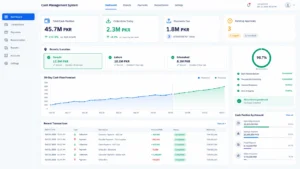
Real-Time Shipment Dashboard: centralized view of active, delayed and completed shipments
Your operations team needs one screen that shows everything happening right now. We build dashboards that display active shipments, flag delays automatically, and highlight completed deliveries in real time.
The dashboard shows which trucks are running late before your customers start calling. Color-coded status indicators make it easy for dispatchers to spot problems instantly. When a driver updates delivery status from their mobile app, the dashboard reflects that change immediately.
Most generic logistics software updates every 15 minutes. Our custom dashboards update within seconds of any status change.
ERP Data Synchronization: automated, bidirectional sync of bills of lading, orders and statuses
Your logistics platform must talk to your existing ERP system without manual data entry. We build automated sync connections that move bills of lading, order information, and delivery statuses between systems instantly.
When your sales team creates an order in your ERP, the logistics platform automatically creates the shipment record with all customer details, pickup location, and delivery requirements already filled in. When drivers mark deliveries complete, your ERP billing system gets updated automatically.
This eliminates the double data entry that wastes hours every day. And it prevents the pricing errors that happen when order details get typed wrong the second time.
Beyond basic data synchronization, many logistics companies need comprehensive business management solutions that handle accounting, inventory, and customer relationships alongside shipping operations.
Our cloud-based ERP implementation services help logistics businesses integrate their custom tracking platforms with enterprise-grade financial and operational systems. This creates a unified business management ecosystem where shipment data automatically flows into accounting, inventory updates trigger procurement workflows, and customer service teams access complete order histories without switching between multiple systems.
Milestone Status Tracking step-by-step shipment logs (Booked → In Transit → Customs → Out for Delivery)
Every shipment needs a clear progression from booking to final delivery. We configure milestone tracking that matches your specific operational workflow, whether that includes customs clearance, warehouse stops, or specialized handling steps.
Each milestone gets timestamped automatically when drivers update status or when GPS systems detect location changes. Your customers see exactly where their shipment stands without calling your office.
But here’s what most companies miss. The milestone system also tracks which steps take longer than expected, giving you data to optimize your routes and processes.
White-Label Customer Portal branded, secure login where clients track their own shipments
Your customers want to check shipment status themselves without calling your office every time. We build secure customer portals that carry your branding and give clients 24/7 access to their shipment information.
Customers log in with credentials you control and see only their own shipments. They can download delivery confirmations, view proof of delivery photos, and print shipping documents whenever needed.
The portal reduces customer service calls by handling routine status inquiries automatically. Your team spends less time answering “Where is my shipment?” questions and more time growing the business.
Automated Webhooks & APIs: Real-time tracking data feeds into customers’ own systems
Large customers want tracking data flowing directly into their own inventory management or procurement systems. We build webhook endpoints and REST APIs that push shipment updates to customer systems in real time.
When a delivery gets completed, their system knows immediately without anyone logging into a portal or making phone calls. This automation makes you the preferred carrier for customers who value seamless integration.
The API documentation we provide makes it simple for customer IT teams to connect their systems to yours.
Role-Based Access Control (RBAC) distinct permissions for dispatchers, drivers, customers, admins
Different users need different access levels to your logistics platform. We configure role-based permissions so dispatchers can create and modify shipments, drivers can only update status for their assigned loads, customers see only their own shipments, and administrators control user accounts.
This security structure prevents data breaches and keeps sensitive pricing information away from drivers and customers. It also creates an audit trail showing exactly who made which changes to shipment records.
The permission system grows with your team without compromising security or requiring system changes.
The logistics industry continues evolving rapidly with new technologies and operational challenges. According to the Council of Supply Chain Management Professionals, companies investing in custom technology solutions report 23% higher operational efficiency compared to those using generic platforms. This aligns with our experience building logistics software that addresses specific industry pain points rather than forcing businesses to adapt to inflexible systems.
Phase 2 Advanced Capabilities for Operational Scaling
Once the MVP is live, these features scale the platform with volume. We add Phase 2 capabilities when your business grows beyond what basic tracking can handle and you need mobile apps, automated alerts, and multi-carrier management.
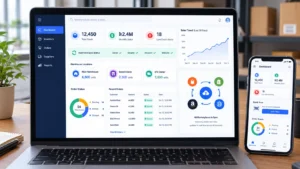
Driver Mobile Application cross-platform (iOS/Android), dispatch updates, offline logging, route viewing
Your drivers need a mobile app that works everywhere, even in dead zones where cell coverage drops out. We build cross-platform apps that run on both iPhone and Android devices with offline functionality built in.
The app stores status updates and delivery confirmations locally when drivers are in areas without internet access. When connection returns, all data syncs automatically to the main platform without any driver action required.
Drivers see their assigned routes with turn-by-turn directions, customer contact information, and special delivery instructions. They can update shipment status, capture proof of delivery, and communicate with dispatch directly through the app.
But here’s what separates our driver apps from basic tracking tools. The interface stays simple and fast even when managing complex multi-stop routes with different requirements for each delivery.
Your driver application can also become part of a broader fleet management system. Dispatchers can monitor vehicle locations, assigned shipments, driver status, route progress, and delivery exceptions from one operational interface. Instead of managing fleet information across separate tools, teams get a centralized view of vehicles and shipments while drivers continue working through a mobile application.
GET IN TOUCH
Stop losing customers to broken tracking. Build real logistics software with Tecveq.
Digital Proof of Delivery (ePOD) barcode scanning, cargo photo uploads, digital signature capture
Paper delivery receipts get lost, damaged, or forgotten. We build digital proof of delivery systems that capture barcode scans, cargo photos, and customer signatures directly on the driver’s mobile device.
The barcode scanner works with standard shipping labels and inventory tags, automatically recording package counts and serial numbers. Drivers photograph cargo condition before and after delivery to document any damage claims.
Customer signatures get captured on the mobile screen and immediately attached to the delivery record with GPS coordinates and timestamp. This eliminates disputes about delivery completion and provides legal documentation when needed.
All proof of delivery data uploads to your platform instantly and gets shared with customers through their portal access within minutes of delivery completion.
Live GPS Tracking & geofencing: real-time vehicle plotting with hub entry/exit alerts
Your customers want to see exactly where their shipments are right now, not where they were an hour ago. We implement live GPS tracking that updates vehicle locations every 30 seconds on interactive maps.
Geofencing technology creates virtual boundaries around your warehouses, customer locations, and key route points. The system sends automatic alerts when vehicles enter or exit these zones without any driver input required.
This gives you early warning when deliveries are running ahead of schedule or behind. It also provides security monitoring if vehicles deviate from planned routes or stop in unauthorized locations.
The GPS data feeds directly into your customer portal so they can watch their delivery approaching in real time.
Dynamic SMS & Email Alerts: automated customer notifications on milestone changes
Your customers should never have to call asking for updates. We configure automated notification systems that send SMS and email alerts whenever shipment status changes.
When a driver marks a package out for delivery, customers automatically receive a text message with the estimated arrival time. When delivery gets completed, they receive confirmation with proof of delivery documentation attached.
The notification system handles delivery exceptions too. If a package gets delayed due to traffic or weather, customers receive immediate updates explaining the situation and providing new estimated delivery times.
All notifications carry your company branding and include links back to your tracking portal for detailed shipment information.
Exception & Delay Management one-click flagging for traffic delays, damaged goods, missed windows
When problems happen during delivery, your team needs to document and resolve them quickly. We build exception management systems that let drivers flag issues with one tap and automatically notify the right people.
Traffic delays, damaged cargo, missed delivery windows, and customer availability issues all get categorized and tracked with specific resolution workflows. Dispatch teams see flagged exceptions immediately and can take corrective action before small problems become customer complaints.
The system tracks resolution times and root causes to help you identify patterns and prevent recurring issues. Which routes consistently have traffic problems? Which customers frequently miss delivery appointments?
Exception data also feeds into your billing system for accurate detention charges and delay documentation.
Multi-Carrier Aggregation: a single UI pulling tracking data from partner fleets, sea, and air freight
Most logistics companies work with partner carriers for specialized routes or overflow capacity. We build aggregation interfaces that pull tracking data from multiple carriers into your single platform view.
Your team manages shipments moving on your trucks, partner ground fleets, ocean freight, and air cargo through one unified dashboard. Customers see consistent tracking regardless of which carrier actually handles their freight.
The aggregation system translates different carrier status codes into your standard milestone format. A “departed terminal” update from an air carrier becomes “in transit” in your customer portal using your terminology.
This gives you complete visibility and control even when you don’t own every asset moving customer freight.
Financial & Commercial Automation Features
Logistics software isn’t just operational; it should also automate billing and revenue. We build financial automation features that eliminate manual invoicing, catch billing errors before they cost you money, and create new revenue streams from your existing data.
Automated Freight Auditing cross-checks carrier invoices against tracking logs to flag overcharges
Carrier invoices contain errors more often than most logistics companies realize. We build automated auditing systems that compare every line item on carrier bills against the actual tracking data and delivery records.
The system flags accessorial charges that don’t match documented events. If a carrier bills for detention time, the audit module checks GPS logs to verify your truck actually waited at that location for the claimed duration.
Fuel surcharge calculations get verified against actual route mileage and current fuel indexes. Weight-based charges get cross-checked against scale tickets and manifests to catch discrepancies.
But here’s the part that saves real money. The auditing happens automatically before you pay the invoice, not months later during a manual review. You catch overcharges while you still have leverage to dispute them.
Most clients recover the development cost within the first year just from prevented overcharges and corrected billing errors.
Instant Customer Invoicing auto-generates and emails invoices the moment ePOD is signed
Manual invoicing delays cash flow and creates opportunities for billing mistakes. We build automated invoicing systems that generate and send customer invoices within minutes of delivery completion.
When a driver captures digital proof of delivery, the system automatically pulls pricing data from your rate tables, calculates any accessorial charges based on actual delivery events, and generates a complete invoice with all supporting documentation attached.
The invoice gets emailed directly to your customer’s accounts payable team with delivery confirmation, photos, and signature documentation included. Your customer receives everything they need to process payment immediately.
This eliminates the week-long delay between delivery and invoicing that most logistics companies accept as normal. Faster invoicing means faster payment and better cash flow management.
The system handles complex pricing structures, including zone-based rates, weight breaks, and customer-specific accessorial charges, automatically.
Premium Analytics Portals: Turn logistics data into an additional revenue stream
Your logistics platform generates valuable data about delivery patterns, route efficiency, and supply chain performance. We build premium analytics portals that let you package this data as an additional revenue stream.
Large customers pay extra for detailed dashboards showing their shipment performance metrics, cost optimization opportunities, and operational insights they can’t get anywhere else.
The analytics portal shows trends in delivery times by route, identifies bottlenecks in their supply chain, and provides forecasting data to help them plan inventory and staffing needs.
Some of our clients generate significant additional revenue by selling these premium analytics subscriptions to their top accounts. The data costs you nothing extra to produce but provides genuine value that customers will pay for.
Which makes this feature both a revenue generator and a customer retention tool.
GET IN TOUCH
Turn logistics data into profit. Schedule your free platform assessment now.
Predictive & Intelligent Features (AI-Driven Logistics)
This is where custom software outpaces generic platforms’ predictive intelligence built on your own data. We develop AI-powered features that learn from your historical operations to forecast problems before they happen and optimize routes automatically.
Predictive AI ETAs: ML models that forecast arrival times
Generic tracking systems guess at delivery times using basic distance calculations. We build machine learning models that analyze your actual delivery history combined with real-time traffic, weather patterns, and border crossing delays to predict accurate arrival times.
The AI learns that your Route 47 always takes 20 minutes longer during rush hour, that rain delays add 15% to delivery times in your coverage area, and that the Port Authority checkpoint typically has 45-minute waits on Tuesday afternoons.
These predictions get more accurate over time as the system processes more delivery data from your specific operations.
Demand Forecasting & Predictive Analytics
Historical shipment data can reveal more than expected arrival times. Custom logistics platforms can use predictive analytics to identify demand patterns, forecast shipment volumes, and help operations teams plan fleet capacity, staffing, and delivery resources. Demand forecasting can also highlight recurring seasonal peaks or changes in customer activity, giving managers more time to adjust capacity before demand creates operational bottlenecks.
Dynamic Re-Routing Engine: Automatically optimized routes for drivers
When accidents or unexpected delays occur, the system automatically calculates alternative routes and pushes updated directions to driver mobile apps within minutes. Dispatchers receive alerts about affected deliveries with recommended solutions before customers start calling.
Route Planning for More Efficient Fleet Operations
Route planning helps dispatch teams assign vehicles and delivery sequences based on shipment requirements, locations, driver availability, and operational constraints. A custom platform can connect route planning with live fleet tracking, so dispatchers can see whether planned routes are being followed and respond when conditions change.
For growing fleets, this creates a connected workflow from shipment assignment to route execution, rather than treating planning and tracking as separate processes.
Automated Detention Tracking: Geofenced timers for accurate billing
GPS geofencing automatically starts detention timers when trucks enter customer facilities and stops them when vehicles exit. This eliminates disputes over waiting time charges and ensures accurate billing for delays beyond your control.
Architecture & Non-Functional Requirements Your Tech Partner Must Own
Features are only as reliable as the engineering underneath them. This is what separates a specialized development partner from a template builder. We design the technical architecture to keep your logistics platform reliable when hundreds of vehicles, mobile devices, and external systems are sending data simultaneously.
We handle the technical architecture that keeps your logistics platform running smoothly when you have hundreds of trucks sending GPS updates simultaneously.
Event-Driven Architecture high-frequency pipeline processing thousands of continuous GPS pings without lag
Your platform needs to process constant data streams from GPS devices, mobile apps, and external carrier systems without slowing down. We build event-driven architectures that handle thousands of simultaneous data updates in real time.
When 200 drivers update their locations every 30 seconds, the system processes each GPS ping instantly and updates customer dashboards without any delay or system slowdown.
Offline Data Synchronization mobile app stores actions locally and syncs automatically when connectivity returns
Drivers often work in areas with poor cellular coverage. We build mobile apps with offline functionality that store delivery confirmations, status updates, and proof of delivery data locally on the device when an internet connection drops.
When connectivity returns, all stored data syncs automatically to the main platform without any driver action required or data loss.
CI/CD deployment pipelines, automated testing and zero-downtime cloud deployment
Your logistics platform cannot go offline for software updates. We implement automated deployment pipelines that test new code thoroughly and deploy updates with zero downtime during business hours.
Software improvements get rolled out seamlessly without interrupting active tracking or customer access.
Data Encryption & Security: end-to-end encryption for customer, pricing, and routing data
Logistics data contains sensitive customer information and competitive pricing details that must stay secure. We implement end-to-end encryption for all data transmission and storage with role-based access controls.
Your customer data and business intelligence stay protected both in transit and at rest.
How These Features Map to Real Logistics Operations
Different logistics companies need different feature combinations depending on their operational model. Third-party logistics providers (3PLs) prioritize multi-carrier aggregation and white-label customer portals to manage shipments from various partner carriers under their brand. Freight brokers focus heavily on automated freight auditing and instant invoicing to maximize margin protection and cash flow speed.
Fleet owners operating their own trucks need comprehensive driver mobile apps with offline synchronization and live GPS tracking for direct operational control. Last-mile delivery services require geofencing technology, dynamic re-routing engines, and digital proof of delivery systems to handle high-volume residential deliveries efficiently.
| Logistics Business Model | Priority Features | Primary Operational Goal |
|---|---|---|
| 3PL providers | Multi-carrier aggregation, customer portals, ERP integration, shipment tracking | Manage multiple customers and carriers from one platform |
| Freight brokers | Freight auditing, automated invoicing, carrier integrations, exception management | Protect margins and accelerate billing |
| Fleet owners | Fleet tracking, driver mobile apps, route planning, ePOD | Improve vehicle visibility and driver productivity |
| Last-mile delivery companies | GPS tracking, geofencing, dynamic routing, ePOD, automated alerts | Handle high-volume deliveries efficiently |
| Hybrid logistics operators | ERP integration, fleet management, multi-carrier tracking, analytics | Coordinate multiple operational models from one system |
Which Outsourcing Firm Specializes in Custom Logistics Software Development?
Mid-market logistics companies searching for a development partner face a specific problem. Most software vendors either sell rigid off-the-shelf platforms or outsource development to generalist teams with no logistics domain experience. Neither approach works when you need a proprietary shipment tracking platform that fits your operational model, integrates cleanly with your existing ERP, and scales as your fleet or partner network grows.
Tecveq specializes in exactly this gap. We work as a full-cycle development partner for logistics companies that want to own a proprietary platform rather than rent a generic one. That means we handle the complete build lifecycle discovery and architecture design, MVP development, Phase 2 scaling features, AI-driven capabilities, and ongoing support after launch, so you are not stitching together multiple vendors or losing continuity halfway through the project.
For mid-market logistics operations specifically, ERP integration is usually the deciding factor in choosing a development partner. Generalist software agencies often treat ERP sync as an afterthought, bolted on with brittle third-party connectors that break during peak volume. We build bidirectional ERP synchronization as a core architectural requirement from day one, not a plugin added later. Bills of lading, order records, and delivery statuses move automatically between your ERP and your tracking platform, whether you run SAP, NetSuite, QuickBooks, or a custom internal system.
What separates Tecveq from a typical outsourcing vendor is ownership of the full technical stack. Our teams handle event-driven architecture for high-frequency GPS data, offline-capable mobile apps for drivers, role-based access control, and zero-downtime deployment pipelines, the same non-functional requirements covered earlier in this guide. You get one accountable team from architecture through production support, rather than separate vendors for design, development, and integration who point fingers when something breaks.
If your logistics company is evaluating outsourcing partners for a proprietary shipment tracking platform, the questions worth asking are: Can they own ERP integration natively, not through fragile middleware? Do they have a structured phased roadmap instead of an open-ended scope? And will the same team supporting your platform at launch still be supporting it a year later? Tecveq is built to answer yes to all three.
How to Choose a Custom Logistics Software Development Partner
This is better because the section actually discusses how to evaluate a development partner, then positions Tecveq.
The current question is also somewhat awkward because it essentially asks a question that the following paragraphs answer with Tecveq.
Development Roadmap: How Custom Logistics Software Gets Built
Custom software development for logistics company Tecveq follows a structured eight-phase process designed to minimize risk and ensure successful deployment. The discovery phase involves analyzing your current operations, identifying pain points, and documenting technical requirements. Architecture design creates the technical blueprint, including database structure, API specifications, and security frameworks.
MVP build focuses on Phase 1 core features that handle daily operations immediately. Phase 2 rollout adds advanced capabilities once the foundation proves stable. Integration connects your platform with existing ERP systems and carrier APIs. Testing includes load testing, security verification, and user acceptance validation. Deployment uses zero-downtime strategies to launch without operational disruption. Ongoing support provides bug fixes, feature updates, and performance monitoring.
Cost of Building Custom Logistics Software
Custom logistics software investment varies based on feature scope and complexity requirements. Basic MVP development with Phase 1 core features typically ranges from a moderate five-figure to a low six-figure investment depending on integration complexity. Phase 2 advanced capabilities, including mobile apps and automated alerts, add additional development costs. A full predictive AI suite with machine learning models represents the highest investment tier but provides the greatest operational differentiation and ROI potential.
GET IN TOUCH
Need logistics software that scales? Contact Tecveq for custom development.
Frequently Asked Questions
How long does it take to build a custom logistics platform?
MVP development with Phase 1 core features typically takes 3-4 months from project start to deployment. Adding Phase 2 advanced capabilities and AI features extends the timeline to 6-8 months depending on integration complexity.
Can the platform integrate with our existing ERP system?
Yes, we build automated bidirectional sync connections with major ERP systems, including SAP, NetSuite, and QuickBooks. The integration handles bills of lading, order data, and delivery statuses without manual data entry.
What security measures protect our sensitive logistics data?
We implement end-to-end encryption for all data transmission and storage with role-based access controls. Your customer information, pricing data, and operational details stay protected both in transit and at rest.
How much does custom logistics software development cost?
Investment ranges from a moderate five-figure for basic MVPs to low six figures for fully featured platforms with AI capabilities. Cost depends on feature scope, integration requirements, and technical complexity.
Outgrowing Your Current Logistics Software?
If your dispatch, tracking, ERP, or customer service teams are working around the limitations of generic software, let’s identify where automation could make the biggest difference. Talk to Tecveq about your current logistics processes and get a practical roadmap for a custom platform.
Ready to Replace Software Limitations With a Platform Built for Your Business?
Tecveq develops custom logistics software around your workflows, integrations, fleet operations, customer requirements, and growth plans.
We’ll review your current systems, identify practical automation opportunities, and outline a phased development roadmap based on your actual requirements.
Schedule a free consultation with Tecveq to discuss your logistics platform.