
Website Development Services in Sahiwal | Tecveq Digital Solutions
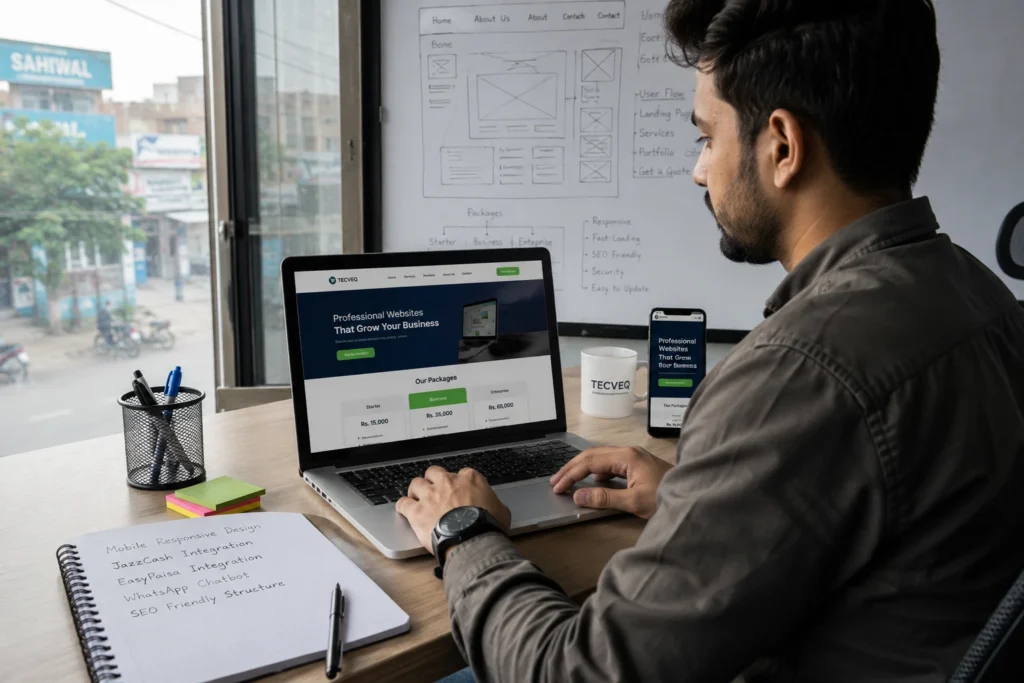
Website Development Service Boost Sahiwal Business Success in 2026 We have watched Sahiwal’s business landscape shift dramatically over the past three years. Local businesses that invested in professional websites are now reaching customers they never could before. The ones that held back are struggling to compete. Your competitors are online. Your customers are searching there first. Digital Growth Statistics for Punjab Enterprises Punjab businesses with professional websites report 67% higher customer inquiries compared to those relying only on Facebook pages or word of mouth. We see this in our own client results every month. Online shopping in Pakistan grew 42% last year. Mobile searches for local services in Sahiwal increased by 35%. These numbers tell us something clear. Customers expect to find you online before they visit your shop or call your number. The textile manufacturers we work with get direct export inquiries through their websites. Educational institutes fill enrollment slots faster. Retail stores moved inventory online during load shedding hours and still made sales. Most Sahiwal businesses still operate without a proper web presence. That gap is your opportunity. Local Market Demands Professional Web Presence Walk through any market in Sahiwal and ask shopkeepers where customers find them now. The answer changed. It used to be location and referrals. Now it starts with a Google search or a social media recommendation. But here is what most business owners miss. A Facebook page is not enough anymore. Customers judge your credibility based on your website before they ever contact you. They compare you against competitors who have professional sites. They look for proof you are established and trustworthy. A basic Facebook page with irregular posts does not build that confidence. We built a website for a local furniture manufacturer in Farid Town last year. Within four months they received their first international order from a buyer in Lahore who found them through Google. That buyer told them directly he chose them over three competitors because their website showed detailed product photos, clear pricing, and professional presentation. The jobs that pay well go to businesses that look professional online. The customers with real buying power expect a real web presence. Tecveq’s Role in Sahiwal’s Digital Economy We started Tecveq because we saw too many capable Sahiwal businesses losing opportunities to companies in Lahore and Faisalabad that simply had better websites. The work quality was the same. The price was competitive. But the online presence made the difference. Our job is to level that field. We have delivered 87 website projects across Punjab in the past two years. Manufacturing companies, educational institutions, medical centers, retail chains, and professional service providers. Each one faced the same core problem. Great business, invisible online. Every project we take starts with understanding how your specific customers search and what they need to see before they trust you enough to make contact. We do not build template websites that look like everyone else. We build web platforms that position your business as the obvious choice in your market. Most of our Sahiwal clients come to us after wasting money on cheap freelancers who disappeared after launch or expensive agencies in Lahore that never understood their local market needs. We stay. We support. We treat your business growth as our responsibility because your success builds our reputation in this city. The businesses thriving in Sahiwal right now have one thing in common. They made the decision to show up online properly before their competitors did. The window is still open, but it closes a bit more every month as more businesses invest in professional websites. You can wait and watch. Or you can move now while the advantage is still available. Complete Website Development Service in sahiwal by Tecveq Every business in Sahiwal needs a different kind of website. A textile exporter needs something completely different from a local clinic or a retail store. Our custom website development services in Pakistan build each project around what your specific business actually needsnot around a template we reuse for every client. Custom Business Website Development Most businesses come to us after getting a generic website that looks like three other companies in their industry. We start every custom website project by studying your business, your customers, and your competitors before we write a single line of code. Corporate Website Design Your corporate website is the first place serious buyers and partners check before they decide to contact you. We design corporate websites that present your company professionally, load fast on every device, and give visitors a clear reason to reach out. Clean layout, strong messaging, and no unnecessary clutter. Business Portfolio Websites A portfolio website only works if it shows the right work in the right way. We structure portfolio websites to highlight your strongest projects, build credibility fast, and guide visitors toward making an inquiry. Not just a gallery. A sales tool. Service-Based Company Websites Service businesses need websites that answer customer questions and remove hesitation before the first phone call. We build service company websites with clear service descriptions, transparent process explanations, and easy contact options so customers feel confident picking up the phone. E-Commerce Website Development Service Selling online in Pakistan is a real opportunity right now. But a poorly built online store loses customers at checkout, runs slow on mobile, and creates payment problems that cost you sales every day. Our ecommerce app development company builds integrated web and mobile solutions that actually sell Online Store Development We build complete online stores from product pages to checkout. Every store we develop is mobile-first because over 80% of Pakistani shoppers browse on their phones. Fast loading, clean product pages, and a checkout process that does not confuse or frustrate the customer. Product Catalog Management Systems Managing hundreds of products manually is exhausting and leads to errors. We build catalog management systems that let you update prices, add products, manage stock levels, and organize categories yourself without needing a developer every time something changes. Payment Gateway Integration We integrate JazzCash, EasyPaisa,
Software Development Company in Pakistan: Tecveq
Struggling to Find a Reliable Software Development Company in Pakistan? We hear this frustration from startup founders every week. You need software built right the first time, but finding the right development partner feels impossible. Most agencies promise the world during sales calls. Then reality hits. Deadlines slip by weeks or months while your budget disappears into endless revision cycles. The project you thought would take three months stretches into eight. Your investors start asking hard questions. Communication becomes a nightmare. You get vague updates like “development is progressing well” instead of actual progress reports. When you ask technical questions, you get marketing speak instead of real answers. You start wondering if they even understand what you need built. The worst part? The software finally gets delivered, and it barely works under real user load. Simple features break when you try to add new ones. What started as your MVP turns into expensive technical debt that needs complete rebuilding. You realize you just paid premium prices for amateur work that cannot scale with your business. Sound familiar? You are not alone. How Tecveq Solves This We built our entire process around eliminating these exact problems. No overpromising. No communication black holes. No software that falls apart when real users touch it. Here is exactly how we work differently. Every project starts with a detailed technical specification document that outlines every feature, timeline, and cost before we write a single line of code. You know exactly what you are getting and when you will get it. We send daily progress updates with actual screenshots and demo links. Not corporate speak. Real working software you can test as we build it. Our project manager responds to messages within 4 hours during business days because we know how important clear communication is for your timeline. As a custom software development company in Pakistan, Tecveq eliminates technical surprises by using battle-tested architecture patterns that handle real user growth. We build with scaling in mind from day one, so your software grows with your business instead of breaking under pressure. Most importantly, we guarantee our work. If something breaks due to our development within the first 90 days, we fix it at no cost. That is confidence you will not get from agencies that cut corners. Ready to see how professional software development should actually work? ⚡ GET IN TOUCH Get Your Free Software Development Quote in 24 Hours No Hidden Costs, No Surprises 💬 Chat on WhatsApp 📞 Call 0307 3319555 Our Software Development Services We build custom software that solves real business problems and grows with your company. Each project starts with understanding exactly what you need, and then we design and develop the solution using proven technologies and architecture patterns that handle real user load. Our software development services in Pakistan cover everything from simple business websites to complex enterprise systems. We have delivered projects for startups launching their first MVP and established companies scaling their existing platforms. Custom Software Development Your business has unique requirements that off-the-shelf software cannot handle. We build custom applications from scratch that fit your exact workflow, integrate with your existing systems, and scale as your business grows. Most custom software projects fail because developers build what they think you need instead of what you actually need. We start every project with detailed requirement analysis where we map out your current process, identify pain points, and design solutions that actually improve your daily operations. Our custom development process includes complete database design, user interface mockups, and technical architecture planning before we write any code. You see exactly what you are getting before development starts. No surprises or scope creep that doubles your budget. We specialize in building software for specific industries like healthcare practice management, logistics tracking systems, and financial reporting platforms. These are not generic templates—from our custom software development for startups to specialized custom software development for logistics companies, each solution handles the unique challenges your industry faces. Web Application Development Web applications need to work fast, handle traffic spikes, and stay secure under real-world conditions. We build web apps using React, Vue.js, and Laravel that perform well even when hundreds of users access them simultaneously. Your web application represents your business online. Poor performance or security issues cost you customers and revenue. We use load testing during development to ensure your application handles traffic growth without crashing or slowing down. Database optimization is where most web applications break down as they scale. We design database structures from the beginning that support complex queries and large datasets. Your application stays fast even when your data grows from thousands to millions of records. Every web application we deliver includes admin panels for content management, user role systems for access control, and API integration capabilities for connecting with other business tools. You get complete control over your application without depending on us for basic updates. Mobile App Development Mobile apps must work perfectly across different devices, operating systems, and network conditions. As a trusted provider of mobile app development in Pakistan, we develop native iOS and Android applications plus cross-platform solutions using React Native and Flutter that deliver consistent user experiences. App store approval can delay your launch by weeks if the application does not meet platform requirements. We follow Apple and Google development guidelines from the start, handle the submission process, and manage any revision requests to get your app approved quickly. Push notifications, offline functionality, and smooth animations are standard features in every mobile app we build. Your users get the professional experience they expect from modern mobile applications. No compromises on performance or user interface quality. Backend integration connects your mobile app to databases, payment systems, and third-party services. We build secure APIs that handle user authentication, data synchronization, and real-time updates between your app and server infrastructure. Backend & API Development Reliable backend systems handle user requests, process data, and integrate with external services without breaking under load. We build scalable backend
Email Marketing Services in Pakistan
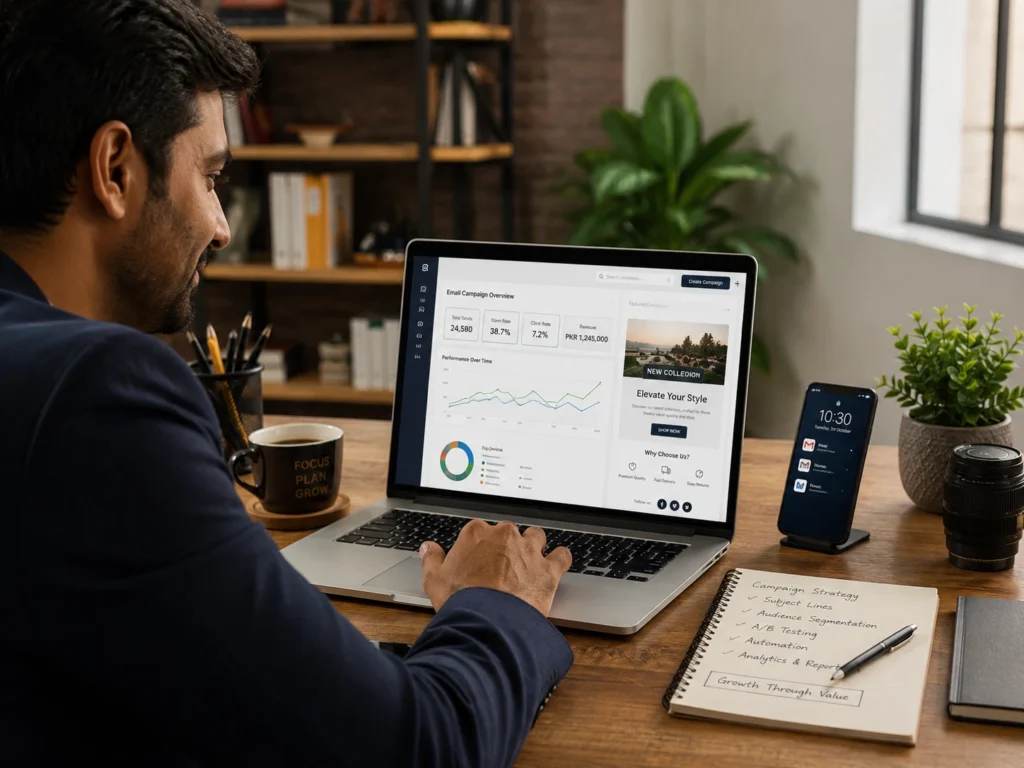
Why Most Businesses in Pakistan Struggle With Email Marketing Most businesses in Pakistan use email, but far fewer have a system that consistently turns subscribers into customers. Poor deliverability, generic campaigns, weak automation, and limited tracking can turn email into a cost instead of a reliable revenue channel. Professional email marketing starts by fixing those foundations before scaling campaigns. We have worked with businesses that struggled with low engagement, weak deliverability, inconsistent follow-up, and limited visibility into what their email campaigns were actually generating. In many cases, the problem was not email itself. The problem was the lack of a structured system connecting audience segmentation, useful content, automation, and performance tracking. That is where professional email marketing becomes valuable. Instead of treating every subscriber the same, a well-built system uses customer behavior and business goals to determine who receives each message, when they receive it, and what action the campaign is designed to drive. Professional email marketing is not simply about sending more campaigns. It starts with a healthy subscriber list, reliable deliverability, audience segmentation, useful content, automation, and accurate performance tracking. When those foundations are in place, email becomes a system for nurturing leads, recovering sales, and increasing customer lifetime value rather than another channel for sending occasional promotions. That is exactly why businesses across Pakistan are looking for email marketing services that actually fix these problems instead of just adding another monthly expense. The problem is not the channel. The problem is how most businesses approach it. They treat email like a broadcast tool instead of a conversation. They send the same generic message to everyone on their list and wonder why people stop opening. They manually copy-paste campaigns every week because they have no automation in place. And when emails land in spam or get ignored, they have no data to understand why. Some businesses approach email marketing as a campaign-production service: a few templates, scheduled sends, and basic reporting without a deeper strategy behind them. That approach can make it difficult to understand why engagement is falling or which campaigns are contributing to revenue. Tecveq takes a different approach by combining strategy, segmentation, automation, deliverability, campaign execution, testing, and performance reporting into one system. We see this across industries. E-commerce brands are losing cart recovery revenue. Real estate agencies sending property updates that get deleted unread. SaaS companies with high churn because their onboarding emails never reach the inbox. Here is what actually goes wrong and why it costs you customers. Low Open Rates & Poor Deliverability Your emails are not getting opened because they are not reaching the inbox in the first place. A common weakness is poor sender-reputation monitoring. They send through poorly configured infrastructure, lack proper domain authentication, or share sending environments without understanding how sender reputation can affect deliverability. They may also rely on purchased or scraped contacts, which can increase bounce rates, spam complaints, and disengagement while weakening sender reputation. Looking only at open rates can also give an incomplete picture of performance, so we evaluate engagement alongside clicks, conversions, unsubscribes, bounce rates, and revenue attributed to email. Low deliverability can undermine every other part of an email campaign. If messages are rejected, filtered into spam, or otherwise fail to reach the intended audience, strong copy and compelling offers have little opportunity to influence results. That is why we address authentication, list quality, sender reputation, engagement, and sending practices before scaling campaigns. We have audited email accounts where 40% of sends were being flagged by Gmail and Outlook. The business had no idea. They kept sending to dead lists, using spammy subject lines, and ignoring every signal that their domain reputation was tanking. Here is what actually affects whether your emails get delivered. SPF and DKIM records are not configured properly. No DMARC policy in place. Sending from a free Gmail or Yahoo address instead of your own domain. High bounce rates because the list has not been cleaned in months. And engagement signals that tell inbox providers your emails are not wanted. When we fix deliverability first, open rates can improve significantly because more legitimate messages are reaching subscribers’ inboxes. Not because we changed the content. Because the emails finally started showing up where people actually check. ⚡ GET IN TOUCH Stop losing sales to abandoned carts. Let Tecveq’s email marketing services recover your revenue. 💬 Chat on WhatsApp 📞 Call 0307 3319555 Generic, Unpersonalized Campaigns Your subscribers get dozens of emails every day. If yours looks like everyone else’s, it gets ignored. Many email campaigns we see from businesses in Pakistan rely heavily on generic messaging. Same subject line for every recipient. Same body copy, whether the person signed up yesterday or six months ago. Same offer sent to someone who already bought and someone who has never opened a single email. There is no segmentation. No personalization beyond adding a first name merge tag. No consideration for where the person is in the customer journey or what they have shown interest in. This is why people unsubscribe or just stop engaging. They are being treated like a number on a list instead of a real potential customer with specific needs. We worked with an e-commerce client who was sending the same weekly newsletter to their entire list of 12,000 contacts. Open rates were stuck at 8%. When we segmented by purchase behavior, browsing history, and engagement level and sent tailored campaigns to each group, open rates jumped to 28% and click-throughs went up by 320%. Personalization is not about inserting someone’s name. It is about sending the right message to the right person at the right time based on what they have actually done. Most businesses skip this because it feels complicated. But segmentation can make campaigns more relevant and give businesses more opportunities to match messaging with subscriber intent. Email Automation That Eliminates Manual Follow-Up If you are manually sending every email campaign, you are losing time and leaving money on the table. We have seen marketing
Affiliate Marketing in Pakistan
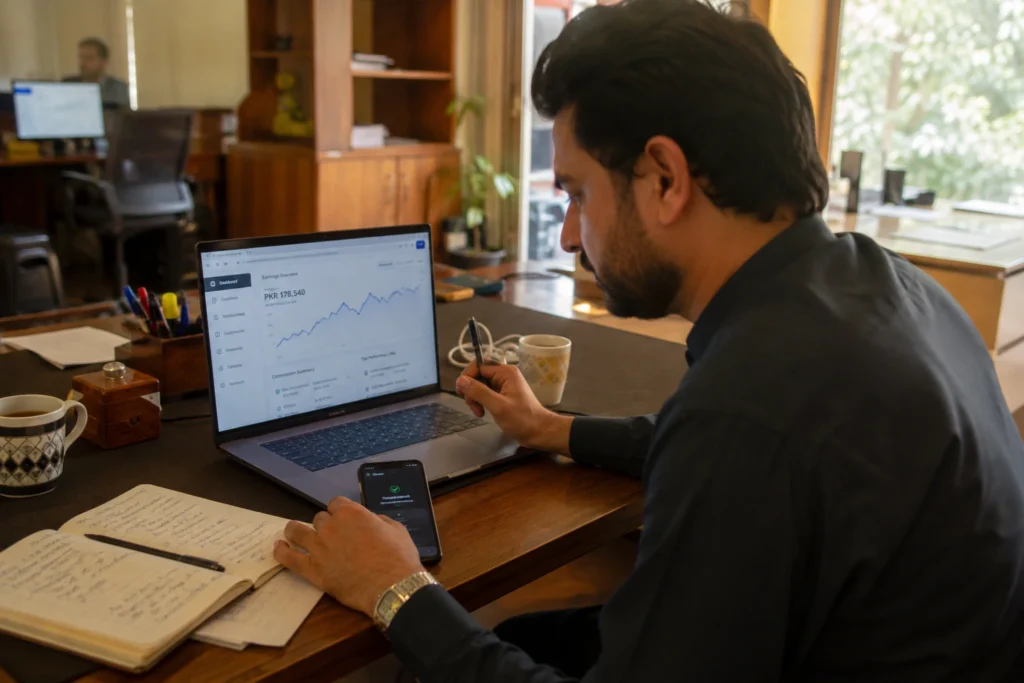
The Affiliate Marketing Struggle Most Businesses Face in Pakistan You want to grow sales through affiliates. But most businesses in Pakistan hit the same walls before they even launch. We’ve seen it dozens of times. A brand tries to set up affiliate marketing in pakistan on their own, recruits a few partners, sends out referral links, and waits for sales to roll in. Then nothing happens. Or worse, sales happen, but there’s no clear way to track who referred what, commissions get disputed, affiliates lose trust, and the whole program falls apart within a few months. The problem isn’t the idea. Affiliate marketing works. The problem is most businesses try to run it without the right system, the right tracking, or the right local setup for Pakistan’s market. Here’s what actually kills affiliate programs before they take off. No Reliable System to Track Sales or Commissions Your affiliate sends traffic. A sale happens. But you have no idea if that sale came from their link or someone else’s. This is the number one reason affiliate programs fail in Pakistan. Without accurate tracking, you can’t pay affiliates fairly, and they can’t trust that their work is being counted. We’ve worked with brands that were manually checking order notes and trying to match customer names to affiliate lists. That breaks down fast once you have more than five active partners. Real affiliate tracking requires a system that captures the referral source the moment someone clicks, ties it to the sale even if they don’t buy immediately, and records the commission owed automatically. Most businesses don’t have this built into their website. They assume a simple referral code or discount link is enough. It’s not. Codes get shared. Links get copied. And without proper cookie tracking and attribution logic, you’re guessing who earned what. Company Details Information Company Name Tecveq (Pvt) Ltd Services Affiliate Marketing Services, Web Development, Digital Marketing Solutions Specialization Custom Affiliate Program Development & Management in Pakistan Location bahrain, Pakistan,UK Service Area Pakistan (Lahore, Karachi, Islamabad, Faisalabad, Multan & nationwide) Office Address Available upon consultation request Contact Method Online consultation form, Direct email, Phone inquiry Business Hours Monday to Saturday, 9 AM to 6 PM PKT Languages Supported English, Urdu Affiliate Websites That Are Slow, Unsecured, or Poorly Built Some businesses try to build their own affiliate portal or dashboard. They hire a cheap developer, get a half-finished WordPress plugin setup, and launch it without testing how it performs under real traffic. Then affiliates log in, and the page takes 15 seconds to load. Or the site throws security warnings. Or the dashboard doesn’t work on mobile. Or worse, affiliate links break entirely and send customers to error pages. Your affiliates are promoting your brand to their audience. If the experience is clunky, slow, or unprofessional, they stop promoting. We’ve seen affiliate programs lose their best partners because the website looked outdated or didn’t inspire confidence. An affiliate website needs to be fast, secure, mobile-optimized, and easy to navigate. It also needs to give affiliates instant access to their performance stats, commission reports, and marketing materials. If any part of that experience feels broken, you lose credibility before you even start. Difficulty Finding and Managing the Right Affiliate Partners Not every affiliate is the right fit for your brand. Some have the wrong audience. Some promise big numbers but deliver nothing. Some disappear after the first payout. Most businesses struggle to find reliable affiliate partners in Pakistan because they don’t have a clear recruitment process or vetting system. They accept anyone who applies, hoping volume will make up for quality. Then they realize managing 50 inactive affiliates is harder than managing 5 good ones. The real challenge is ongoing management. Affiliates need regular updates, fresh creatives, performance feedback, and timely payouts. Without a dedicated system to onboard, communicate with, and support your partners, even the good ones lose interest and move to other programs that are easier to work with. Local Payment & COD Complications Killing Affiliate Trust Here’s where most international affiliate models break down in Pakistan. Your affiliates want to get paid in PKR through local bank transfers or JazzCash or Easypaisa. Not PayPal. Not international wire transfers. And definitely not 60 days after the sale. Then there’s COD. A customer orders through an affiliate link, selects cash on delivery, and never completes the purchase. Do you pay the affiliate commission for that? What if the customer returns the order a week later? What if the sale gets canceled? We’ve worked with eCommerce brands where half their revenue came from COD orders. Without clear rules about when commissions are earned and how COD is handled, disputes happen constantly. Affiliates feel cheated when they drive sales but don’t get paid because the order was returned. And brands feel burned when they pay commissions on canceled orders. Local payment structures and COD-friendly commission rules need to be built into the program from day one. Otherwise trust disappears fast. No Clear Strategy Just Random Referral Links This is the most common mistake. A business decides to try affiliate marketing, generates a few referral links, sends them to a handful of influencers or bloggers, and hopes something sticks. There’s no commission structure. No performance tiers. No onboarding process. No content guidelines. No plan for what happens after the first month. Just links floating around with no strategy behind them. Real affiliate marketing requires a structured plan. What commission percentage makes sense for your margins? Do you offer flat fees or percentage-based payouts? How do you reward top performers? What happens if someone sends low-quality traffic? How do you scale the program once it’s working? Without a clear strategy, affiliate marketing becomes random and inconsistent. You can’t optimize what you can’t measure, and you can’t grow what you haven’t structured properly from the start. That’s the reality most businesses face when they try affiliate marketing in Pakistan on their own. The idea is solid. The execution falls apart because the foundation was
WordPress Development Company Custom Website Solutions by Tecveq
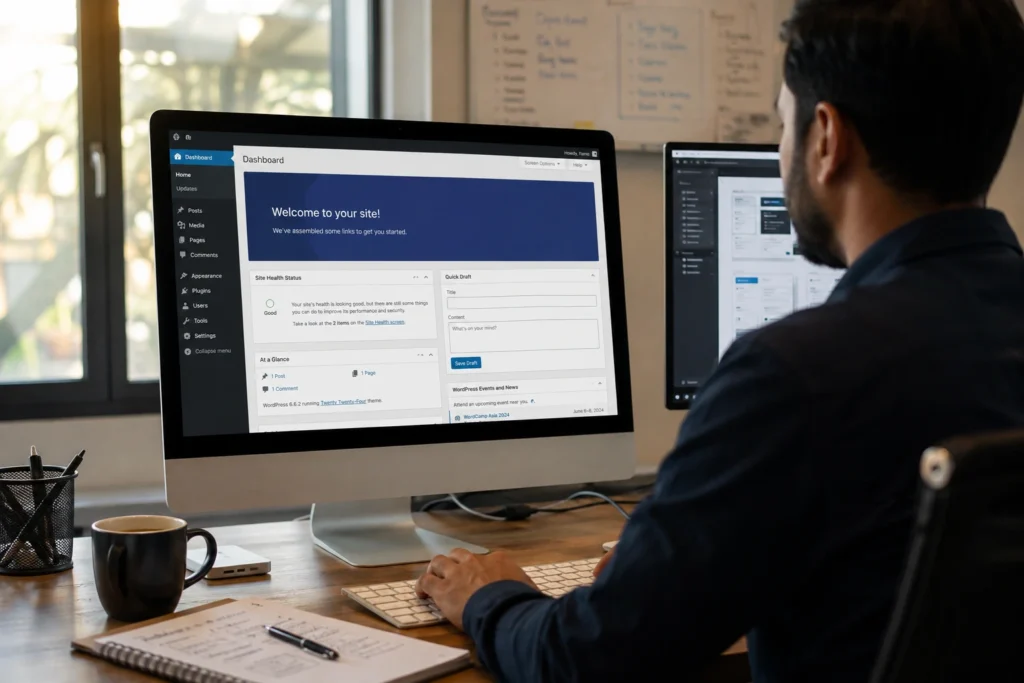
Building Digital Growth Through Custom WordPress Development Most businesses don’t need another templated website. They need a WordPress solution that actually drives revenue, captures leads, and scales with their growth. We build custom WordPress websites that do exactly that. We’ve worked with startups launching their first digital presence and enterprises managing complex multi-site architectures. The pattern is always the same. Businesses come to us after trying DIY builders or working with agencies that delivered something that looks fine but doesn’t convert. They need WordPress development that connects to their actual business goals, not just a pretty homepage. Here’s what sets our approach apart from a typical development agency. We don’t start with a theme and try to bend it into your business model. We start with your revenue model, your customer journey, and your growth timeline. Then we build a custom WordPress solution around those requirements. Every feature exists because it serves a specific business outcome. Our WordPress development company covers the full spectrum. Custom theme development built on scalable architecture. Plugin development for business-specific functionality your competitors can’t replicate. WooCommerce solutions that handle real transaction volume without breaking. SEO-friendly structure that ranks without constant maintenance. And dedicated support after launch because your business doesn’t stop growing the day we deploy. We work with clients across the US, UK, and international markets. Remote collaboration is standard for us. Clear communication, transparent timelines, and milestone-based delivery keep projects on track regardless of time zones. Most WordPress agencies will tell you they build “fast, secure, mobile-responsive” sites. So does everyone else. What we actually deliver is a conversion-focused WordPress website engineered for your specific industry, integrated with your existing tools, and structured so your team can manage content without calling us every time you need to update a page. If you’ve been frustrated by WordPress sites that look professional but don’t generate business results, we should talk. Our process starts with a free consultation where we assess your current situation, identify what’s holding your site back, and map out exactly what a high-performing WordPress solution looks like for your business model. No pressure. No generic proposals. Just an honest conversation about whether custom WordPress development is the right move for where your business is headed. ⚡ GET IN TOUCH Get a custom WordPress development plan built around your business — Free Consultation → 💬 Chat on WhatsApp 📞 Call 0307 3319555 Our WordPress Web Development Company Services We build WordPress websites that solve real business problems. Not templated sites that look fine but don’t convert. Every service we offer is designed to give you a WordPress solution that drives measurable results for your specific business model. Our WordPress web development company services cover everything from initial design through long-term maintenance and growth. We work with startups launching their first site, growing businesses scaling their digital presence, and enterprises managing complex WordPress architectures across multiple markets. Here’s what we actually deliver. Custom WordPress Development Custom WordPress development means we build your site from the ground up based on your business requirements, not a pre-made theme we try to customize later. We write clean code structured around your content model, your user workflows, and your conversion goals. Most businesses come to us after they’ve hit the limits of a theme-based site. The design doesn’t match their brand. The functionality doesn’t support their actual processes. And every customization requires workarounds that break with the next update. We architect WordPress solutions that scale with your business. Custom post types for your specific content. Custom fields that match how your team actually works. And a codebase you own completely with no licensing restrictions or vendor lock-in. Our custom development process starts with mapping your business logic before we write a single line of code. What actions do your users need to take? What data do you need to capture? What third-party tools must connect to your site? We build the WordPress architecture that makes all of that work smoothly. WordPress Theme Development WordPress theme development is where your brand identity meets functional design, a core part of what makes us a trusted WordPress web design agency for businesses that need more than a generic layout We create custom WordPress themes that reflect your visual identity while maintaining fast load times, mobile responsiveness, and SEO-friendly structure. We don’t use page builders that add bloated code and slow your site down. We hand-code themes using WordPress best practices so your site loads in under 3 seconds and ranks well without constant optimization work. Every theme we build includes a flexible content management system that lets your team update pages, add new sections, and manage media without needing developer help for routine changes. You get full control over your content with guard rails that prevent accidental layout breaks. Our theme development includes responsive design that works across all devices, accessibility compliance for ADA requirements, and browser compatibility testing before launch. WordPress Plugin Development WordPress plugin development gives you custom functionality that doesn’t exist in off-the-shelf plugins. We build plugins when your business process requires specific features that generic plugins can’t handle. Common scenarios where we develop custom plugins include unique booking systems, specialized member portals, custom reporting dashboards, and workflow automation that connects WordPress to your internal tools. We follow WordPress plugin development standards so your custom plugins update safely, don’t conflict with other plugins, and integrate cleanly with your theme. And we document everything so future developers can maintain and extend the code. Most custom plugins take 2 to 4 weeks to develop depending on complexity. We provide a detailed specification before we start coding so you know exactly what you’re getting and what it will cost. WordPress Website Development WordPress website development at Tecveq covers the complete build process from discovery through launch and post-launch support. We handle strategy, design, development, content migration, third-party integrations, testing, and deployment. Our WordPress website development company approach focuses on conversion-focused design that turns visitors into leads or customers. Every layout