
Mobile App Development Services in Sahiwal
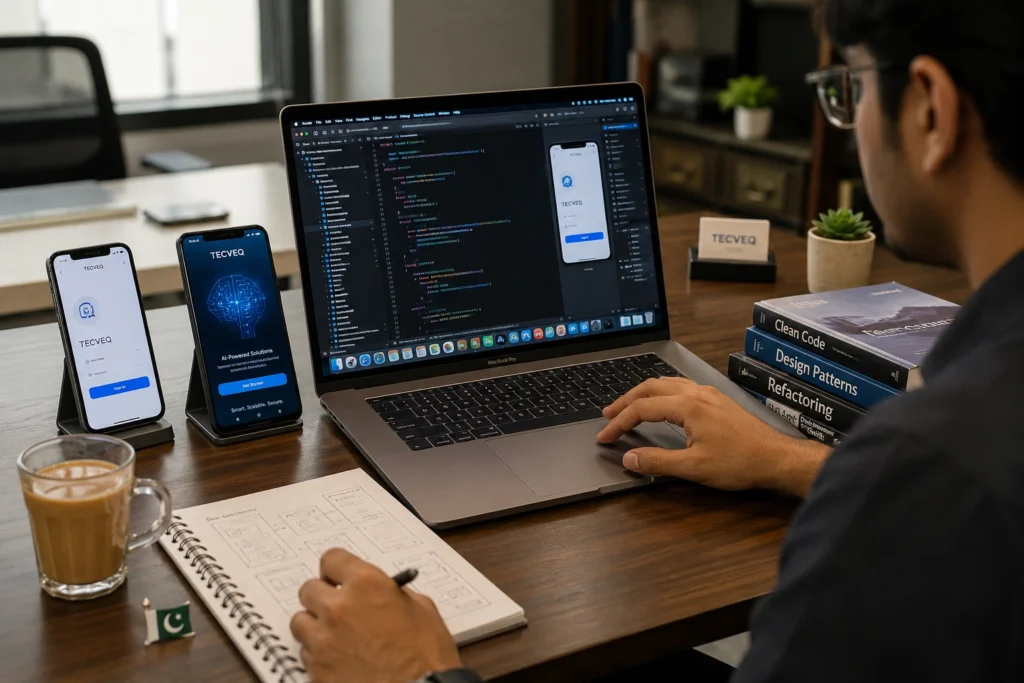
Why Choose Tecveq for Mobile App Development in Sahiwal Local Presence, Global Development Standards We understand the Sahiwal business market because we work here every day. But we build apps using the same coding standards and security protocols that international companies demand. Most local developers cut corners to keep prices low. We never do. Every app we build goes through the same quality testing process whether it’s for a small Sahiwal startup or a multinational client. You get enterprise-level development at local prices. Our team stays current with Apple and Google’s latest requirements. When platform updates change how apps must be built, we already know about it. Your app launches on time and passes store review on the first try. Company Details & Information Company Information Details Company Name Tecveq Location Sahiwal, Pakistan Years in Business 5+ Years Projects Completed 200+ Mobile Apps Team Size 15+ Developers Platforms Supported iOS, Android, Cross-Platform Development Languages Swift, Kotlin, Java, Flutter, React Native Post-Launch Support 30 Days Free + Maintenance Packages Response Time Within 2 Hours (Business Hours) App Store Success Rate 95% First-Time Approval Proven Track Record — 200+ Projects Delivered We have launched 200+ mobile apps over the past several years. Real apps that real businesses use to serve their customers every day. Here’s what that experience means for you: We know which features actually get used and which ones waste development time. We spot potential problems before they become expensive fixes. And we build your app architecture to handle growth from day one. Most of our clients come back for additional features or new apps. That only happens when the first project delivers exactly what we promised. Dedicated Mobile App Development Team Your app gets built by specialists, not generalists who dabble in everything. Our iOS developer has been writing Swift code for 6 years. Our Android developer focuses exclusively on mobile apps, not websites that happen to work on phones. Our UI designer has created interfaces for apps with thousands of daily users. When you call with questions, you talk directly to the person building your app. No project managers who relay messages back and forth. No confusion about what’s possible or what’s taking extra time. Transparent Pricing, No Hidden Costs We give you the total project cost upfront. Before we write a single line of code. Here’s exactly what happens: We discuss your app requirements in detail. We will send you a written estimate that breaks down development time for each feature. You approve the estimate before we start. The final bill matches the estimate unless you request additional features. No surprise charges for app store submission. No extra fees for basic testing. No monthly charges you didn’t agree to. You know exactly what you’re paying before you commit to anything. Most of our estimates are accurate within 5% of the final cost because we have built similar features dozens of times before. Post-Launch Support & Maintenance Your app will need updates after it launches. iOS and Android release new versions twice a year. Sometimes apps break when users update their phones. We handle all of that for you. Every app we build includes 30 days of free bug fixes after launch. After that, we offer maintenance packages that keep your app current with operating system updates. When something breaks, we fix it fast. Most maintenance issues get resolved within 24 hours. Because when your app is down, your business is losing money. And when you’re ready to add new features, we already know your code inside and out. No ramp-up time for a new developer to figure out how everything works. ⚡ GET IN TOUCH Ready to Transform Your Business Idea Into a Professional Mobile App? 💬 Chat on WhatsApp 📞 Call 0307 3319555 Our Mobile App Development Services in Sahiwal Android App Development We build native Android apps using Kotlin and Java that work perfectly on all Android devices. Our custom Android app development services include material design implementation, Play Store optimization, and thorough testing across different screen sizes and Android versions to ensure your app performs flawlessly for every user. Most Android apps we build get approved by the Google Play Store on the first submission because we follow all their guidelines from the start. Your Android app will include push notifications, offline functionality, and seamless integration with Google services that Android users expect. iOS App Development Our iOS development team creates iPhone and iPad apps using Swift that pass Apple’s strict App Store review process every time. We design iOS apps that feel natural to iPhone users and take advantage of iOS-specific features like Face ID, Apple Pay, and Siri shortcuts. Every iOS app we deliver includes proper memory management, smooth animations, and the clean interface design that Apple users demand. Your app launches on the App Store without delays or rejection issues. Development Timeline & Milestones Development Phase Duration Deliverables Client Involvement Discovery & Planning 1 Week Project Scope, Wireframes, Timeline Requirements Discussion, Approval UI/UX Design 2 Weeks App Design, Prototypes Design Review, Feedback Backend Development 3-4 Weeks Server Setup, APIs, Database Weekly Progress Updates Frontend Development 4-5 Weeks Mobile App Coding, Integration Feature Testing, Feedback Testing & QA 1-2 Weeks Bug Reports, Performance Tests User Acceptance Testing App Store Submission 1 Week Store Optimization, Launch Final Approval, Launch Review Post-Launch Support 30 Days Bug Fixes, Performance Monitoring Issue Reporting, Feedback Cross-Platform App Development (Flutter / React Native) Cross-platform development lets you reach both Android and iOS users with one codebase instead of building two separate apps. We use Flutter and React Native frameworks to create apps that perform just as well as native apps while cutting development time in half. This approach works best for most business apps, social platforms, and e-commerce applications. You get the same features on both platforms without paying for two completely different development projects. Custom Mobile App Development We build custom mobile app development services in Sahiwal specifically for your business requirements, not generic templates that look like
Restaurant Website Development Service in Sahiwal
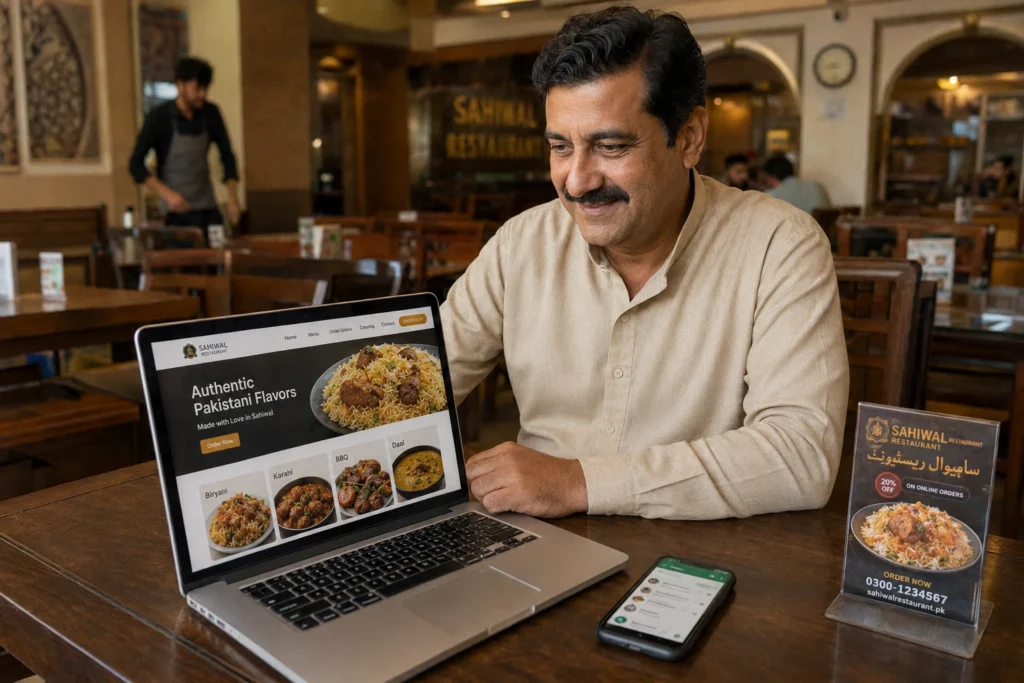
Tecveq Builds Revenue-Generating Restaurant Websites in Sahiwal Our Restaurant Website Development Service in Sahiwal builds websites that directly increase your orders and revenue. Not just digital menus. Full ordering systems with WhatsApp integration, online payment setup, and delivery zone management built specifically for local restaurants competing in Sahiwal’s fast-growing food delivery market. Most restaurant owners we talk to already know they need a website. What they don’t know is that a basic menu display site does nothing to increase sales. We build systems that let customers browse your menu, add items to a cart, pay through JazzCash or EasyPaisa, and send orders directly to your kitchen. That’s the difference between a website that sits there and one that generates actual revenue every single day. We’ve worked with fine dining restaurants, fast food outlets, cloud kitchens, and multi-branch chains across Punjab. The pattern is always the same. Restaurants that take online orders through their own website instead of relying only on third-party apps keep more profit per order and build direct customer relationships they actually own. Here’s what happens when you choose our restaurant website development service in Sahiwal. We sit down with you or your manager and map out your entire menu structure, your delivery zones, your peak hours, and your payment preferences. Then we build a mobile-optimized ordering system around that exact workflow. You get the source code and full admin panel access, and we host it free for the first year so you can start taking orders immediately without any technical hassle. Sahiwal’s Food Industry Is Moving Online Fast Sahiwal customers now expect to order food online the same way they do in Lahore or Karachi. WhatsApp ordering, Instagram menu browsing, and Google Maps restaurant searches have become the standard. Restaurants without proper online presence lose orders to competitors who show up first in search results and make ordering simple. We see it every week. A new café opens with great food but no real website. They rely entirely on phone orders and walk-ins. Three months later they’re struggling, while the restaurant across the street with half the food quality but a proper online ordering system is taking 40 to 50 orders per day through their website alone. Load shedding makes this even more critical. Customers don’t want to call and wait on hold during power outages. They want to browse a menu on mobile data, place an order, and get a confirmation without talking to anyone. Your website works 24/7 even when your physical location has no electricity. The restaurants winning right now in Sahiwal are the ones treating their website as a primary sales channel, not a digital business card. Menu updates happen daily. New deals go live every Thursday. Seasonal items get promoted through the homepage banner. It’s active restaurant digital marketing, not a static page someone built in 2019 and never touched again And the customer base is there. Sahiwal has over 250,000 residents with smartphone access and mobile payment apps already installed. University students, young professionals, and families ordering dinner online are a massive market. Most of them never call restaurants anymore. They search, they browse, they order through the site, or they move to the next option. ⚡ GET IN TOUCH Get Your Restaurant Website in Sahiwal Free Quote in 24 Hours 💬 Chat on WhatsApp 📞 Call 0307 3319555 Tecveq’s Role in Digitizing Local Restaurants We don’t just build restaurant websites. We digitize the entire order-taking process so you can compete with the big delivery platforms without paying their 25% to 30% commission on every order. When a restaurant hires us, we replace the chaos of managing WhatsApp orders, phone calls, and Facebook messages with a single unified system. All orders come into one admin panel with customer details, delivery addresses, order timestamps, and payment confirmation. Your kitchen staff sees exactly what to prepare. Your delivery team sees exactly where to go. No missed orders. No forgotten items. No confusion during rush hours. Most of our Sahiwal clients were losing 15 to 20 orders per week just from miscommunication before we built their system. Customers would send WhatsApp messages that got buried under 50 other chats. Phone orders during peak hours went to voicemail. Facebook orders came in while staff was busy and never got confirmed. That’s thousands of rupees in lost revenue every single month from operational gaps, not food quality issues. We’ve also helped restaurants move away from expensive third-party dependency. Platforms like Foodpanda and Cheetay charge high commissions and own your customer data. You never build a direct relationship. You’re just a vendor on someone else’s app. When you have your own website and ordering system, every customer belongs to you. You can retarget them. Offer them loyalty discounts. Send them notifications about new menu items. That’s how you build a real restaurant brand instead of being one option among 47 others on an app. Our process is built around Sahiwal’s specific infrastructure challenges. We optimize sites for 3G speeds because not everyone has stable 4G. We integrate local payment methods like JazzCash, EasyPaisa, and cash on delivery because that’s what your customers actually use. We set up delivery zone mapping for Sahiwal’s specific areas so customers see accurate delivery times based on their actual location, not some generic estimate. The result is a system that works for local restaurant operations without requiring you to change your entire workflow or hire a full-time tech person to manage it. Company Information Details Company Name Tecveq Business Type Custom Software Development & Restaurant Website Development Services Offered Restaurant Website Development, Online Ordering Systems, Mobile App Development, Payment Gateway Integration, Cloud Kitchen Solutions, Multi-Branch Restaurant Systems Primary Service Area Sahiwal, Punjab, Pakistan Office Address M3CH+JG7, Sahiwal, Punjab, Pakistan Phone Number 0307 3319555 WhatsApp Number 0307 3319555 Email info@tecveq.com Website https://tecveq.com/ Operating Hours 9 AM to 9 PM Daily (Including Weekends) Founded Software Development Company Serving Local Businesses Specialization Restaurant Digital Transformation & Online Ordering Solutions Service Delivery On-site, Remote, and
B2B Email Marketing Agency Built to Fill Your Sales Pipeline, Not Your Inbox Trash Folder
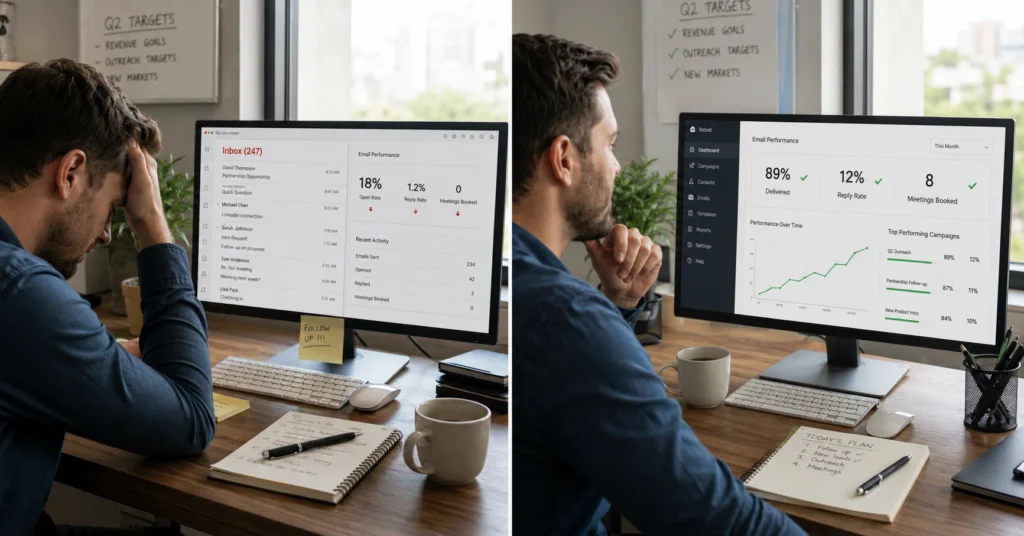
Your Sales Team Is Losing Hours to Emails That Never Get Opened Your sales reps are spending three hours every morning writing personalized cold emails. They research prospects, craft custom messages, and hit send with high hopes. Then they watch their inbox for replies that never come. Most B2B sales teams see open rates below 20% and reply rates under 2%. That means 98% of their email effort disappears into spam folders or gets deleted within seconds. We see this pattern constantly when new clients come to us frustrated with their current outreach results. Here’s what’s actually happening to those hours of work. Your carefully written emails are getting flagged by spam filters before they even reach the prospect’s inbox. When they do make it through, generic subject lines get buried under 200 other cold emails that all sound exactly the same. Your sales team burns half their day on email tasks that should take 30 minutes. They’re researching prospects one by one instead of working from verified lists. Building email sequences manually instead of using automation that actually works. And worst of all, they’re following up inconsistently because tracking everything manually is impossible when you’re reaching out to hundreds of prospects. The real cost isn’t just the wasted hours. It’s the qualified meetings your team never books because they’re stuck doing administrative email work instead of having actual sales conversations. We’ve calculated this for dozens of clients. Most sales teams lose 15-20 potential meetings per month to inefficient email processes. Your competitors who have this figured out are booking those meetings while your team is still crafting individual emails that no one will read. And the frustration is killing morale. Your best reps start questioning whether cold email works at all. They want to focus on selling, not becoming email marketing specialists. Some teams give up on email entirely and miss out on their most scalable lead generation channel. We fix this by building email systems that actually get opened, read, and replied to. Our clients typically see their reply rates jump to 8-12% within the first month because we eliminate the manual busywork and solve the deliverability problems that kill most campaigns before they start. ⚡ GET IN TOUCH Get Your Free B2B Email Marketing Strategy Session Book Qualified Sales Meetings Within 14 Days 💬 Chat on WhatsApp 📞 Call 0307 3319555 Why Most B2B Email Campaigns Fail Before They Even Land Most B2B email campaigns never reach their intended recipients because of three fatal mistakes that happen before you even hit send. We see these same problems every time a frustrated client comes to us with a “broken” email system that was actually doomed from day one. Your emails are getting blocked, deleted, or ignored because of infrastructure problems you probably don’t know exist. And the ones that do make it through are getting dismissed instantly because they sound like every other cold email that decision-maker received that day. Here’s exactly where most companies go wrong and why their email campaigns fail before they even get started. Poor Domain Health Kills Deliverability Before the First Send Your domain reputation determines whether your emails land in the inbox or disappear into spam folders. Most companies start sending cold emails from their main business domain without any warmup process. That’s like flooring the gas pedal on a cold engine. Email providers like Gmail and Outlook track sending patterns for every domain. When you suddenly start sending 50 cold emails per day from a domain that previously sent 5 emails per week, their algorithms flag you as suspicious. Your emails get automatically routed to spam or blocked entirely. We see this constantly with new clients. Their domain health score is already damaged before we take over their campaigns. They’ve been burning through their sender reputation for months without realizing it. The fix requires dedicated sending domains, proper SPF and DKIM authentication, and a gradual warmup process that mimics natural sending patterns. We start new domains at 5 emails per day and slowly increase volume over 4 to 6 weeks. Most companies skip this entirely and wonder why their open rates are below 10%. Company Information Details Headquarters Pakistan (Sahiwal), with offices in UK & Bahrain Specialization B2B Email Marketing for Technology Companies Target Industries SaaS, Fintech, Healthtech, Cybersecurity, Enterprise Software Client Size Range 10-500 employees (Startups to Mid-market) Average Reply Rate 8-12% (vs industry average 2-3%) Setup Time 7-14 days to first campaign launch Global Coverage 24/7 support across US, UK, and Asia time zones Generic Copy Gets Deleted by Decision-Makers in Seconds Decision-makers delete cold emails within 3 seconds of opening them because most emails sound identical. The same “I noticed your company” opening lines. The same vague value propositions. The same pushy meeting requests. We tested this with one of our clients in the manufacturing industry. Their original emails used templates they found online with generic benefits like “increase efficiency” and “reduce costs.” The reply rate was 1.2%. We rewrote their emails with specific references to challenges their prospects actually faced. Instead of “reduce costs,” we mentioned the specific labor shortage issues hitting their industry. Instead of “increase efficiency,” we referenced the new compliance requirements that were forcing equipment upgrades. Reply rates jumped to 9.4% with the same prospect list. The problem is most companies write emails about what they sell instead of what the prospect actually cares about. They lead with their credentials instead of the prospect’s problems. And they ask for meetings without giving any reason why that meeting would be valuable. Manual List Building Wastes Weeks Your Sales Team Doesn’t Have Most sales teams spend 2 to 3 hours per day researching prospects and building contact lists manually. They’re looking up companies one by one, finding email addresses through guesswork, and building spreadsheets that go out of date within weeks. This approach might work when you’re reaching out to 10 prospects per week. But it completely breaks down when you need to scale to
Plugin Development Service in Pakistan
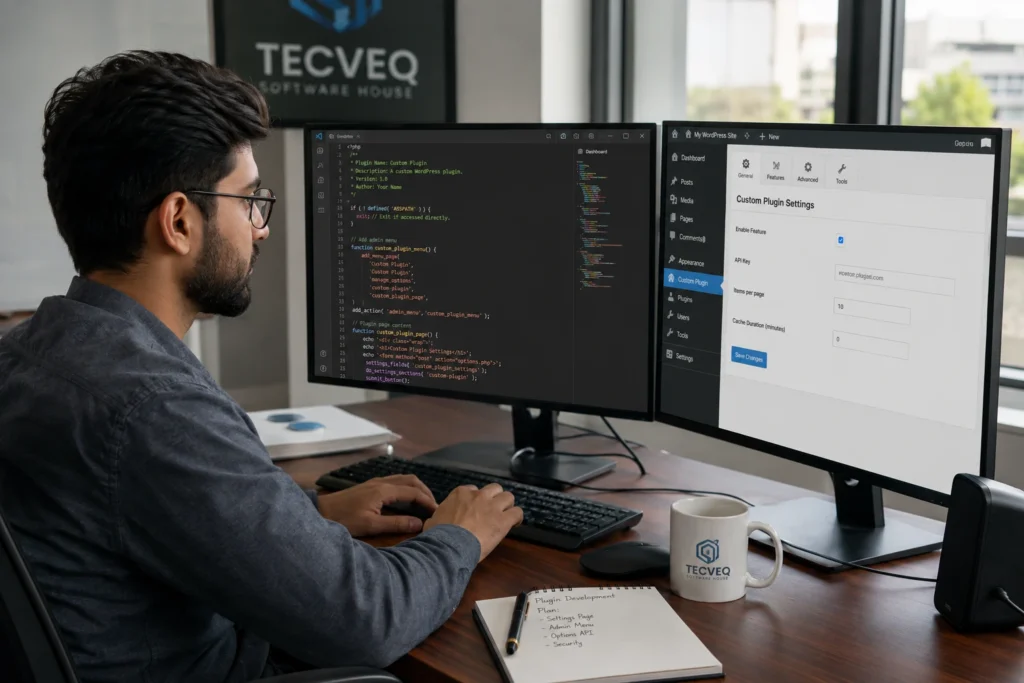
When Off-the-Shelf Plugins Can’t Keep Up With Your Business Your WordPress site is running slow. You’ve installed five different plugins trying to get one simple feature to work the way you need it. And now your admin dashboard takes 10 seconds to load. We see this all the time. Most businesses start with free plugins from the WordPress repository because they seem like the easiest solution. And sometimes they work fine. But when your business needs something specific—a custom calculator, a unique booking flow, a specialized form that connects to your CRM—you run into a wall. The free plugin gets you 80% of the way there, and then you’re stuck trying to force it to do something it was never built to do. So you install another plugin to fill the gap. Then another one to make those two work together. Before long, you’re running 40 plugins on a site that should need 12. Your site is slow. Your customers are waiting. And you’re paying monthly fees for three different SaaS tools that sort of work but don’t talk to each other. That’s when businesses come to us. We build custom WordPress plugins that do exactly what your business needs as part of our complete WordPress development company services across Pakistan and internationally. . Nothing more, nothing less. No bloat, no unnecessary features you’ll never use, and no monthly subscription fees for functionality you should own outright. You get clean, secure, well-documented code that integrates directly into your site and does the job right. If you’ve been patching problems with stacks of generic plugins, you already know it’s not sustainable. When your website is core to your business operations, you need tools built specifically for the way you work. Not tools built for everyone and optimized for no one. Article Overview The Problem With Off-the-Shelf Plugins Our Plugin Development Services Industries We Serve With Custom Plugin Development Our Plugin Development Process in Pakistan Plugin Development Pricing in Pakistan Why Choose Our Plugin Development Company Proof of Our Plugin Development Work FAQs About Our Plugin Development Service Our Plugin Development Service in Pakistan We write custom WordPress plugins from scratch to solve specific business problems that off-the-shelf solutions can’t handle. Every plugin we build is coded cleanly, documented thoroughly, and designed to do one job exceptionally well without slowing down your site or creating conflicts with your existing setup. Here’s what we build and how each service solves a real business challenge. ⚡ GET IN TOUCH Need a custom plugin? Get a free quote in 24 hours. 💬 Chat on WhatsApp 📞 Call 0307 3319555 Custom Plugin Development We build WordPress plugins tailored to your exact business requirements. No template code. No borrowed frameworks that bloat your site with features you’ll never touch. Just clean, purpose-built functionality that does what you need. Most businesses come to us when they’ve searched the WordPress plugin directory for hours and can’t find anything that works the way their operations actually run. You need a membership system with a specific approval workflow. Or a custom product configurator that calculates pricing based on six different variables. Or a booking system that integrates with your internal scheduling software. We start by mapping out exactly what the plugin needs to do. Then we write the code from the ground up, test every function, and hand you full documentation so your team understands how it works. You own the code completely. No licensing restrictions, no recurring fees, and no vendor lock-in. The plugin integrates directly into your WordPress admin panel exactly where you need it. Your team can use it without training because we design the interface around how people actually work, not around how developers think people should work. WooCommerce Extensions & Custom Modules We build custom WooCommerce extensions when the default store functionality doesn’t match how you sell. Standard WooCommerce works fine for straightforward products, but the moment you need custom pricing rules, unique checkout flows, or specialized product options, you hit limitations fast. We’ve built WooCommerce plugins for businesses that sell by the square foot, by weight with tiered pricing, with deposit and balance workflows, and with approval-required custom B2B eCommerce solutions that need specialized wholesale ordering logic. Each one required custom cart logic, custom pricing calculations, and custom admin controls that no existing extension could handle. Our WooCommerce development services in Pakistan include custom payment gateway integrations, inventory sync with external systems, automated order routing based on product type or location, and custom reporting dashboards that show the metrics you actually need to run your business. Every WooCommerce plugin we build follows WordPress and WooCommerce coding standards so it updates cleanly when WooCommerce releases new versions. We don’t hack the core. We extend it properly so your store stays stable and secure. Factor Freelance Developers Generic Dev Agencies Tecveq (Specialized) Code Ownership Usually yours Varies by contract 100% yours, no restrictions WordPress Standards Hit or miss Basic compliance Full WordPress coding standards Documentation Minimal or none Basic setup guide Complete technical + user docs Post-Launch Support Often unavailable Ticket system delays Direct developer access Scalability Planning Build for current needs Standard architecture Growth-ready, modular design Security Practices Basic Standard Security audit + hardening Update Compatibility Your responsibility Limited testing Proactive update management Fixed Pricing Scope creep common Estimates change Fixed quote, transparent REST API & Third-Party Integrations We connect your WordPress site to external platforms through custom API integrations. When your business uses a CRM, an accounting system, a shipping platform, or any other software that needs to talk to your website, our custom API integration services build the plugin that makes that connection work reliably. Most API integration projects come to us after a business has tried Zapier or another middleware tool and realized the limitations. You can’t control the exact data flow. You’re paying monthly fees that add up fast. And when something breaks, you’re stuck waiting for support from three different companies trying to figure out whose fault it is. We
Best Salon Management Software 2026: Complete Tecveq Salon Management System Feature Guide
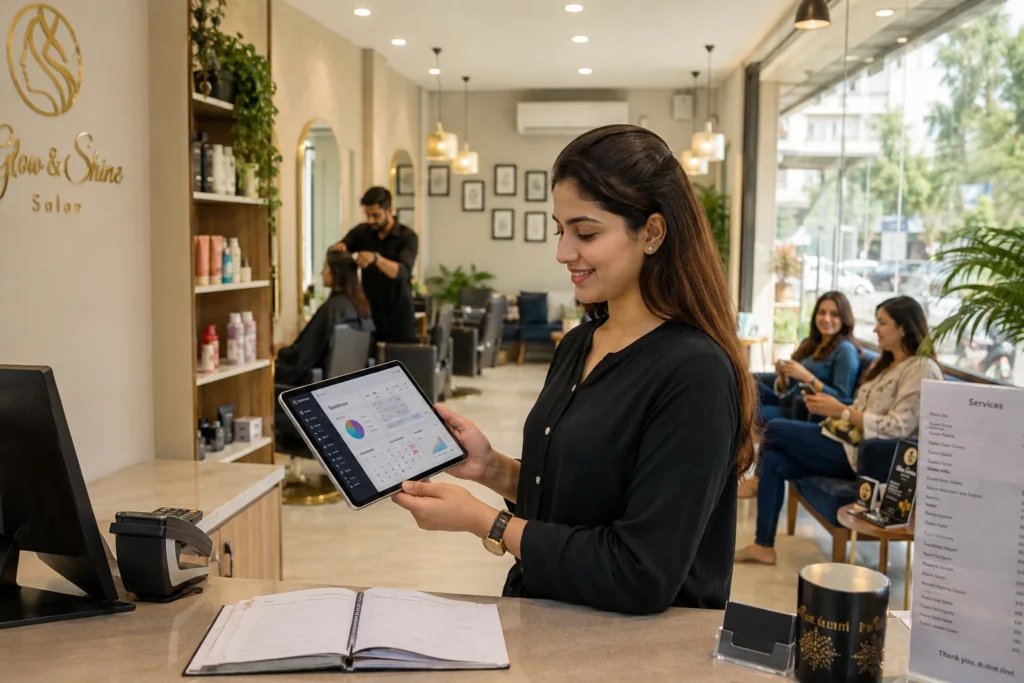
Why Salons Need the Right Management Software in 2026 Running a salon in 2026 is not the same business it was five years ago. Client expectations have shifted, competition has tightened, and the margin for operational error has shrunk to almost nothing. Clients now expect to be remembered. They want their preferred stylist, their last service, and their allergies and preferences on file without having to repeat themselves every visit. When that does not happen, they leave. And they do not always tell you why. The billing side is just as unforgiving. Manual cash handling creates gaps. Paper appointment books get lost or double-booked. Staff commissions tracked on a spreadsheet lead to disputes that damage team morale. Inventory runs out without warning, and a client shows up for a treatment you cannot deliver. Most salon owners we talk to” is a first-hand experience claim, but you don’t establish who “we” are, how many salons you’ve worked with, or what evidence supports it Here is what that actually costs you: The best spa and salon management software of 2026 does not just organize your schedule. It gives you real-time visibility into every part of your business, from your most profitable services to your lowest-performing staff days, so you can make decisions based on actual data instead of gut feeling. This is why choosing the right salon management software in 2026 is more than a technology upgrade. For growing salons, the right system can make day-to-day operations easier to manage by connecting appointments, billing, client records, staff activity, inventory, and financial reporting. Whether you manage a single chair or run multiple locations, the gap between salons using proper spa and salon management software and those still running on manual systems is widening every month. And the salons on the wrong side of that gap are feeling it in their revenue. ⚡ GET IN TOUCH Get Your Free Tecveq Salon Management System Demo – Best Salon Software 2026 💬 Chat on WhatsApp 📞 Call 0307 3319555 What Is the Tecveq Salon Management System? The Tecveq Salon Management System is a complete salon management program built specifically for salons, spas, barbershops, bridal studios, and grooming businesses that are serious about running a tighter, more profitable operation. Built by Tecveq, a software development company with clients across Pakistan, the UK, and Bahrain, the Tecveq Salon Management System was designed after one honest observation: most existing salon system options on the market are either built for Western markets with payment methods that do not work locally, priced for enterprise businesses that most salon owners cannot afford, or so feature-light they stop being useful the moment your business grows past the basics. So we built something different. What Tecveq Salon Management System Actually Does The Tecveq Salon Management System connects every part of your salon operation inside one system. Billing, client records, staff management, inventory, promotions, and financial reporting all sit in the same place and talk to each other in real time. That means when a client walks in, your staff can pull up their complete history in seconds. When a service is billed, the inventory updates automatically. When the month closes, your profit and loss report is already there, broken down by service, staff member, and payment method. No manual reconciliation. No end-of-day guesswork. No spreadsheets. Here is what comes with the Tecveq Salon Management System: Who Tecveq Salon Management System Is Built For The Tecveq Salon Management System works for a solo provider running a single chair and a multi-location brand managing a full team across branches. The system is designed to support businesses from single-location salons to multi-branch operations. It is the right fit if you run a hair or beauty salon that needs a proper beauty salon system to replace scattered manual processes. It works for barbershops and grooming studios that need the best software for scheduling for barbers paired with fast, accurate billing. Bridal and groom studios use it to manage complex multi-session packages without losing track of what has been paid, what is pending, and who is handling which appointment. Nail salons, massage spas, and boutique wellness centers use the Tecveq Salon Management System as their spa management system because it handles client records, package tracking, and revenue reporting in one place without requiring a dedicated IT person to maintain it. And for businesses watching costs closely, Tecveq Salon Management System is built to be genuinely affordable without cutting the features that actually matter. That is the difference between software built to sell and software built to run a real business. Company Information Details Company Name Tecveq Product Name TSMS (Tecveq Salon Management System) Email Address contact@tecveq.com Support Email support@tecveq.com Website www.tecveq.com Office Locations Pakistan, United Kingdom, Bahrain Primary Services Custom Software Development, AI Solutions, Salon Management Software Industry Focus Beauty Salons, Spas, Barbershops, Bridal Studios Established Software Development Agency Tecveq Salon Management System: The Best All-in-One Spa and Salon Management System Most salon owners come to us after trying two or three other systems. The story is almost always the same. One platform handled booking but had no real billing. Another had a POS but no client history. A third had reports but required three separate apps to get the full picture. And none of them supported the payment methods their actual customers use every day. That is the problem the Tecveq Salon Management System was built to solve. The Tecveq Salon Management System brings every part of your salon operation into one place. Not loosely connected. Not requiring you to export from one module and import into another. Every function, from the moment a client walks in to the moment you close your books at the end of the month, runs inside a single system that updates in real time. One System. Every Function. Zero Gaps. Here is what that looks like in practice. A client walks in. Your front desk pulls up their profile in seconds, sees their last three visits, the services they had, the staff member they prefer, and any outstanding Udhar balance. The appointment is confirmed, the service starts,