
White Label International SEO Services Built for Agencies
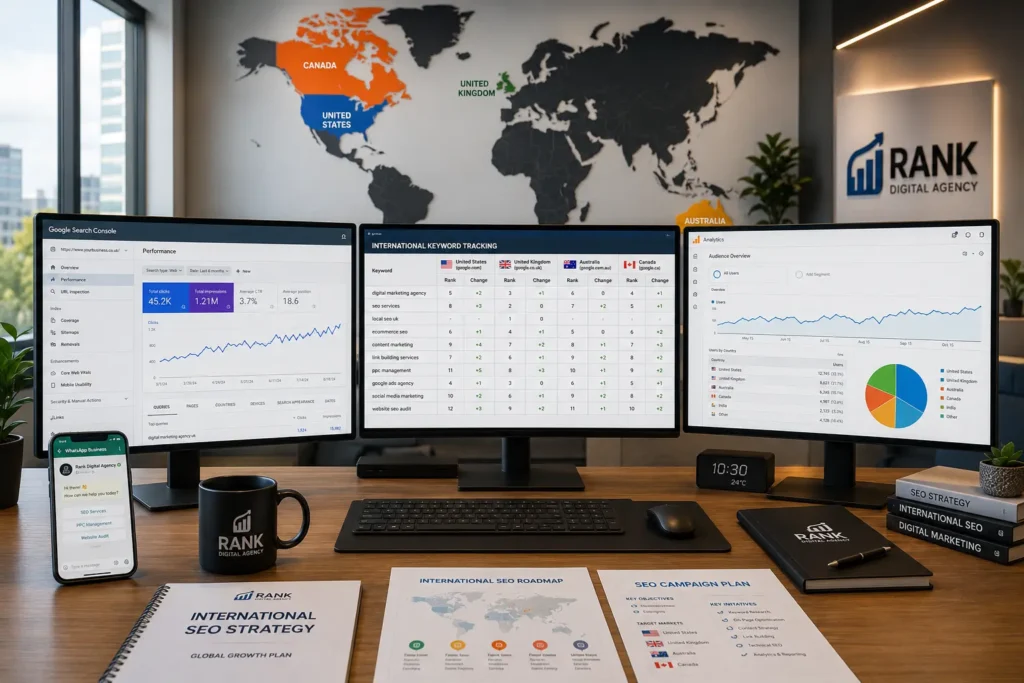
International SEO Services for Agencies Who Don’t Want to Hire a Specialist Your clients are asking for international SEO services as they expand into the UK, Australia, North America, and other global markets. Hiring in-house specialists to deliver that costs $150,000 or more per year in salary alone. And that’s assuming you can find someone qualified who actually wants to join your team Here’s what we see happening. Digital marketing agencies like yours land clients who need global SEO services, but the technical complexity stops most agencies cold. Hreflang implementation, multilingual content strategy, and regional link building across different countries. Get any of it wrong and you could tank your client’s existing rankings. Most agencies either turn away this revenue or try to learn international SEO on the fly. Both options hurt your growth. We built our white-label international SEO service specifically for agencies facing this exact problem. You keep the client relationship and take full credit for the results. We handle everything behind the scenes, from technical audits to monthly reporting, all delivered under your brand. Your clients get expert international SEO without you having to become experts yourself. You can say yes to every global expansion opportunity instead of watching that revenue walk out the door. And your clients never know we exist. ⚡ GET IN TOUCH Ready to Scale Your Agency with White-Label International SEO? 💬 Chat on WhatsApp 📞 Call 0307 3319555 The Problem: Delivering SEO Services Without the In-House Expertise International SEO requires specialists you probably don’t have on your team right now. Hreflang implementation alone can destroy existing rankings if you set it up wrong. And most agencies learn this the expensive way—after they’ve already promised results to a client. Here’s the reality we see when agencies try to handle international SEO consulting in-house. You need someone who understands technical SEO across multiple countries, knows the difference between translation and localization, can build links from regional domains, and monitors ranking changes across different search engines. That’s not one person. Most agencies already struggle with domestic SEO content writing services for their local clients. Adding international complexity without specialist support is a recipe for costly mistakes. Hiring qualified specialists costs $150,000 per year minimum, assuming you can even find people willing to join your agency. Learning it yourself takes 6 to 12 months of trial and error. Your clients can’t wait that long. But here’s the bigger problem. If you’re researching agencies for international SEO services to partner with, you’ve probably noticed something frustrating. Most providers want to work directly with your clients, not for you. They see your client referral as a lead to steal, not a partnership to honor. We’ve watched agencies recommend subcontractors who then pitched the client on additional services behind the agency’s back. Or delivered such poor work that the client blamed the referring agency, not the actual provider. Your reputation is on the line every time you recommend someone. Bad international SEO doesn’t just hurt that project. It damages the trust you’ve spent years building with your client. That’s exactly why we built our white label services differently. Unlike traditional SEO partnerships, our approach follows Google’s international SEO best practices while maintaining complete confidentiality for your agency relationships. The Solution: A Fully Managed International SEO Service You Can Resell We become your invisible international SEO team. Your clients get expert international SEO services without you hiring specialists, learning hreflang implementation, or trying to manage multilingual content strategy across four different countries at once. You won’t be stuck coordinating between a translator, a link builder, and a technical SEO person who’ve never spoken to each other. We run that whole process ourselves and hand you white-labeled deliverables ready to forward straight to your client. The result? You can say yes to more international projects and help your clients enter a global market without adding an international SEO specialist to your payroll. Most agencies turn away this revenue or spend months trying to learn international SEO themselves. You can start taking on international clients next week. International SEO Service What We Handle What Your Agency Receives International SEO Audit Technical issues, market opportunities, competitors, URL structures and international SEO risks White-labeled audit report Hreflang & Technical SEO Hreflang implementation, international URLs, XML sitemaps and technical fixes Technical implementation + health reporting Content Localization Regional keyword research, localization, content briefs and page optimization Localized content ready for client review International Link Building Relevant links and digital PR opportunities in target markets Monthly backlink report Reporting Rankings, organic traffic, conversions and market-level performance White-labeled monthly report Strategy & Optimization Ongoing testing, prioritization and market-specific optimization Strategy updates and recommendations Comprehensive International SEO Audit & Market Analysis Every project starts with a full international SEO audit of your client’s website and their competitors in each target market. We check for hreflang errors, duplicate content across regional pages, and site-structure problems that could hurt rankings the moment you try to expand into a new country. We build the audit around the client’s actual industry, the specific markets they’re targeting, and how their site is currently structured, not a fixed template we run on every account. It carries your branding throughout, so you present it to your client as your team’s work. This isn’t a generic template report. We customize every audit based on the client’s industry, target markets, and existing website structure. Whether your client needs enterprise SEO strategies for large-scale international expansion or focused market entry, each audit addresses their specific situation. You can present this audit as your own work because it carries your branding throughout. Hreflang Implementation & Technical SEO Setup Hreflang tags are the single most common technical mistake that wrecks international SEO campaigns. Get them wrong and you can hurt rankings you already have while trying to gain new ones. We implement and validate hreflang annotations across the relevant regional and language versions, checking for common issues such as incorrect language-region codes, missing return links, and inconsistent URLs before the implementation goes live.
What to Look for in Custom Mobile App Development Services: A Complete Buyer’s Guide

Why Choosing the Wrong Mobile App Development Partner Can Cost You Everything Hiring the wrong custom mobile app development company is one of the most expensive mistakes a business can make. I have spoken with founders who spent $80,000 and eight months on an app that never launched. I have heard from business owners who received a finished app that crashed every time more than 50 users logged in at once. And I have met product managers who handed a mobile application development project to an agency that went silent three months in, taking the code and the deposit with them These are not rare horror stories. They happen more often than most agencies will admit. The truth is that custom mobile app development services vary wildly in quality, process, and honesty. Some agencies build genuinely great products. Others take your money, produce something that barely works, and move on to the next client. The difference between the two is not always obvious from a website or a sales call. What goes wrong most often? Scope creep is the most common. A project starts at $40,000 and a four-month timeline. Six months later you are at $90,000, the app is still not finished, and every new requirement adds another invoice. Nobody told you upfront that changes cost extra or how much extra. Then there is the communication problem. You hired an agency. They assigned a junior developer. You send messages and wait three days for a response. You have no idea what stage the project is at or whether you are on track. And sometimes the agency simply disappears. Payments accepted. The project started. Then nothing. This guide exists because I got tired of watching businesses go through this. I am going to show you exactly what to look for when you hire mobile app developers, what questions to ask before you sign anything, and which warning signs tell you to walk away before it costs you everything. By the end of this, you will know how to find a mobile app development company worth trusting and how to start your project with clear expectations on both sides. ⚡ GET IN TOUCH Ready to build your app right? Get a free strategy call and cost estimate. 💬 Chat on WhatsApp 📞 Call 0307 3319555 What’s Actually Included in Custom Mobile App Development Services Most people searching for custom mobile app development services picture one thing: a developer writing code. That is maybe 40% of what actually goes into building an app that works, looks professional, and survives its first year in the market. The other 60% is everything agencies forget to mention until you are already signed and paying. A complete custom mobile app development service covers strategy, design, platform development, backend infrastructure, testing, App Store submission, and what happens after your app goes live. If an agency pitches you on “development only” and treats everything else as an add-on, that is a sign they are either underquoting to win the deal or expecting you to fill the gaps yourself. Here is what every component actually means for your project and why skipping any of them creates problems you will pay to fix later. Strategy and Consulting Good agencies push back. Not to be difficult, but because the first version of every app idea almost always includes features that users will not use and is missing something users actually need. Before a single line of code gets written, the right development partner sits down with you to figure out what your app actually needs to do, who will use it, and what the smallest version looks like that still solves the core problem. This is where problem solving starts in the development process. App development consultancy is not a sales conversation. It is a working session that shapes the entire project around the problem your app needs to solve Skipping this stage is how projects end up six months in and $70,000 over budget because the original plan was built on assumptions nobody tested. Mobile App UI/UX Design Design is not about making the app look attractive. That matters, but it is not the point. Mobile app UI/UX design directly shapes the user experience, determining whether someone who downloads your app figures out how to use it in the first 60 seconds or deletes it in frustration. It determines whether users complete a purchase or abandon the cart. It also determines whether your customer support inbox fills up with “How do I do this?” messages or stays quiet because the app explains itself Bad design kills otherwise good apps. I have seen technically solid apps with terrible retention numbers purely because users could not find the features they needed. The design phase produces wireframes first, then high-fidelity mockups you review and approve before development starts. What you see in those mockups is what gets built. iOS and Android App Development This is the part most clients picture when they think about mobile app development. But there is an important choice here that affects your budget and timeline significantly. iOS app development services and Android app development services are separate products when built natively. Native iOS apps are written in Swift and run on iPhones and iPads. Native Android apps are written in Kotlin and run on Android devices. Building both natively means two separate codebases, two sets of developers, and roughly double the development time. Cross-platform app development using frameworks like React Native or Flutter lets you build one codebase that runs on both platforms. For most business apps, this is the right approach. It costs less, launches faster, and performs well enough for the majority of use cases. If you’re specifically looking at restaurant app development in Pakistan, cross-platform is often the most cost-effective choice for local restaurants wanting both iOS and Android presence. Backend Development and Integrations Your app is the part users see. The backend is everything that makes it actually work. Backend development for mobile apps
The SaaS SEO Agency That Grows Your MRR, Not Just Your Traffic
We’re a SaaS SEO agency that specializes in one thing: helping software as a Service companies turn organic search into their most profitable customer acquisition channel. Not another generalist agency that treats your B2B product like an e-commerce store or plasters “SaaS” on generic blog strategies. We focus on what actually matters to your business. Demo requests. Free trial signups. Pipeline growth. Monthly recurring revenue increases that you can show your board. product-qualifiedMost SEO agencies chase vanity metrics. They’ll send you reports filled with traffic numbers and keyword rankings while your actual lead quality stays flat. We measure success differently. Our SaaS clients track organic leads through to closed revenue, and we optimize for the metrics that matter: cost per acquisition, product qualified leads, and how much of your pipeline comes from organic search instead of paid ads that get more expensive every quarter. Here’s what that looks like in practice. When you work with us, we map every piece of content to your sales funnel stages. We build comparison pages that capture bottom-of-funnel searches when prospects are choosing between you and competitors. We create product-led content that explains your features as solutions, not technical specifications. We optimize the pages that actually convert visitors into trials, not just the blog posts that generate research traffic from students and job seekers. And we prove ROI. Our reporting connects organic traffic directly to your CRM data so you can see exactly how many demos came from organic search, how many converted to customers, and what your true customer acquisition cost is for the SEO channel compared to paid ads. Ready to see how this works for your SaaS? Book a free 30-minute strategy call and we’ll show you exactly where your competitors are ranking, what keywords are driving their demo requests, and how we’d approach growing your organic pipeline in the first 90 days. ⚡ GET IN TOUCH Ready to outrank your SaaS competitors? Get your free 30-minute strategy call today. 💬 Chat on WhatsApp 📞 Call 0307 3319555 Why Isn’t Your SaaS Ranking on Google? (And Why Generic SEO Agencies Keep Failing You) one,Your SaaS product solves real problems. Your website explains what it does. You’ve published blog content. But when potential customers search for solutions in your category, your competitors show up on page one and you’re buried on page three or not ranking at all. Here’s what’s actually happening. Generic SEO agencies treat every client the same way. They build blog content around high-volume informational keywords, optimize your homepage for your product category, and send you monthly reports showing traffic increases. What they don’t tell you is that the traffic they’re generating comes from job seekers researching your industry, students writing papers, and overseas users who will never buy a B2B software product that costs $5,000 per year. They don’t understand the B2B SaaS marketing funnel. SaaS buyers don’t search for generic category terms and convert immediately. They research for three to six months. They compare your product against five competitors. They download comparison guides. They read review sites. They search for specific feature terms and integration questions. Then, after weeks of internal evaluation, they finally request a demo. Your content needs to be mapped to each stage of that SaaS sales funnel. Awareness stage content that explains the problem. Consideration stage content that positions your product as the solution. Decision stage content like comparison pages and alternative pages that capture prospects who are actively choosing between you and named competitors right now. Most agencies skip the bottom-of-funnel content entirely. Why? Because it’s harder to scale than generic blog posts, and it requires actual understanding of how your product works and who your competitors are. Why B2B SaaS SEO Is Different From Every Other Industry We’ve worked with B2B SaaS companies long enough to know exactly where generic strategies fall apart. First, your sales cycle is long. Effective SaaS growth marketing requires content that nurtures prospects over months, not content that tries to close a sale in one visit. Your blog can’t just attract traffic. The content has to educate, build trust, and keep prospects engaged until they’re ready to talk to sales. Second, you’re targeting multiple personas. The end user who will actually use your software searches differently than the VP who approves the budget. Generic agencies optimize for one keyword set. We build SEO strategies that support your demand generation engine by creating content for every decision maker in the buying committee. Third, your competitive landscape is fundamentally different from that of a local service business.You’re competing against funded SaaS companies with $500K annual content budgets and enterprise brands that have been publishing for a decade. A generic SEO approach that works for a local service business will never move the needle when you’re trying to outrank companies with domain authority three times higher than yours. Which is exactly why you need a B2B SaaS SEO agency that understands these challenges and knows how to win in competitive markets without requiring you to match your competitors’ content budgets dollar for dollar. We do it by being smarter about keyword targeting, more strategic about content types, and more focused on the content that actually converts trials and demos instead of just generating traffic that looks good in a report but contributes nothing to your pipeline. Who Is SaaS SEO Best Suited For? SaaS SEO works best when organic search can influence a meaningful part of the buying journey. Our approach is particularly suited to B2B SaaS companies with a defined product category, an identifiable target audience, and enough customer value to justify investing in long-term organic acquisition. This can include early-stage SaaS companies building their first organic acquisition channel, growth-stage companies looking to reduce dependence on paid acquisition, and established software businesses competing for high-value commercial searches. How SaaS SEO Actually Works (The 5 Tactical Differences That Matter) A true SaaS SEO strategy addresses long sales cycles, multiple buyer personas, and competitive markets where your direct competitors have
Enterprise SEO Agency That Connects Rankings to Revenue

Why Standard SEO Breaks Down at Enterprise Scale If you’re evaluating an enterprise SEO agency, you’re probably past the basics. You already know SEO matters. The harder problem is execution: managing complex websites, multiple business units, technical dependencies, approval workflows, and thousands of pages without putting existing organic performance at risk. Your dev team operates in two-week sprints, but your SEO priority has been waiting three months for approval. One template change affects 47,000 URLs across six product lines, and nobody wants to be the one who breaks what’s already ranking. Your content team just built a great resource hub, but it lives in a subdomain that Google barely crawls because nobody fixed the internal linking architecture three site migrations ago. This is where standard SEO advice stops working. Why Standard SEO Processes Break Down at Enterprise Scale Small business SEO is about ranking a few dozen pages for local searches. Enterprise SEO is about protecting existing performance across thousands of pages while coordinating changes through Legal, Product, Engineering, Brand, and three regional marketing teams, who all report to different VPs. Here’s what that actually looks like. Your competitors launch a new content initiative in two weeks. Your version of the same initiative requires sign-off from stakeholders across four departments, a compliance review, translation into six languages, and technical implementation that won’t happen until Q3 because Engineering is focused on the platform migration. By the time your content goes live, the search landscape has shifted and your competitors already own the visibility you were targeting. Large-site SEO migration is another pressure point most agencies have never managed. When you’re replatforming 80,000 product pages, one redirect mapping error can cost you 40% of your organic traffic overnight. We’ve seen it happen. A mid-market agency treats migration like a checklist. An enterprise agency treats it like open-heart surgery because that’s what it is when your site generates $200 million in annual revenue. Cross-team SEO collaboration becomes the bottleneck faster than technical problems do. Your SEO roadmap says “fix canonicalization across the blog.” But the blog is owned by Content, hosted on a separate CMS managed by a vendor in Austin, and making changes requires a ticket that goes through a queue engineering deprioritized two quarters ago. The problem isn’t that nobody knows how to fix it. The problem is nobody owns the outcome across all those handoffs. And then there’s reporting. Your CMO doesn’t care about keyword rankings. She cares whether organic search is supporting the Q2 product launch in EMEA and whether the 15% traffic increase you’re showing her actually drove pipeline for the sales team or just informational visits that bounced. Standard SEO reporting shows site-wide traffic. SEO governance at enterprise scale means showing performance by business unit, region, product family, and buyer stage so every stakeholder sees the slice that matters to their goals. Most SEO agencies will tell you they can “scale up” for enterprise clients. What they mean is they’ll assign more people to your account. What you actually need is a team that has worked inside these constraints before and knows the difference between an SEO problem and an organizational structure problem that happens to show up in your search performance. We’ve managed SEO for companies where a single page change requires sign-off from twelve people. We’ve coordinated search strategies across brands operating in 47 countries with different regulatory requirements in each one. We’ve protected organic traffic during migrations where the technical documentation was incomplete and the legacy platform was so old the original developers had retired. That’s the difference. Standard SEO breaks down when the problem isn’t what to do. The problem is how to get it done when six teams need to agree, three systems need to integrate, and the current performance you’re trying to protect is worth eight figures in revenue. If that sounds familiar, you’re in the right place. What Makes Enterprise SEO Different (And When You Actually Need It) Not every company needs enterprise SEO. A 200-page website with one marketing manager and a clear content calendar can do well with a solid standard search engine optimization strategy. But there’s a point where the normal approach stops fitting the actual problem, and companies that push past that point without changing their approach tend to lose ground to competitors who did. Enterprise SEO services are built for organizations where complex websites, multiple teams, technical dependencies, and large-scale search demand make standard SEO processes difficult to execute effectively. The fundamentals remain the same, but the systems used to manage them need to work across thousands of URLs, multiple markets, business units, platforms, and stakeholders. Instead of treating each technical, content, and reporting issue as an isolated task, these solutions connect site architecture, content systems, governance, measurement, and execution into one coordinated SEO program. Here’s how to know which side of that line you’re on. The Enterprise SEO Difference: What Changes at Scale The fundamentals of SEO don’t change. Technical health, content relevance, and authority still drive rankings. What changes at enterprise scale is how you manage those fundamentals across thousands of pages, dozens of internal stakeholders, and systems that don’t always talk to each other. What Standard SEO Handles What Enterprise SEO Also Solves Fix technical SEO issues on a few hundred pages Triage technical debt across 50,000+ pages without disrupting what’s already ranking Build a content calendar based on target keywords Design content systems that scale across business units without creating duplicate content Track rankings month over month Report performance by product line, region, business unit, and buyer stage Write and publish content through one CMS Navigate SEO governance across multiple platforms, teams, and approval workflows Build backlinks to improve domain authority Manage authority programs at scale with risk controls that protect the brand Respond to algorithm updates Monitor ranking changes by page family and connect movement to specific business impact The difference isn’t complexity for its own sake. It’s that an enterprise client needs answers at a level of specificity that standard SEO tools
Ecommerce SEO Services That Actually Grow Your Store’s Revenue in Pakistan
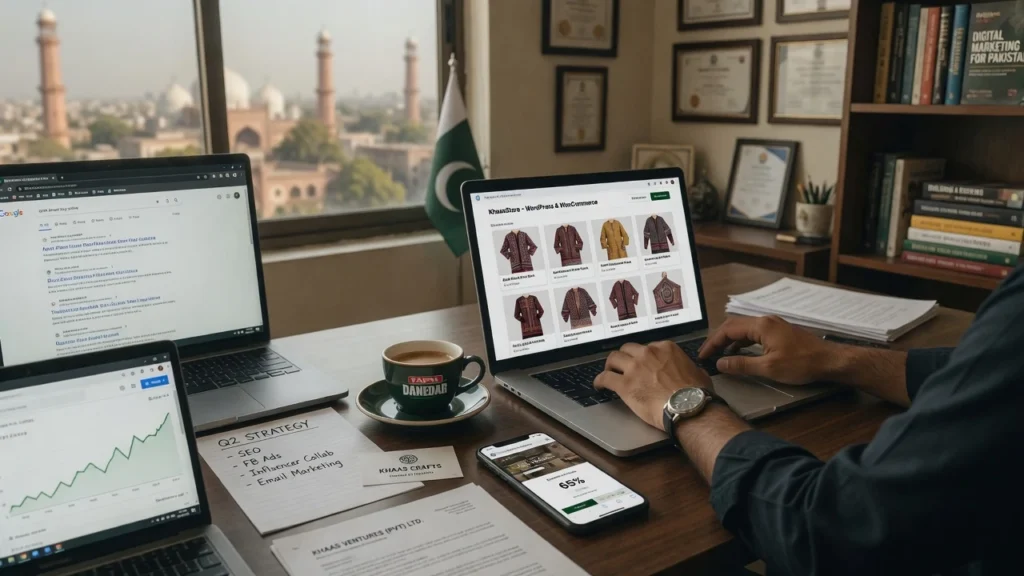
Why Your Ecommerce Store Isn’t Ranking And How Our Ecommerce SEO Services Fix It You’ve done everything the ecommerce SEO guides tell you to do. Installed the plugins, written meta descriptions for your top products, maybe even paid an agency to optimize your store. But when you search for the exact products you sell, your competitors show up on page one and you’re buried on page three or worse. And the frustrating part? You’re spending more on Facebook and Google ads every month just to maintain the same sales. The cost per click keeps going up. For most Pakistani ecommerce stores, ad spend is eating 20 to 30 percent of every sale. You know organic traffic would fix this. But your store just won’t rank no matter what you try. There is a reason for that and it is fixable Here’s why generic SEO doesn’t work for ecommerce stores. Your store isn’t a blog with 50 articles. It’s a catalog with hundreds or thousands of product pages, category pages, filter pages, and variant pages that all look similar to Google. Most SEO strategies are built for service websites or content sites. They completely ignore the technical complexity that makes ecommerce SEO services different from everything else in digital marketing. Your products might be using the exact same descriptions your supplier gave you. So are ten other stores selling the same items. Your products might be using the exact same descriptions your supplier gave you. So are ten other stores selling the same items. When product pages contain little original or useful information, it becomes harder for them to differentiate themselves in search results. Your site might load fast on your office WiFi but take significantly longer on a mobile connection. That’s why we look at product content, page experience, technical SEO, and search intent together instead of treating rankings as a keyword-only problem. Or maybe your category pages have no real content, just product grids. Google has nothing to rank. Your internal linking might send all the authority to your homepage while your actual product and category pages stay invisible. Your product schema might be missing or broken, so Google can’t show your prices and star ratings directly in search results and you lose clicks to competitors whose listings look richer ⚡ GET IN TOUCH Stop Paying for Every Customer – Start Ranking for Free Traffic 💬 Chat on WhatsApp 📞 Call 0307 3319555 This is exactly what real ecommerce SEO services fix. We don’t just install a plugin and hope for the best. We audit your entire store first, identify the specific technical, content, and structural problems holding your products back, then fix them in the right order for fastest ranking impact. We’ve optimized WooCommerce, Shopify, and custom-built stores across fashion, electronics, and B2B catalogs in Pakistan. We know what actually moves ecommerce rankings because we’ve done this work across stores ranging from 20 products to 5,000-SKU catalogs Not sure where your store is falling short? Request your free ecommerce SEO audit. We’ll show you exactly what’s holding your rankings back, which fixes will have the biggest impact, and what realistic organic traffic growth looks like for your specific catalog. What’s Included in Our Ecommerce SEO Services Ecommerce SEO isn’t a single task you check off a list. It’s a coordinated combination of technical fixes, content optimization, and authority building that all work together to get your products ranking and your store generating consistent organic revenue. We built this approach specifically for online stores because the SEO that works for service websites or blogs fails completely when applied to product catalogs. Here’s exactly what we do for every ecommerce client. Ecommerce SEO Strategy Customized to Your Catalog We don’t use the same marketing strategies for every store. A 50-product boutique needs a completely different approach than a 500-product wholesale site or a 5,000-SKU marketplace. We analyze your catalog size, your competition level, your profit margins, and your platform before we recommend anything. Then we map keywords to your actual product hierarchy so every category page and product page targets the right search terms for your specific business not just the terms with the highest volume. The stores on page one didn’t get there by accident. They got there because someone built a strategy specifically around their catalog instead of following a generic SEO checklist. That’s how we work too Technical SEO for Ecommerce: Speed, Mobile & Indexing Fixes Most ecommerce ranking problems are technical. Google can’t rank pages it can’t crawl properly. We fix the foundational issues that keep your products invisible: site speed problems that make visitors leave before your page loads, crawlability errors that prevent Google from finding your pages, duplicate content generated by filter and variant URLs, and missing or broken schema markup that hides your prices and reviews from search results. We optimize your Core Web Vitals scores following Google’s official guidelines so your store meets the speed and user experience standards that directly impact search rankings on mobile networks. And here’s the part most agencies miss completely. Faceted Navigation & URL Management Filters for size, color, brand, price and other attributes can create hundreds or thousands of URL variations from a relatively small product catalog. We review which filtered URLs should be crawlable and indexable, which should remain accessible to users without competing for search visibility, and how canonicalization and internal linking should be handled. The goal is to make useful pages discoverable without allowing low-value URL variations to overwhelm your crawl and indexing signals. Mobile Optimization for Pakistani 4G Networks Your store might load in two seconds on your office WiFi. But most of your visitors are on mobile using Jazz, Zong, or Ufone 4G connections that load pages significantly slower than the US or European broadband connections most international agencies test on. We test your site on real Pakistani mobile network conditions and optimize specifically for those speeds. We compress images without losing visual quality, lazy load everything below the fold, minimize code