
Shopify SEO Agency That Grows Your Store Revenue, Not Just Rankings
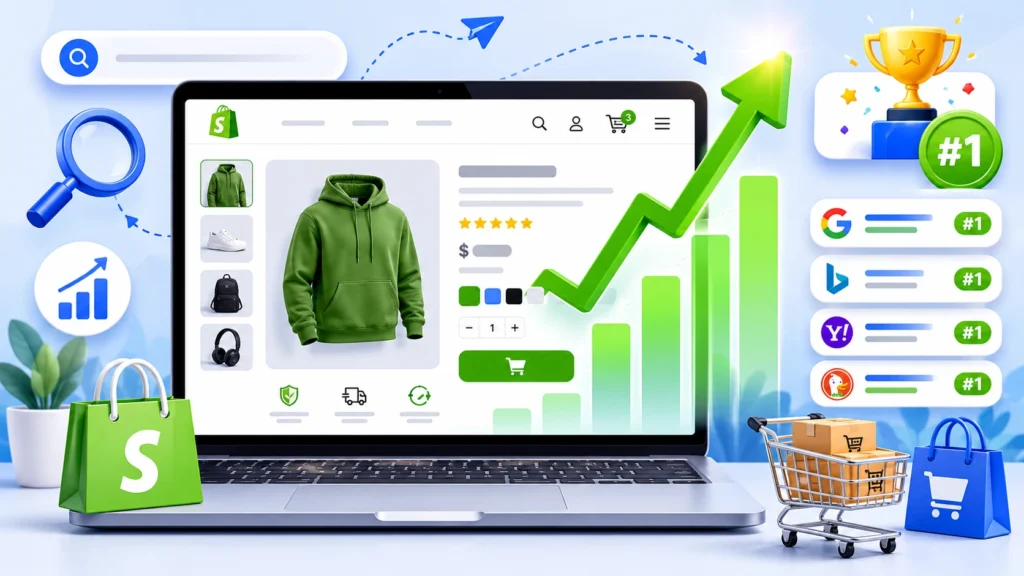
Shopify SEO Services That Turn Search Visibility Into Sale You built a beautiful Shopify store with great products, but something’s wrong. Your Google Analytics shows visitors coming to your site, but they’re not buying anything. Or worse—barely anyone finds your store at all. We see this frustrating situation every week. Store owners pour money into Facebook ads and Google Ads just to get traffic, while their competitors somehow rank at the top of Google search results for the exact same products. Your potential customers are searching for what you sell, but they’re finding other stores instead of yours. The problem isn’t your products or your prices. It’s that Google can’t properly understand and rank your Shopify store. Without strong organic traffic for Shopify stores, you’re stuck paying for every single visitor through ads. And that’s not sustainable for long-term growth. Here’s what we hear from frustrated store owners every day: “I know people are searching for my products because I see the search volume in Google Ads. But when I search for those same terms, my store is nowhere to be found. My competitors are ranking on page one while I’m invisible.” This happens because most Shopify stores have technical SEO problems they don’t even know about. Duplicate content issues, poor site structure, missing optimization—these invisible problems prevent Google from showing your products to customers who are ready to buy. You shouldn’t have to choose between paying for ads forever or watching competitors steal your potential customers. Shopify SEO is a specialized form of search engine optimization focused on improving your store’s visibility across product, collection, category, and informational searches that can lead to sales. We’ve helped dozens of Shopify store owners break free from ad dependency and increase Shopify sales with SEO that actually works. Most see their first organic sales within 60 days, and many cut their ad spending in half within six months while growing total revenue. But first, let us show you exactly how we make Shopify stores visible to customers who are ready to buy. ⚡ GET IN TOUCH Why do competitors rank while your store stays invisible? Find out free 💬 Chat on WhatsApp 📞 Call 0307 3319555 Why Choose Our Shopify SEO Agency? Most Shopify SEO agencies will show you charts of keyword rankings and traffic increases. We show you revenue growth and actual sales numbers. Here’s the difference. Other agencies get excited when your store ranks #3 for a keyword that brings 500 visitors who never buy anything. We focus on getting your products found by customers who are ready to purchase right now. Rankings without sales don’t pay your bills. We’re completely transparent about our process and pricing. While other agencies make you call for a quote or sit through a sales pitch to learn what they actually do, we tell you upfront exactly what our Shopify SEO services cost and what happens in your first 90 days. No hidden fees. No surprise charges after you sign. And here’s what most e-commerce SEO agencies miss entirely: Shopify stores have unique technical challenges that generic SEO companies don’t understand. Collection pages that create duplicate content issues. Apps that slow down your site. Product variants that confuse Google. Theme limitations that hurt your rankings. We’ve worked exclusively with Shopify stores since 2019. Not WordPress sites. Not custom e-commerce platforms. Just Shopify. Which means we know exactly how to fix the platform-specific problems that keep your store invisible in search results. Most agencies will promise you “more traffic” without caring if that traffic converts into customers. We promise you more qualified organic visitors who actually buy your products. Because what good is doubling your website traffic if your sales stay the same? Our Shopify SEO expert team tracks revenue per organic visitor, conversion rates by traffic source, and total organic sales growth. Not just keyword positions and page views. We care about the metrics that matter to your business. When you work with us, you get honest timelines, realistic expectations, and clear communication about what’s working and what isn’t. No fluff reports full of vanity metrics. Just straight talk about how we’re growing your organic sales. Other Shopify SEO agencies won’t tell you this upfront because they want you to call first. We’ll tell you right here: most stores see their first increase in organic sales within 60 to 90 days, with significant growth happening in months 4 through 6. That’s the kind of transparency that separates real professionals from agencies that just want your monthly retainer fee. Our Complete Shopify SEO Services for Growing Stores Our Shopify SEO services cover everything needed to turn your store into an organic sales machine. Not just basic optimization that every agency offers. We handle the complete Shopify store optimization process, from technical fixes that help Google find your products to content strategies that bring in customers who are ready to buy. Every service we offer has one goal: increasing your organic revenue, not just your website traffic. Most store owners don’t realize their biggest SEO problems are invisible. Duplicate URLs from collection filters. Apps that slow down page loading. Missing structured data that prevents rich snippets in search results. We fix these technical issues first because they’re blocking everything else from working properly. But technical fixes alone won’t grow your business. You need product pages that rank for buying-intent searches and collection pages that capture customers looking for specific product categories. We optimize both to turn search visibility into actual sales. Here’s exactly what our Shopify SEO services include and what each one does for your bottom line. Shopify Technical SEO and Store Health We start by fixing the technical problems that prevent Google from properly crawling and indexing your store. Many Shopify stores have technical SEO issues that can limit crawling, indexing, page performance, or search visibility without the owner realizing it Our Shopify technical SEO audit identifies duplicate content from collection pages, slow-loading product images, missing canonical tags, and broken internal links. We
Construction ERP Software That Actually Works for Your Business
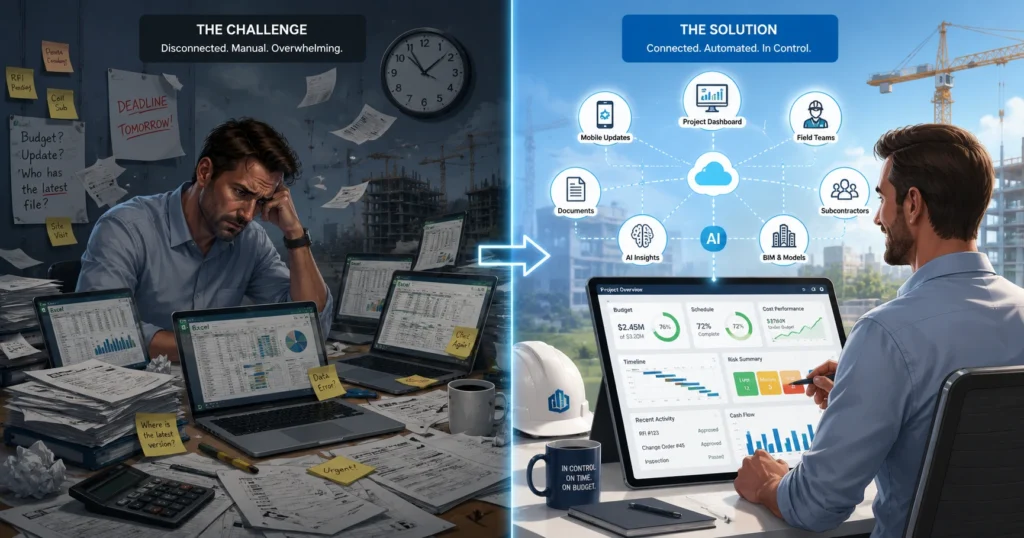
How Construction ERP Software Stops Spreadsheets and Disconnected Tools From Costing You Money We see this every day across construction companies of every size. Project data scattered across five different systems, none of them connected, none of them current. Your project manager updates costs in one spreadsheet. Your accountant tracks expenses in a separate system. Your field supervisor fills out paper time forms that sit in a pile for two weeks before anyone touches them. Meanwhile, you’re trying to determine whether Project A is genuinely profitable or quietly draining cash, and you won’t have a clear answer until the damage is already done Last month, you probably discovered a cost overrun that should have been caught three weeks earlier. Or found out a subcontractor submitted an invoice that doesn’t match what your project manager approved. These construction project management challenges aren’t just frustrating – they’re expensive. Here is what construction companies tell us changes first when they move from disconnected tools to an integrated ERP system. The key benefits are clearer project visibility, less duplicate data entry, faster financial updates, and more organized compliance management. Instead of relying on separate systems and manual processes, teams can work from the same current information across the business. ‘I have no real-time visibility into project costs. By the time I see the numbers, they’re already two weeks old and I’m reacting to problems instead of preventing them.’ That’s a project director at a mid-sized general contractor. He was running six active jobs when he said it. ‘We’re entering the same data into three different systems. My team spends hours every week on duplicate entry that contributes nothing to actually managing projects.’ We hear this constantly from companies that have patched together construction project management software with accounting tools and field apps that were never designed to connect. ‘Compliance documentation is everywhere. When regulators show up, it’s a scramble to find safety training records and permit files before the auditor loses patience.’ For companies managing multiple active sites, construction compliance management handled manually isn’t a system it’s a liability ⚡ GET IN TOUCH Your Cost Overruns Are Already Happening. You Just Don’t Know It Yet. 💬 Chat on WhatsApp 📞 Call 0307 3319555 Why Construction Companies Choose ERP Software Over Disconnected Tools Construction ERP software connects your project data, financial information, and field operations inside one system so you can see what is actually happening across every active job in real time, without calling three people to get a number. Your project costs, your subcontractor commitments, your change orders, your compliance records all of it lives in one place and updates automatically as your team works. No more scattered spreadsheets. No more field reports buried in email chains. If you are still evaluating whether to build, buy, or outsource your software solution, our guide on build vs buy vs outsource software breaks down exactly what that decision costs you long term. . No more compliance documentation that nobody can find when an auditor walks in. Here is what construction companies tell us changes first when they move from disconnected tools to an integrated ERP system. Project visibility stops being a phone call. Instead of tracking down three people to find out if Project B is on budget, you open one dashboard and see current costs, committed expenses, change order impacts, and projected final numbers — all updated as of this morning, not two weeks ago. Duplicate data entry disappears. When your foreman submits a daily report from the job site, that single entry automatically updates project costs, feeds into construction payroll software calculations, and logs equipment usage hours. Your team enters information once. Everything else updates itself. Compliance stops being a crisis. Safety training records, permit documentation, and regulatory certifications update in real time as your team documents normal daily work. When an auditor arrives, the records are already organized. Construction compliance management stops being a scramble and starts being a standard outcome. This is what enterprise resource planning construction software is designed to do. It takes all the separate pieces of running a construction business and connects them so information flows naturally from the field to the office to your financial reports. According to the Associated General Contractors of America, construction productivity has declined over the past decade despite technological advances, largely due to fragmented data systems and inefficient project coordination. The biggest concern we hear before implementation is always the same: ‘We can’t afford to disrupt operations while we’re in the middle of active projects.’ That’s a legitimate concern, and it’s exactly why we built our implementation process around maintaining operational continuity. ERP for construction companies is not a rip-and-replace exercise. We work around your active project schedule and build the new system while your existing operations continue without interruption. Most of our clients are running real-time cost tracking within the first month. By month two, duplicate data entry is largely eliminated and field teams are submitting reports digitally without paper. The manual work your team currently handles re-entering data, chasing down approvals, assembling weekly reports doesn’t have to be part of your operation. It’s something you can stop doing. How StrategicERP’s Construction ERP Software Solves Real Industry Problems StrategicERP’s construction ERP software connects your entire operation estimating, procurement, field reporting, project accounting, and compliance through one platform built from the ground up for construction workflows. Not adapted from generic business software. Not retrofitted with construction modules after the fact. Built specifically for the way construction companies manage projects, people, and costs from bid to closeout We have implemented construction ERP software for over 1,100 construction companies general contractors, EPC firms, MEP contractors, civil engineering companies, and real estate developers. The pattern we see in every engagement is the same: the problem isn’t that your teams aren’t working hard enough. The problem is that your tools were never designed to work together the way a construction operation actually runs. Construction ERP systems solve that disconnect by bringing project, financial, field, procurement, and compliance information into