
Best Accounting Software in Pakistan (2026) — Custom-Built by Tecveq

Pakistani Businesses Are Moving Toward Custom Accounting Software in 2026 We build accounting software specifically for your business because off-the-shelf solutions no longer keep up with what Pakistani companies actually need. The best accounting software in Pakistan is not something you download and force your workflow into. It is software designed around how your business already operates. Most businesses we talk to started with generic accounting tools. They seemed fine at first. Then the problems started showing up. The software could not handle their inventory the way they tracked it. Reports did not match what their accountant needed for tax filing. Multi-branch syncing broke constantly. FBR compliance became a guessing game. And when they called support, they got generic answers that did not solve Pakistan-specific problems. Custom-built accounting software solves this completely. We sit down with you and map out exactly what your business does. How you invoice clients. How you track stock across warehouses in Karachi and Lahore. What reports does your CFO need every Monday morning? What FBR filing requirements do you have to meet without errors? Then we build the software to do exactly that. No forcing your process into someone else’s template. No paying for features you will never use. No waiting months for a vendor to maybe add the one feature that would save you 10 hours a week. Top accounting software in Pakistan is shifting toward this model because businesses are tired of adapting to software instead of software adapting to them. We have built systems for manufacturers tracking raw materials and finished goods simultaneously. Retail chains running 15 locations with different pricing models. Service companies managing project budgets and client retainers across teams. Each one is different. Each one built to fit. The companies growing fastest right now are the ones using tools built specifically for their operation. Not generic solutions their competitors also use. FBR Digital Invoicing Compliance Now Defines “Best” in Pakistan FBR compliance is not optional anymore, and it is not something you can patch onto old accounting software at the last minute. The Federal Board of Revenue has made integrated e-invoicing and digital tax reporting mandatory for businesses across Pakistan, fundamentally changing what makes accounting software actually usable. Which accounting software is used in Pakistan successfully right now depends entirely on whether it handles real-time e-invoicing, automated tax reporting, and audit-ready record keeping without manual workarounds. We build FBR compliance directly into every accounting system we create. Not as an add-on feature. As the foundation. Real-Time E-Invoicing Requirements for 2026 Every invoice your business generates must sync with FBR systems in real time starting this year. The requirement is not just about uploading files at month-end. It means live integration so every sale you record gets reported to FBR immediately with the correct tax breakdown and client details. We integrate this directly into your invoicing workflow. When your team creates an invoice in the system, it automatically formats everything according to FBR standards, assigns the correct tax codes, validates the client NTN, and transmits the data instantly. No separate upload process. No month-end reconciliation panic. No rejected filings because someone forgot to include a required field. Most businesses using older software are still doing this manually. They generate invoices in their system, then recreate the same data in a separate FBR portal. That doubles the work and doubles the chance of errors. And when FBR audits your records, any mismatch between your internal invoices and what you filed triggers immediate red flags. We eliminate that completely. One invoice. One entry. Automatically compliant. Penalties and Risks of Non-Compliant Systems FBR penalties for non-compliant invoicing start at PKR 20,000 per missed or incorrect filing and scale up fast. We have talked to businesses hit with penalties exceeding PKR 500,000 because their accounting software could not generate audit-compliant reports and they missed filing deadlines trying to fix it manually. But the real risk is not just fines. It is the operational damage that happens when you cannot trust your own financial data. Non-compliant systems force your team to maintain two sets of records. One in your accounting software. One for FBR. Those records drift apart over time. Then when your accountant needs accurate numbers for tax filing or your bank needs verified financials for a loan application, you spend days reconciling conflicting data. And you still are not sure which version is correct. We build the system so compliance is automatic. Every transaction you record is structured correctly from the start. Tax calculations happen in real time based on current FBR rates. Reports generate in the exact format FBR requires. When audit season comes, you pull the report and submit it. Done. No last-minute data cleanup. No paying your accountant extra hours to reverse-engineer compliant records from non-compliant software. No wondering whether you will pass the audit. The companies we work with sleep better during tax season because their software handles compliance automatically and they know their numbers are accurate. ⚡ GET IN TOUCH Build FBR-Compliant Accounting Software for Your Business | Free Consultation with Tecveq 💬 Chat on WhatsApp 📞 Call 0307 3319555 Core Features That Separate Reliable Accounting Software From the Rest We have built accounting systems for over 200 Pakistani businesses, and the pattern is always the same. Companies do not fail because their software lacks fancy features. They fail because their software cannot handle the basics flawlessly under real business pressure. The best bookkeeping software is not the one with the longest feature list. It is the one that handles your daily accounting workload without breaking, without requiring workarounds, and without forcing you to double-check everything manually because you do not trust the numbers. Here is what actually matters when you are running a business in Pakistan and need software that works every single day without fail. Invoicing and Automated Tax Reporting Your invoicing system should create a complete audit trail from quote to payment without you thinking about it. We build invoicing modules that generate sequential
SaaS Learning Management Systems: Built for Scale, Security, and Growth
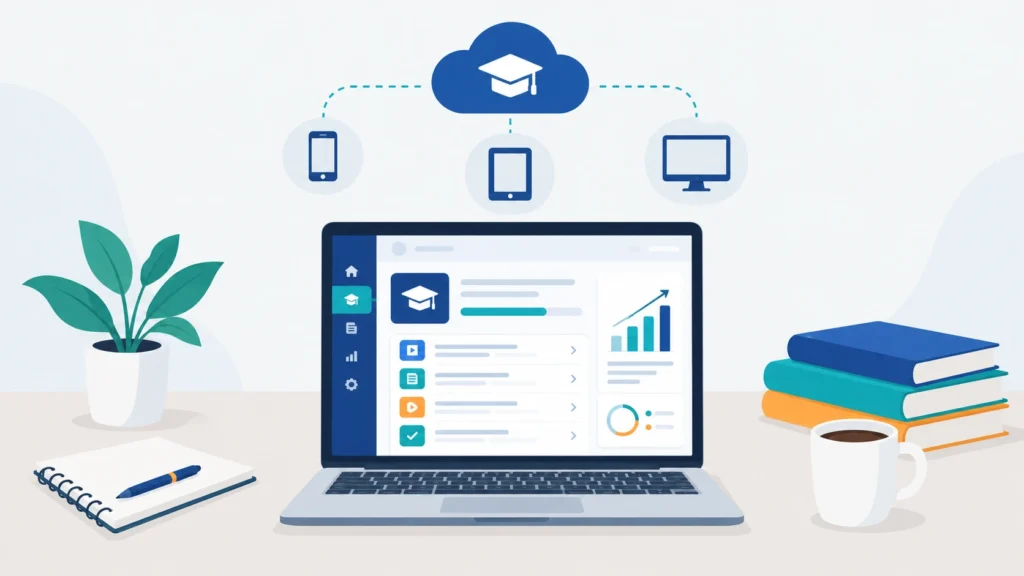
The Shift Toward Cloud-First Learning Infrastructure I’ve sat in enough planning meetings to notice the same pattern every time. Someone brings up training software, and within minutes the conversation turns into a server conversation. Who’s going to host it? Who’s going to patch it? Who’s going to fix it when it breaks at 2 AM before a big compliance deadline? That’s usually the moment a company starts looking at a SaaS learning management systems instead of building something in-house. I’ve built software for companies at very different stages, from five-person startups to teams managing hundreds of employees across multiple cities. And the ones still running training on their own servers almost always have the same complaint. It works, technically. But someone on the team is quietly babysitting it, and that person has a dozen other things they’d rather be doing. A cloud-based learning management system removes that job entirely. Not because the technology is magic, but because someone else is responsible for keeping the lights on. Why Businesses Are Moving Away from On-Premise Systems On-premise systems fail in a very specific way. Not loudly. Slowly. The software works fine for the first year. Then an update gets delayed because nobody has time. Then a security patch gets skipped because the person who understood the server left the company. Then, eventually, someone asks why the training portal has been down for three days, and the honest answer is nobody noticed. I’ve watched this exact sequence happen more than once. The real problem with hosting an LMS yourself isn’t the initial setup. Initial setup is the easy part. It’s the maintenance five years later, when the original developer is gone and nobody fully understands how the system was configured. A SaaS LMS platform sidesteps that entire risk by keeping infrastructure, security, and updates on the vendor’s side, not yours. That single shift changes who’s accountable when something breaks, and it changes it in your favor. There’s also a scaling problem that on-premise setups handle badly. Add fifty new employees overnight, and a self-hosted system needs more server capacity, more storage, and sometimes more licensing headaches. A cloud-based LMS just absorbs the growth. No new hardware conversation required. ⚡ GET IN TOUCH Ready for a SaaS LMS Built for Your Business? 💬 Chat on WhatsApp 📞 Call 0307 3319555 The Role of Subscription-Based Learning in Modern Training Subscription-based training changed the financial conversation just as much as it changed the technical one. Buying software outright used to mean a large upfront cost, followed by years of hoping it still made sense for the business. Training needs don’t stay still, though. What a company needed two years ago rarely matches what it needs now. A subscription model fixes that mismatch. You pay for what the organization actually uses, and the platform evolves without forcing a full rebuild every few years. This is where a SaaS learning management system earns its place in a modern training strategy. It’s not just software delivered differently. It’s software that keeps adapting because the vendor has an ongoing reason to keep improving it. I’ve seen companies switch from an owned system to a subscription-based one purely because they were tired of paying for upgrades that felt optional but weren’t. Once compliance requirements shift, or once a new device becomes standard for employees, an outdated LMS turns into a liability fast. Subscription pricing also does something on-premise licensing rarely does. It ties the vendor’s success to the customer’s satisfaction, not to a one-time sale. That alignment matters more than most buyers realize until they’ve experienced the alternative. Core Advantages of a SaaS Learning Management System Every client conversation I’ve had about training software eventually lands on the same question. What am I actually getting for the money? The honest answer is that a SaaS learning management system solves problems most people don’t think about until they’ve already been burned by them. If you’re still comparing platforms at a high level, our roundup of the best SaaS LMS platforms is a good place to see how different vendors stack up before committing to one. Faster Deployment Without Heavy IT Involvement A SaaS LMS gets a company from decision to live training in days, not months. That gap matters more than it sounds. I’ve seen on-premise LMS projects stretch past their original timeline because a single server configuration issue held up the entire rollout. Nobody planned for it. It just happened, because self-hosted setups have more moving parts that can go wrong before day one. With a cloud-based learning management system, most of that setup work disappears. The vendor already handles servers, security baselines, and infrastructure. What’s left for the business is configuration, not construction. This is the part people underestimate. Faster deployment isn’t just about convenience. It’s about how quickly training actually reaches employees who need it right now, not in a quarter. A new hire doesn’t wait well. Neither does a compliance deadline. Elastic Scalability for Growing Teams Growth exposes weak infrastructure fast, and training software is usually the first thing to crack under it. I’ve watched companies double their headcount in a single year and assume the LMS would just keep up. Sometimes it did. Often it didn’t, especially with systems built for a much smaller team from the start. A SaaS learning management system handles that differently. Scalability is built into the architecture, not bolted on after the fact. Add fifty employees or five hundred, and the platform absorbs it without a hardware conversation or a licensing scramble. This matters just as much in reverse. A company that shrinks a department or shifts from in-office to distributed teams doesn’t want to be stuck paying for server capacity nobody’s using anymore. Elastic scalability means the platform grows and contracts with the business. Not the other way around. Continuous Updates and AI-Enabled Capabilities An outdated LMS is usually outdated because someone decided an update wasn’t worth the disruption. That decision compounds. With a SaaS LMS platform, updates happen on
Custom iOS App Development Services for Startups & Businesses
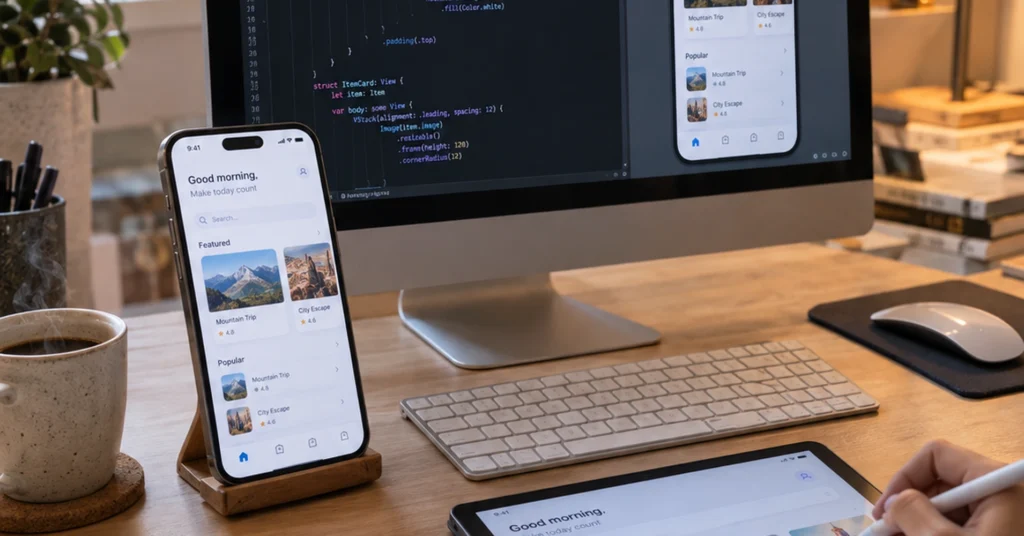
The Real Cost of Choosing the Wrong iOS Development Partner Most businesses do not realize they picked the wrong iOS development company until months into the project. By then the budget is spent, the launch date has slipped twice, and the app still does not do what the business actually needs. We have taken over projects from other developers more than once. Almost every time, the problem traces back to the same four things. Generic Apps That Don’t Fit Your Business A custom iOS app should be built around your business, not the other way around. Many development shops reuse the same core structure for every client and simply swap the colors and logo. That approach might be faster to deliver. But it rarely accounts for how your actual customers use the app, what your team needs on the backend, or where your industry has specific rules to follow. We start every custom iOS app development project by mapping out how your business actually runs before we open Xcode. A clinic booking system and a retail loyalty app have almost nothing in common under the hood, and they should not be built the same way. Missed Deadlines and Endless Delays Ask any founder who has been through a delayed app launch what went wrong, and the answer is almost always the same. The scope was never locked down clearly at the start. Vague requirements lead to vague timelines. And vague timelines turn into missed ones. We fix this by defining the full feature set and development milestones before writing a single line of code. You get a project timeline broken into stages, so you know exactly what should be finished and when, not a rough guess that keeps shifting. ⚡ GET IN TOUCH Get a Free Quote for Your Custom iOS App 💬 Chat on WhatsApp 📞 Call 0307 3319555 Hidden Costs and Unclear Pricing Nobody wants a surprise invoice halfway through a project. Unfortunately, it happens more often than it should in custom iOS app development. The usual cause is a quote based on assumptions instead of a real technical scope. Something gets missed early on, and the client ends up paying for it later, often after the work has already started. We price custom iOS app development based on the specific features, integrations, and complexity your app actually requires, and we walk you through that breakdown before any contract is signed. If something changes mid-project, we tell you the cost impact before we do the work, not after. No Support After Launch Getting your app approved on the App Store is not the finish line. It is the point where real users start finding real issues and where new iOS versions can break things without warning. Plenty of development companies quietly step back once the app goes live. Then the client is stuck fielding bug reports with no one to call. We stay involved after launch to handle updates, fix issues that come up, and keep the app compatible as Apple releases new iOS versions. An app you cannot maintain is an app that slowly becomes unusable. Industries We Understand Deeply Every industry brings its own users, rules, and expectations, and an app built without that context tends to show it. We have built custom iOS apps across a wide set of industries, including We do not treat these as interchangeable. A logistics app and a legal services app need different data structures, different security priorities, and different user flows from day one. That is the difference between an app that was built for your industry and one that was simply built to work in general. Detail Information Company Name Tecveq Service Custom iOS App Development Services Headquarters 2 Idmiston Road, London, England, E15 1RG Email info@tecveq.com Phone / WhatsApp +44 7721 716507 Global Offices Pakistan, United Kingdom, Bahrain Website tecveq.com Core Technologies Swift, SwiftUI, Xcode Industries Served Healthcare, E-Commerce, Finance, Real Estate, Education, Logistics, Hospitality, Food & Beverage, Social Networking, Media & Entertainment, Agriculture, Legal Service Areas United States, United Kingdom, Global (Remote Delivery) Typical Timeline 3 to 6 months Recognitions Clutch Top 1000 Companies, INC. 5000, Horizon Interactive Gold & Silver Awards What Is Custom iOS App Development? Custom iOS app development means building an app from the ground up around your specific business, instead of adapting a pre-built template to fit. We design and code every feature to match how your business actually operates and how your customers actually behave. That distinction matters more than most people realize before they start. A template app can get something on the App Store fast. But it locks you into someone else’s structure, someone else’s limitations, and often a redesign a year later once you outgrow it. We build with Swift, Apple’s programming language for iOS, paired with SwiftUI for the interface and Xcode as the development environment. These are the same tools Apple itself recommends for native iOS development, and they are what let an app run fast, feel smooth, and stay compatible as new iOS versions roll out. Native development is not the only option. Some companies build with cross-platform frameworks instead, which can work for simpler apps. But if your app needs to run fast, integrate deeply with iPhone or iPad hardware, or handle sensitive data securely, native iOS development is usually the more reliable path. We will tell you honestly which approach fits your project during the discovery call, not just push whichever one is easier for us. Tecveq: Your Custom iOS App Development Solution We build custom iOS apps for businesses that need software shaped around their actual operations, not around a generic template. Every project starts with understanding what your business does before we touch a single line of code. Here is exactly what that looks like in practice. Before we write anything, we map out your workflows, your users, and the specific problem the app needs to solve. A booking system for a clinic and a checkout flow for an
Flutter App Development Service in Sahiwal
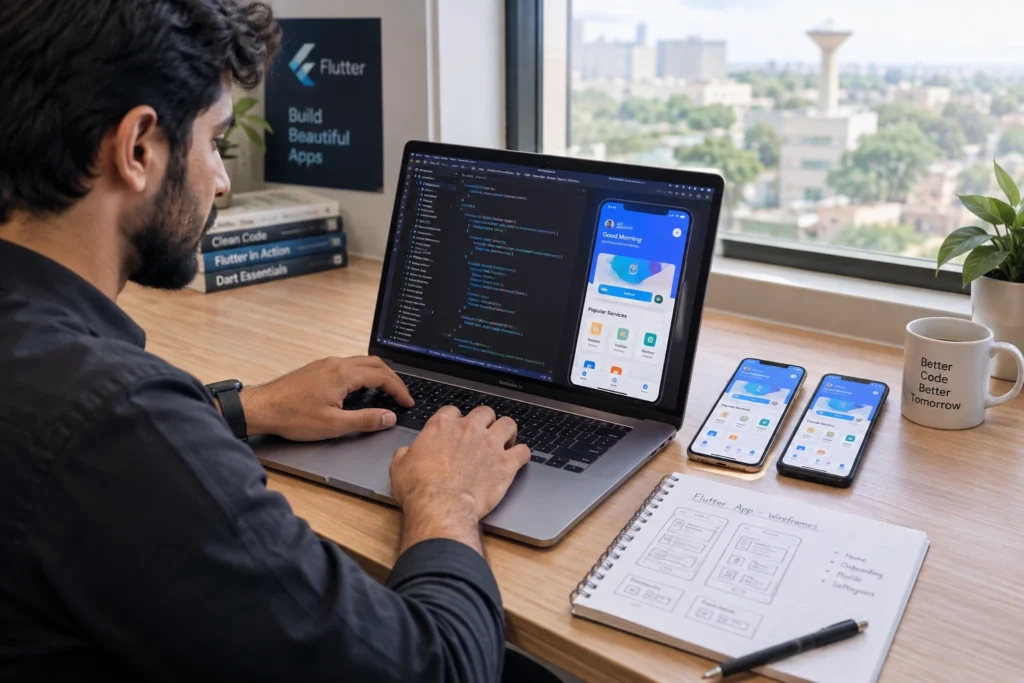
Struggling to Find a Reliable Flutter App Development Partner in Sahiwal? We hear this frustration almost every week from business owners in Sahiwal who have tried working with local freelancers or agencies and ended up disappointed. The project starts with big promises. Fast delivery. Low cost. Perfect communication. Then reality hits. Deadlines get pushed back with vague excuses. The freelancer goes silent for days, and you have no idea what is happening with your app. Code quality turns out to be rushed and buggy. Features you paid for do not work the way you expected. And when you finally launch, there is no one around to fix the problems that show up after your app goes live. We have taken over dozens of half-finished Flutter projects from freelancers who disappeared or could not deliver what they promised. The cost of fixing poorly written code and redoing entire features is often higher than building the app correctly from the start. Here is what usually goes wrong when businesses try to save money by hiring unreliable developers. Missed deadlines with no accountability. Freelancers working alone have no project manager, no team backup, and no structure to keep them on schedule. When something comes up in their personal life or they take on too many projects at once, your app sits untouched for weeks. You have no leverage and no way to get your timeline back on track. Poor communication that leaves you in the dark. You send messages and wait hours or days for a reply. You ask for progress updates and get one-line responses with no real detail. You schedule calls, and they cancel last minute or do not show up at all. Running a business means you need to know where your project stands at all times, and freelancers rarely have the discipline or systems to keep you informed. No post-launch support when problems arise. The app goes live, and within a week users report bugs or features that do not work on certain devices. You contact the developer, and suddenly they are too busy with other projects to respond. Or they want to charge you again to fix issues that should have been caught during testing. You are left with a broken app, frustrated users, and no one to turn to. Code quality that creates long-term problems. Freelancers under pressure to deliver fast often take shortcuts. They copy code from online sources without understanding it. They skip proper testing. They build features that work on the surface but break under real-world use. When you eventually need to scale the app or add new features, you discover the entire foundation needs to be rebuilt because the original code is too messy to work with. We built Tecveq specifically to solve these problems for businesses in Sahiwal who need a Flutter development partner they can actually count on. Our process is structured, our communication is consistent, and we stand behind every app we build long after it launches. If you have been burned by unreliable developers before, we understand why you are hesitant to trust another agency. That is exactly why we focus on transparency, clear timelines, and keeping you involved at every stage so you always know where your project stands and when it will be finished. Why Businesses in Sahiwal Choose Tecveq for Flutter App Development We built our Flutter app development service in Sahiwal around four principles that matter most to business owners who need mobile apps that actually work and launch on time. No guessing about timelines. No surprise costs halfway through the project. No wondering whether your app will run the same on iPhone and Android. And no getting stuck with a developer who builds your app and then disappears when you need updates or fixes. Here is exactly what you get when you work with us. Single Codebase, Dual Platform Performance We write your app code once and deploy it to both iOS and Android without rebuilding everything from scratch for each platform. This is what Flutter does better than any other mobile development framework. One team writes one set of code, and your app runs natively on iPhone, iPad, and every Android device your customers use. The performance is identical to apps built separately for each platform, but you save months of development time and avoid paying two teams to build the same features twice. Most businesses in Sahiwal who come to us have been quoted separate prices for an iOS app and an Android app by developers who only know native development. They are looking at double the budget and double the timeline just to reach their full audience. We cut that in half by using Flutter’s cross-platform architecture without sacrificing speed or user experience. Your customers will never know your app was built with a single codebase. The animations are smooth. The interface responds instantly. And updates happen simultaneously on both platforms instead of rolling out weeks apart. Faster Time-to-Market Without Compromising Quality Speed matters when you are launching a business or trying to beat competitors to market with a new feature. We deliver Flutter apps in 30 to 60 days depending on complexity. Not because we rush or cut corners. Because Flutter’s hot reload feature lets our developers see code changes instantly without recompiling the entire app every time they make an adjustment. What used to take hours of build time in traditional mobile development now takes seconds. This means we spend more time perfecting your app’s design and functionality instead of waiting for code to compile. Our designers and developers work in parallel, testing UI changes in real time and catching issues before they become expensive problems later. And here is the part that saves you the most time. When we find a bug or need to adjust a feature, we fix it once, and the correction applies to both iOS and Android versions immediately. No separate debugging sessions for each platform. No version mismatches, where your iPhone app works but your Android
POS Software for Restaurants in Sahiwal
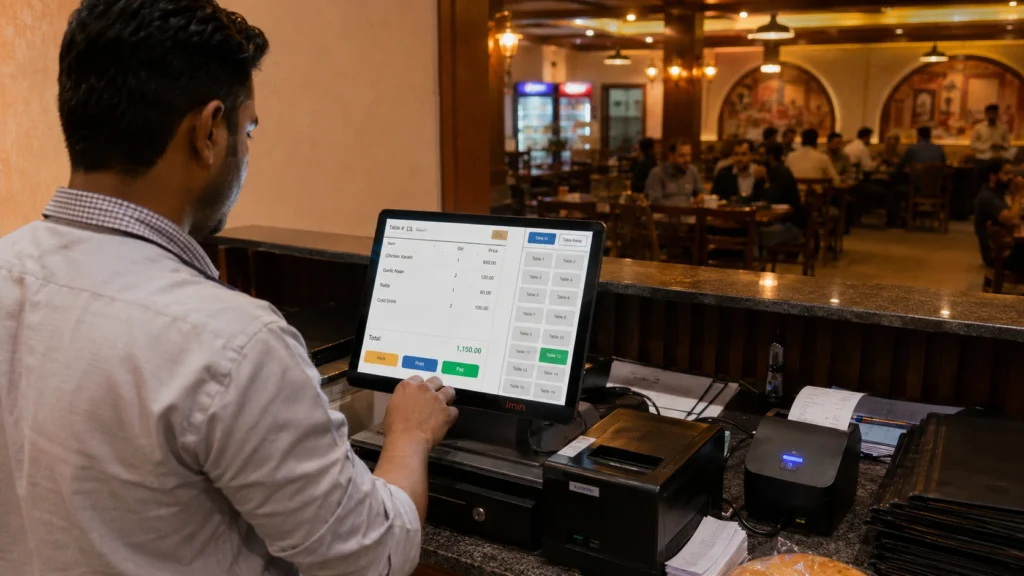
Restaurant POS Software Built for Sahiwal’s Food Businesses We built our restaurant POS software for the exact chaos that happens during a Friday dinner rush in Sahiwal. Orders piling up. A waiter is asking about table four while the kitchen wants confirmation on table two. One missed order and a customer walks out unhappy. Our POS software for restaurants in Sahiwal handles billing, table tracking, and kitchen order routing from a single screen, so your staff never has to guess what happened where. It works the same whether you run a dine-in restaurant, a takeaway counter, a delivery-only kitchen, or a small cafe. We set it up around how your business actually operates, not the other way around. Power cuts are common here. So we built the system to keep working offline, and it syncs your data automatically once the connection comes back. Some restaurants only need simple billing. Others run three counters and need everything synced in real time. We configure the setup based on what your restaurant actually needs, not a fixed package that forces you to pay for tools you will never use. And that is the part most POS providers skip. They sell you a license and leave you to figure out the rest. We walk you through setup ourselves and stay available if something needs adjusting after you go live. What You Get With Tecveq’s Restaurant POS System Every feature in our restaurant POS software solves a problem we have watched restaurant owners deal with over and over. Here is exactly what comes with it. Fast Billing & Checkout A slow checkout line loses customers before they even taste the food. Our billing screen is built for speed, so your cashier can ring up an order, apply a discount, and print a receipt in a few taps. No hunting through menus. No confusing item codes. You can also split bills, merge tables, and apply item-level discounts without calling anyone for help. And if the power goes out mid-transaction, billing keeps running because the system works offline first. Table & Order Management Your staff needs to know which tables are occupied, which are ready for the next order, and which are waiting on the kitchen. Our table management screen shows all of that at a glance. Waiters can assign orders to specific tables directly from a tablet or the counter screen. This cuts down on the back-and-forth that usually happens when a table changes an order or asks for something extra. Not every restaurant needs the same table layout. Which is why we set this up to match your actual floor plan during onboarding. Kitchen Order Ticket (KOT) Routing An order placed at the counter needs to reach the kitchen instantly, without a waiter walking back and forth to confirm it. Our KOT routing sends every order straight to the kitchen screen or printer the moment it is placed. The kitchen sees exactly what was ordered, which table it belongs to, and any special instructions attached. This alone eliminates most of the mixed-up orders that happen during a busy service. FBR-Integrated Tax Compliance Tax compliance should not mean extra paperwork at the end of every day. Our restaurant POS system generates FBR-compliant invoices automatically as part of the normal billing process. Every transaction is recorded the way it needs to be recorded. You do not need a separate tool or a manual entry step to stay compliant. This matters more than most restaurant owners realize until an audit comes up. We set the compliance settings correctly from day one, so you are not scrambling to fix records later. Inventory & Stock Tracking You cannot run a kitchen efficiently if you do not know what is running low until it runs out mid-service. Our inventory tracking updates stock levels automatically as items get sold, so you know exactly what needs reordering. It tracks ingredients down to the recipe level, not just finished menu items. That means when a dish sells, the system deducts the actual ingredients used, giving you a much more accurate picture of your real food cost. Restaurants that skip this step usually find out about a shortage the hard way, in the middle of dinner service. Sales & Profit Reports Numbers on a screen only matter if they tell you something useful. Our reporting dashboard breaks down sales by item, by time of day, and by staff member, so you can see what is actually working. You get profit margins per dish, not just total revenue. That is the number that tells you whether your best-selling item is actually making you money once ingredient costs are factored in. We built these reports to answer the questions restaurant owners actually ask us. Not generic sales totals that look good on paper but do not help you make decisions. ⚡ GET IN TOUCH Orders getting missed? Call us and get your POS set up today. 💬 Chat on WhatsApp 📞 Call 0307 3319555 Multi-Counter & Multi-Branch Live Sync Running two counters on separate systems is how restaurants end up with mismatched inventory numbers and orders that never made it to the kitchen. Our restaurant POS system connects every counter and every branch to one live system, so nothing gets tracked twice or missed entirely. Real-Time Sync Across Counters An order placed at counter one should show up instantly at counter two, not five minutes later after someone manually checks. Our system syncs every transaction across counters the moment it happens. If a customer orders at the takeaway counter and later adds items at the table, both counters see the updated order immediately. Stock levels update the same way. Sell an item at one counter, and every other counter reflects the new inventory count right away. This matters most during peak hours, when two or three staff members are ringing up orders at the same time. Without live sync, you end up overselling items that already ran out. With it, everyone is working off the same