
What to Look for in Custom Mobile App Development Services: A Complete Buyer’s Guide
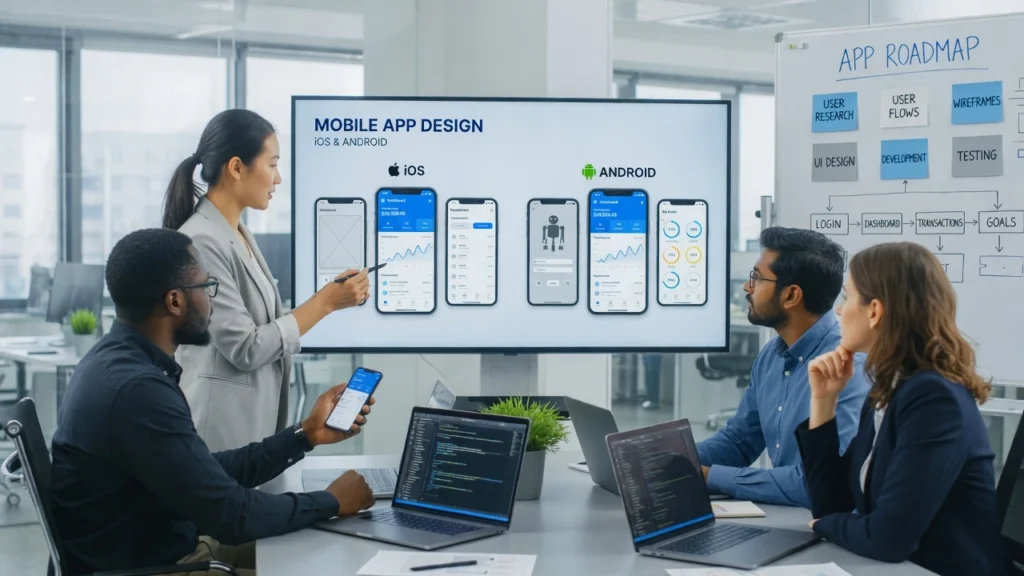
Why Choosing the Wrong Mobile App Development Partner Can Cost You Everything Hiring the wrong custom mobile app development company is one of the most expensive mistakes a business can make. I have spoken with founders who spent $80,000 and eight months on an app that never launched. I have heard from business owners who received a finished app that crashed every time more than 50 users logged in at once. And I have met product managers who handed a mobile application development project to an agency that went silent three months in, taking the code and the deposit with them These are not rare horror stories. They happen more often than most agencies will admit. The truth is that custom mobile app development services vary wildly in quality, process, and honesty. Some agencies build genuinely great products. Others take your money, produce something that barely works, and move on to the next client. The difference between the two is not always obvious from a website or a sales call. What goes wrong most often? Scope creep is the most common. A project starts at $40,000 and a four-month timeline. Six months later you are at $90,000, the app is still not finished, and every new requirement adds another invoice. Nobody told you upfront that changes cost extra or how much extra. Then there is the communication problem. You hired an agency. They assigned a junior developer. You send messages and wait three days for a response. You have no idea what stage the project is at or whether you are on track. And sometimes the agency simply disappears. Payments accepted. The project started. Then nothing. This guide exists because I got tired of watching businesses go through this. I am going to show you exactly what to look for when you hire mobile app developers, what questions to ask before you sign anything, and which warning signs tell you to walk away before it costs you everything. By the end of this, you will know how to find a mobile app development company worth trusting and how to start your project with clear expectations on both sides. ⚡ GET IN TOUCH Ready to build your app right? Get a free strategy call and cost estimate. 💬 Chat on WhatsApp 📞 Call 0307 3319555 What’s Actually Included in Custom Mobile App Development Services Most people searching for custom mobile app development services picture one thing: a developer writing code. That is maybe 40% of what actually goes into building an app that works, looks professional, and survives its first year in the market. The other 60% is everything agencies forget to mention until you are already signed and paying. A complete custom mobile app development service covers strategy, design, platform development, backend infrastructure, testing, App Store submission, and what happens after your app goes live. If an agency pitches you on “development only” and treats everything else as an add-on, that is a sign they are either underquoting to win the deal or expecting you to fill the gaps yourself. Here is what every component actually means for your project and why skipping any of them creates problems you will pay to fix later. Strategy and Consulting Good agencies push back. Not to be difficult, but because the first version of every app idea almost always includes features that users will not use and is missing something users actually need. Before a single line of code gets written, the right development partner sits down with you to figure out what your app actually needs to do, who will use it, and what the smallest version looks like that still solves the core problem. This is where problem solving starts in the development process. App development consultancy is not a sales conversation. It is a working session that shapes the entire project around the problem your app needs to solve Skipping this stage is how projects end up six months in and $70,000 over budget because the original plan was built on assumptions nobody tested. Mobile App UI/UX Design Design is not about making the app look attractive. That matters, but it is not the point. Mobile app UI/UX design directly shapes the user experience, determining whether someone who downloads your app figures out how to use it in the first 60 seconds or deletes it in frustration. It determines whether users complete a purchase or abandon the cart. It also determines whether your customer support inbox fills up with “How do I do this?” messages or stays quiet because the app explains itself Bad design kills otherwise good apps. I have seen technically solid apps with terrible retention numbers purely because users could not find the features they needed. The design phase produces wireframes first, then high-fidelity mockups you review and approve before development starts. What you see in those mockups is what gets built. iOS and Android App Development This is the part most clients picture when they think about mobile app development. But there is an important choice here that affects your budget and timeline significantly. iOS app development services and Android app development services are separate products when built natively. Native iOS apps are written in Swift and run on iPhones and iPads. Native Android apps are written in Kotlin and run on Android devices. Building both natively means two separate codebases, two sets of developers, and roughly double the development time. Cross-platform app development using frameworks like React Native or Flutter lets you build one codebase that runs on both platforms. For most business apps, this is the right approach. It costs less, launches faster, and performs well enough for the majority of use cases. If you’re specifically looking at restaurant app development in Pakistan, cross-platform is often the most cost-effective choice for local restaurants wanting both iOS and Android presence. Backend Development and Integrations Your app is the part users see. The backend is everything that makes it actually work. Backend development for mobile apps
The SaaS SEO Agency That Grows Your MRR, Not Just Your Traffic
We’re a SaaS SEO agency that specializes in one thing: helping software as a Service companies turn organic search into their most profitable customer acquisition channel. Not another generalist agency that treats your B2B product like an e-commerce store or plasters “SaaS” on generic blog strategies. We focus on what actually matters to your business. Demo requests. Free trial signups. Pipeline growth. Monthly recurring revenue increases that you can show your board. product-qualifiedMost SEO agencies chase vanity metrics. They’ll send you reports filled with traffic numbers and keyword rankings while your actual lead quality stays flat. We measure success differently. Our SaaS clients track organic leads through to closed revenue, and we optimize for the metrics that matter: cost per acquisition, product qualified leads, and how much of your pipeline comes from organic search instead of paid ads that get more expensive every quarter. Here’s what that looks like in practice. When you work with us, we map every piece of content to your sales funnel stages. We build comparison pages that capture bottom-of-funnel searches when prospects are choosing between you and competitors. We create product-led content that explains your features as solutions, not technical specifications. We optimize the pages that actually convert visitors into trials, not just the blog posts that generate research traffic from students and job seekers. And we prove ROI. Our reporting connects organic traffic directly to your CRM data so you can see exactly how many demos came from organic search, how many converted to customers, and what your true customer acquisition cost is for the SEO channel compared to paid ads. Ready to see how this works for your SaaS? Book a free 30-minute strategy call and we’ll show you exactly where your competitors are ranking, what keywords are driving their demo requests, and how we’d approach growing your organic pipeline in the first 90 days. ⚡ GET IN TOUCH Ready to outrank your SaaS competitors? Get your free 30-minute strategy call today. 💬 Chat on WhatsApp 📞 Call 0307 3319555 Why Isn’t Your SaaS Ranking on Google? (And Why Generic SEO Agencies Keep Failing You) one,Your SaaS product solves real problems. Your website explains what it does. You’ve published blog content. But when potential customers search for solutions in your category, your competitors show up on page one and you’re buried on page three or not ranking at all. Here’s what’s actually happening. Generic SEO agencies treat every client the same way. They build blog content around high-volume informational keywords, optimize your homepage for your product category, and send you monthly reports showing traffic increases. What they don’t tell you is that the traffic they’re generating comes from job seekers researching your industry, students writing papers, and overseas users who will never buy a B2B software product that costs $5,000 per year. They don’t understand the B2B SaaS marketing funnel. SaaS buyers don’t search for generic category terms and convert immediately. They research for three to six months. They compare your product against five competitors. They download comparison guides. They read review sites. They search for specific feature terms and integration questions. Then, after weeks of internal evaluation, they finally request a demo. Your content needs to be mapped to each stage of that SaaS sales funnel. Awareness stage content that explains the problem. Consideration stage content that positions your product as the solution. Decision stage content like comparison pages and alternative pages that capture prospects who are actively choosing between you and named competitors right now. Most agencies skip the bottom-of-funnel content entirely. Why? Because it’s harder to scale than generic blog posts, and it requires actual understanding of how your product works and who your competitors are. Why B2B SaaS SEO Is Different From Every Other Industry We’ve worked with B2B SaaS companies long enough to know exactly where generic strategies fall apart. First, your sales cycle is long. Effective SaaS growth marketing requires content that nurtures prospects over months, not content that tries to close a sale in one visit. Your blog can’t just attract traffic. The content has to educate, build trust, and keep prospects engaged until they’re ready to talk to sales. Second, you’re targeting multiple personas. The end user who will actually use your software searches differently than the VP who approves the budget. Generic agencies optimize for one keyword set. We build SEO strategies that support your demand generation engine by creating content for every decision maker in the buying committee. Third, your competitive landscape is fundamentally different from that of a local service business.You’re competing against funded SaaS companies with $500K annual content budgets and enterprise brands that have been publishing for a decade. A generic SEO approach that works for a local service business will never move the needle when you’re trying to outrank companies with domain authority three times higher than yours. Which is exactly why you need a B2B SaaS SEO agency that understands these challenges and knows how to win in competitive markets without requiring you to match your competitors’ content budgets dollar for dollar. We do it by being smarter about keyword targeting, more strategic about content types, and more focused on the content that actually converts trials and demos instead of just generating traffic that looks good in a report but contributes nothing to your pipeline. Who Is SaaS SEO Best Suited For? SaaS SEO works best when organic search can influence a meaningful part of the buying journey. Our approach is particularly suited to B2B SaaS companies with a defined product category, an identifiable target audience, and enough customer value to justify investing in long-term organic acquisition. This can include early-stage SaaS companies building their first organic acquisition channel, growth-stage companies looking to reduce dependence on paid acquisition, and established software businesses competing for high-value commercial searches. How SaaS SEO Actually Works (The 5 Tactical Differences That Matter) A true SaaS SEO strategy addresses long sales cycles, multiple buyer personas, and competitive markets where your direct competitors have