
WhatsApp Chatbot for Healthcare Clinics UK:The Complete AI Powered Guide (2026)
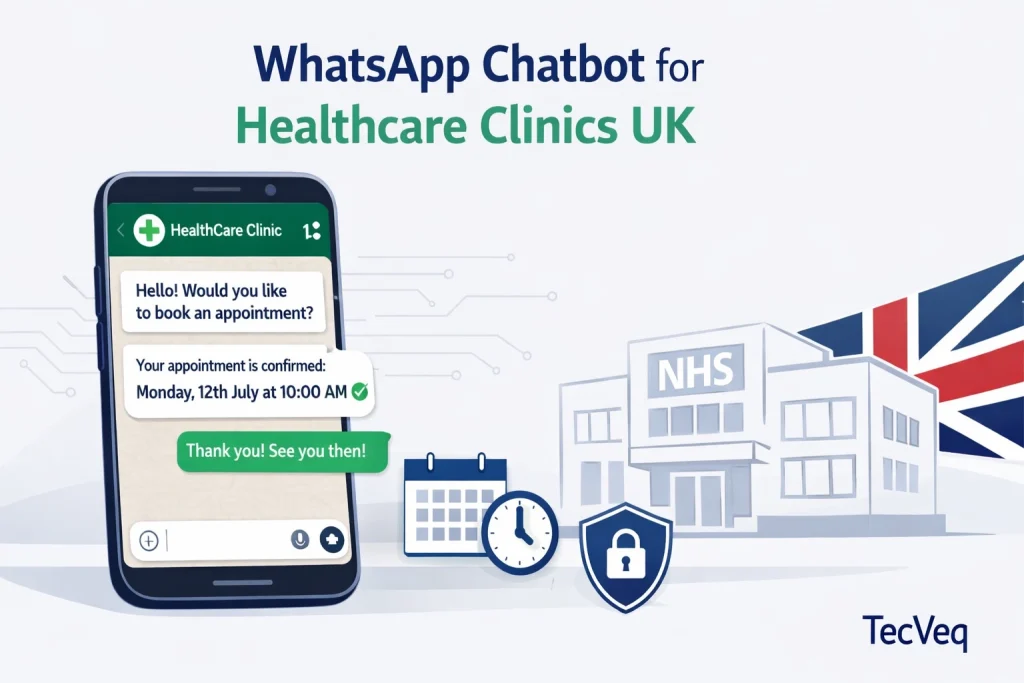
Why UK Healthcare Clinics Need WhatsApp Automation Right Now UK healthcare clinics are under more pressure than ever and traditional systems like phone bookings are no longer keeping up.This is exactly why a WhatsApp chatbot for healthcare clinics UK is quickly becoming essential. GP surgeries and private clinics are dealing with more patients every single day. At the same time staff are stretched thin and the phone lines never stop ringing. Something has to change. That is where WhatsApp automation for clinics comes in. The NHS No Show Crisis 15 Million Missed Appointments a Year Here is a number that should stop you in your tracks. In 2025 alone patients missed around 16 million GP appointments in England. That is roughly one in every 23 booked consultations. To put that in simple terms health officials say it is like every GP practice in England losing an entire day of appointments every single month. Approximately 7.2 million of these are missed GP appointments costing NHS England £216 million every year. This is lost time, lost revenue, and patients who didn’t get the care they needed. That is real money. Real appointment slots. Real patients who needed care but did not get it because someone forgot to show up or could not find a way to cancel in time. A WhatsApp chatbot for healthcare clinics in the UK sends automatic reminders before every appointment. Patients can confirm or reschedule with one tap. No phone call needed. No waiting on hold. Just a simple message that saves your clinic time and money. A WhatsApp chatbot for healthcare clinics UK directly solves this problem by sending automated reminders and allowing instant rescheduling. Why Phone Calls Are Failing UK Patients (And What They Prefer Instead) Be honest how many times have you tried calling your GP and given up? Long hold times. Busy signals. Calling back at 8am just to get through. It is frustrating for patients and exhausting for your front desk staff. Most patients today would rather send a quick message than wait on a phone call. WhatsApp has over 2 billion users worldwide and is one of the most used apps in the UK. People already know how to use it. They feel comfortable with it. That makes it the perfect tool for patient communication. With AI chatbot automation for healthcare UK clinics can handle booking queries and reminders around the clock without a single staff member picking up the phone. This is why WhatsApp automation for clinics is replacing traditional phone systems across the UK. The Rise of Digital First Primary Care in the UK The NHS is pushing hard toward a digital first approach. The NHS App now stops 1.5 million hospital appointments from being missed and has saved 5.7 million staff hours since July 2024. It now has over 40 million registered users. Healthcare digital transformation is no longer a future plan. It is happening right now. Private clinics and GP surgeries that embrace WhatsApp automation today will be ahead of the curve tomorrow. What Is an AI-Powered WhatsApp Chatbot for Healthcare Clinics? An AI-powered WhatsApp chatbot is a smart automated messaging tool that talks to your patients through WhatsApp. It answers questions. It books appointments. It sends reminders. And it does all of this without anyone on your team having to type a single reply. Think of it as a smart digital receptionist that works 24/7 without breaks, delays, or missed calls. How WhatsApp Business API Powers Clinical Communication To run a WhatsApp chatbot for a UK healthcare clinic you need something called the WhatsApp Business API. This is not the same as the free WhatsApp Business app you can download on your phone. The API is a more powerful version built for businesses and healthcare providers that need to send messages at scale. The WhatsApp Business platform lets your clinic connect with a chatbot system that uses conversational AI and natural language processing. That means patients can type questions in plain everyday language and the intelligent virtual assistant understands exactly what they mean and replies in seconds. It also uses end-to-end encryption which means every message between your clinic and your patient is fully protected. That matters a great deal when you are handling sensitive healthcare information under UK GDPR rules. Rule Based vs AI Chatbots: Which Does Your Clinic Need? Not all chatbots work the same way. Before your clinic picks one it helps to understand the difference between the two main types. A rule-based chatbot follows a fixed script. It can only respond to specific questions in a specific order. If a patient asks something outside of that script the bot gets stuck. It is like a phone menu system. Press 1 for appointments. Press 2 for test results. It works for very simple tasks but it cannot handle real conversations. An AI chatbot is different. It uses conversational AI and natural language processing to actually understand what a patient is saying. A patient could type “I need to move my Friday appointment to next week” and the intelligent virtual assistant understands that perfectly. It does not need the patient to use exact words or follow a set menu. For most UK healthcare clinics a hybrid AI chatbot works best. It uses AI for flexible conversations and falls back on simple rules for tasks like booking confirmations. This gives you the best of both worlds. 8 Powerful Use Cases of a WhatsApp Chatbot for Healthcare Clinics UK Now let us get into the practical side. Here are eight real ways a WhatsApp chatbot for healthcare clinics in the UK can make your clinic run better every single day. 1. Automated Appointment Booking and Confirmation Patients can instantly book appointments through WhatsApp without calling your clinic.. The automated booking system checks real-time availability and sends an instant confirmation message. No phone calls. No back and forth emails. Just a smooth online appointment scheduling experience that patients actually enjoy. 2. Appointment Reminders to Reduce No-Shows This